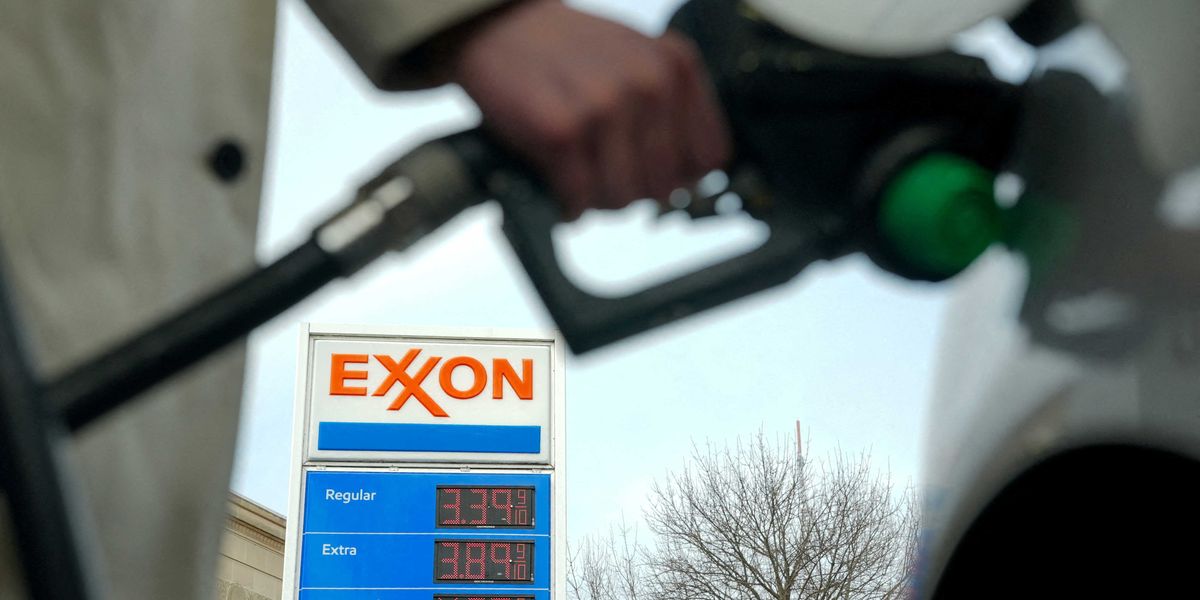
Iranian-linked hackers are believed to have compromised U.S. gas tank gauge systems, exploiting online, passwordless automatic tank gauges and in some cases altering display readings. The intrusions have not caused known physical damage, but they raise safety concerns and come amid heightened U.S.-Iran tensions and a spike in U.S. gas prices tied to the Strait of Hormuz conflict. The article also notes Trump is considering a gas tax holiday as relief, adding a domestic policy angle.
The immediate market read-through is not “cyber event” so much as a small but non-zero increase in operational risk premia across fuel distribution and adjacent critical infrastructure. The first-order damage is limited, but the second-order effect is that low-cost, internet-exposed industrial systems become a liability screen for insurers, regulators, and acquirers; that should widen the valuation gap between well-capitalized, compliance-heavy operators and fragmented independents with weaker OT security. Expect a short-lived bid for firms that sell monitoring, endpoint protection, and industrial network segmentation rather than for broad cyber beta.
Energy pricing remains the dominant macro transmission channel. Even if the incident itself does not impair supply, it reinforces the narrative that Gulf-related disruption risk is not one-off and therefore keeps a geopolitical risk premium embedded in gasoline crack spreads and regional retail margins. The more important second-order winner is domestic refining and pipeline/logistics capacity with inland exposure, which tends to gain when the market prices in localized distribution friction and sticky retail markups even without a true supply shock.
Politically, the more immediate catalyst is not the breach but the gasoline optics: elevated pump prices compress the White House’s room to tolerate further escalation, which increases the odds of a de-escalatory headline within weeks. That creates a convex setup in crude and fuel equities: upside if tensions worsen, but a meaningful reversal if there is any credible signaling around maritime security, sanctions relief, or tactical ceasefire. The market is likely overestimating the permanence of the current risk premium; geopolitically driven gasoline spikes historically fade quickly once traders believe the administration will prioritize price relief.
The contrarian angle is that cyber attribution noise can be a distraction from the real investable issue: infrastructure hardening spending is likely to accelerate regardless of attribution certainty. That means the best medium-term expression is not short energy, but long cyber and industrial-security beneficiaries funded by trimming exposure to the most politically sensitive parts of the energy complex where headline risk may soon force policy response.
AI-powered research, real-time alerts, and portfolio analytics for institutional investors.
Request DemoOverall Sentiment
mildly negative
Sentiment Score
-0.35
