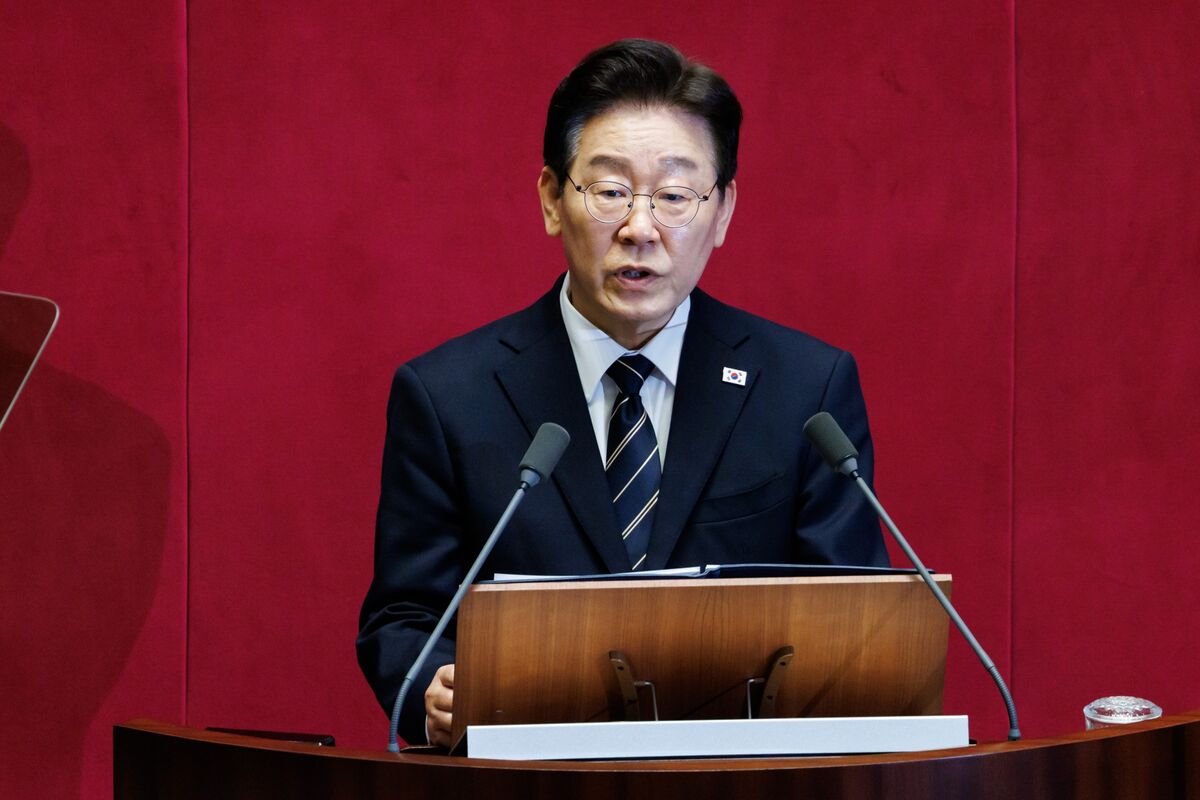
Samsung Electronics faces a planned 18-day work stoppage after government-mediated talks with its union collapsed, with the company citing "excessive" union demands. South Korean President Lee Jae Myung called for an "appropriate limit" on collective labor action amid the unrest. The news is modestly negative for Samsung sentiment and could pressure operations, but it is unlikely to drive broad market moves.
This is less about one company’s labor cost and more about a political signal that South Korea is willing to intervene when labor friction threatens strategic industrial output. That matters because chip fabs and adjacent semiconductor equipment chains are ultra-sensitive to even short disruptions: the real damage is not just lost shifts, but yield/process instability, delayed maintenance windows, and knock-on slippage in customer delivery commitments that can persist for weeks. The immediate beneficiary is management leverage across Korean industrials; the immediate losers are organized labor and any supplier exposed to tight delivery schedules if work stoppages spread.
The second-order risk is that this becomes a template for more assertive state messaging around “national competitiveness” in technology sectors. In the near term, that should compress the probability of a prolonged strike, but it does not eliminate headline volatility or the chance of a partial work slowdown that is harder to quantify than a full walkout. Over a 1-3 month horizon, the key question is whether this raises the bargaining threshold for unions elsewhere, or instead hardens labor’s stance by framing the dispute as politically charged.
The market may be underpricing the operational asymmetry: semiconductor producers can absorb a few days of disruption, but if the dispute hits tool maintenance, quality assurance, or export logistics, the cost curve can worsen quickly. That makes the path of least resistance mildly favorable for large Korean tech names versus domestically exposed industrials, while suppliers with just-in-time exposure face the most downside if the rhetoric escalates. The contrarian view is that the strike itself may be a negotiation tactic rather than a true production shock, so the best short entries are likely on any oversold knee-jerk reaction, not on the first headline.
AI-powered research, real-time alerts, and portfolio analytics for institutional investors.
Request DemoOverall Sentiment
mildly negative
Sentiment Score
-0.25
