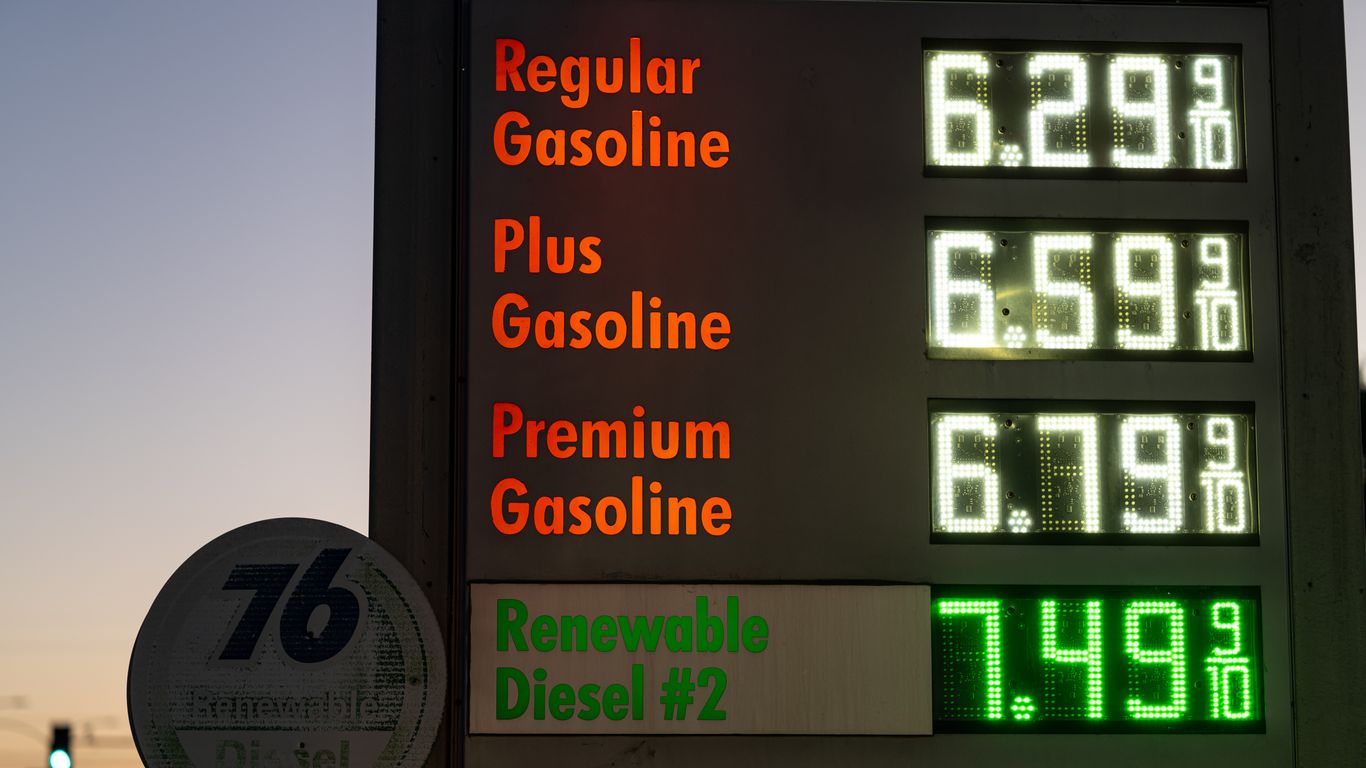
U.S. average gas prices have reached $4.56 per gallon, with California at $6.15 and all 50 states now above $4, as the Iran war nears three months. AAA said gasoline is up 53% since the conflict began, a sharp inflationary shock that is costing consumers millions daily and pressuring small businesses. GasBuddy warned prices could exceed the prior record of $5.03 if the Strait of Hormuz stays closed through mid-summer.
The first-order read is inflationary, but the second-order effect is a tax shift from discretionary consumption into non-discretionary transport, which tends to hit lower-margin retailers, restaurants, lodging, and regional leisure names before it shows up in headline retail sales. The pressure is especially acute for small operators with limited pricing power and higher delivery intensity; expect margin compression to show up within one or two monthly reporting cycles, not quarters. Airlines and truck-intensive logistics are vulnerable on cost, but the bigger equity impact is likely in consumer cyclicals where demand elasticity is lagged and usually underestimated.
The market may be underappreciating the policy response path. Once gasoline crosses psychologically salient thresholds, political pressure for supply release, diplomacy, or strategic inventory actions rises quickly, and that makes this a time-bounded shock rather than a clean multi-year trend. The key catalyst window is the next 2-6 weeks: if the shipping corridor remains constrained, the inflation impulse can propagate into CPI prints and rate expectations before consumers fully adjust spending. That creates a nasty mix for duration-sensitive assets and high-multiple retailers.
Contrarianly, the move is not universally bullish for energy equities; integrateds and refiners may benefit near term, but sustained extreme gasoline prices can destroy demand, lower miles driven, and widen crack-spread volatility after the initial spike. If the market starts pricing a demand break or rapid geopolitical de-escalation, the easy money in broad energy longs will fade. The sharper expression is relative: long upstream cash flows versus short consumer margin exposure, rather than outright commodity beta.
If the Strait reopens or if policy intervention arrives, the unwind can be violent because positioning will likely be one-way. In that scenario, the most crowded longs are vulnerable to a fast 10-15% pullback even if prices remain elevated versus pre-war levels. The best risk-reward is to own beneficiaries of inflation persistence while keeping optionality on a sudden reversal.
AI-powered research, real-time alerts, and portfolio analytics for institutional investors.
Request DemoOverall Sentiment
strongly negative
Sentiment Score
-0.68
