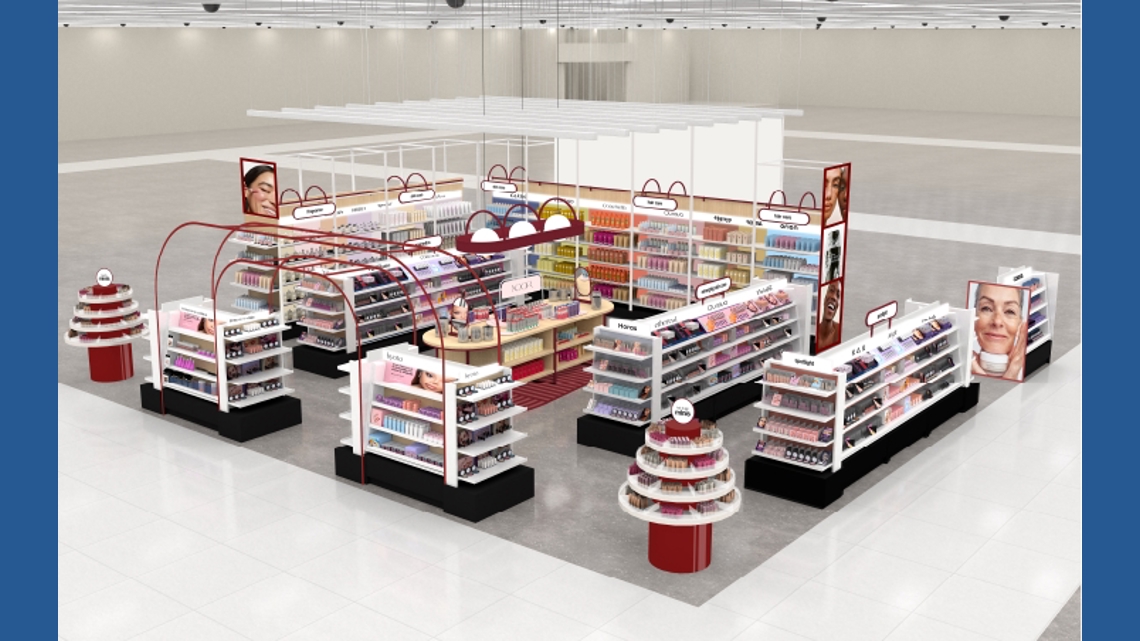
Target is remodeling 8 Michigan stores as part of a broader plan for more than 130 full-store remodels nationwide, backed by $2 billion in incremental investment and more than $1 billion in additional capex. The upgrades are food-forward, with nearly 50% more newness in food and beverage assortment, expanded grocery space, and improved Drive-Up and Order Pickup areas. The news signals a modestly positive retail growth and customer-experience push, but it is unlikely to materially move the stock on its own.
This is less a one-off capex refresh than a deliberate attempt to reprice Target as a grocery-led, frequency-driven destination. The second-order effect is that Target is trying to pull spend away from big-box food, club, and convenience channels by improving trip utility, not just aesthetics; that matters because grocery trips are the highest-repeat traffic source in retail and can lift attachment across discretionary baskets. If the execution works, the earnings lever is not margin expansion from food itself, but traffic resilience and better fixed-cost absorption across the store.
The near-term read-through is modestly positive but not enough to justify a multiple rerate on headlines alone. Remodels are usually a 2-3 quarter operating distraction: they can suppress in-store conversion during construction, raise labor complexity, and create temporary out-of-stock risk as planograms shift toward fresh and grab-and-go. The key watchpoint is whether Target can sustain basket growth after the remodel novelty wears off; if incremental trips do not hold, the company is simply trading capex for low-return square footage.
Competitively, the most vulnerable peers are those exposed to the same convenience mission without Target’s discretionary halo. Walmart is the harder benchmark because it can match the grocery move with superior supply chain economics, while Kroger/Albertsons face the risk of losing some higher-income, mission-light trips if Target improves perceived freshness and speed. The contrarian angle is that this may be underappreciated as a defensive move in a weaker consumer backdrop: if households keep consolidating errands, a better food-forward Target can defend share even if broader retail demand stays soft.
Catalyst-wise, the real proof points are the next two quarters of comp trends in remodel markets versus non-remodel markets, plus any commentary on attachment rates in food and beverage. If remodel comps do not outperform by low-single digits within 1-2 quarters of completion, the market should treat this as a capital allocation story rather than an operating inflection. Conversely, evidence of durable lift in grocery penetration would support a more durable margin/traffic thesis into 2027.
AI-powered research, real-time alerts, and portfolio analytics for institutional investors.
Request DemoOverall Sentiment
mildly positive
Sentiment Score
0.20
Ticker Sentiment
