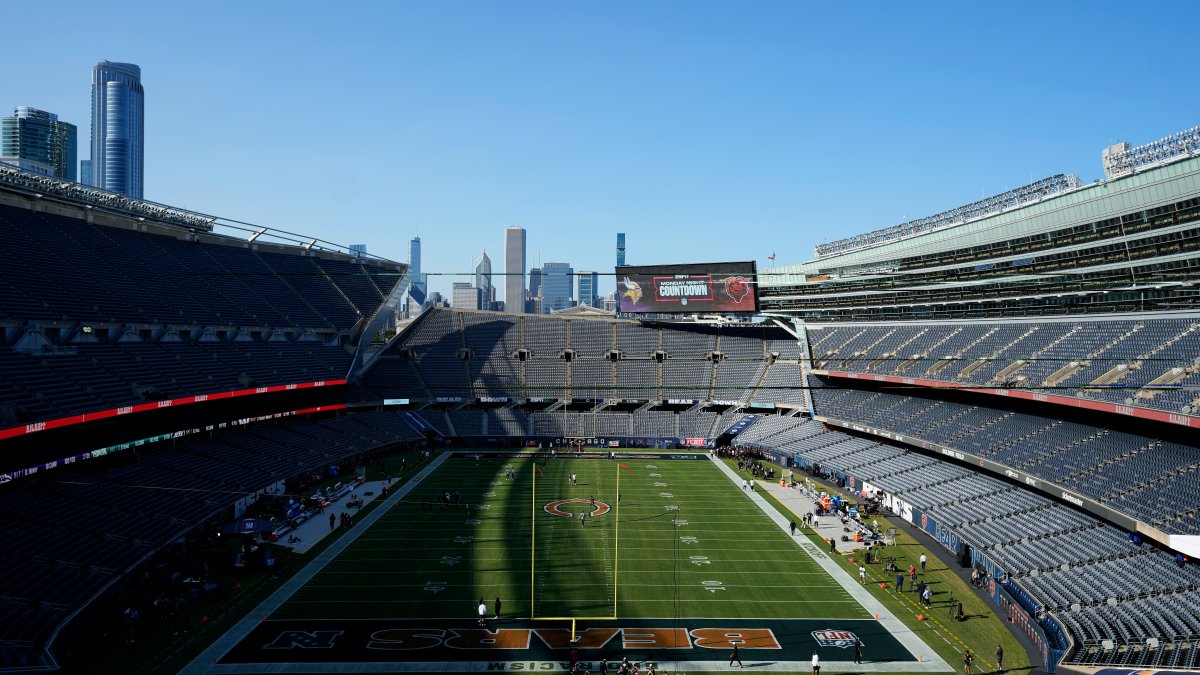
The Bears’ stadium decision is still unresolved, with two viable sites remaining: Arlington Heights and Hammond, Indiana. Indiana is offering up to $1 billion in incentives for Hammond, while the Arlington Heights plan hinges on property-tax legislation and infrastructure support before the Illinois General Assembly’s May 31 deadline. Commissioner Goodell said the stadium will not be built in Chicago, keeping pressure on state lawmakers and local officials to finalize a deal.
The relevant market is not the stadium itself but the wedge between public-sector bargaining and local real-estate optionality. The biggest second-order beneficiary is the land bank and surrounding infrastructure ecosystem around Arlington Heights: any credible path that preserves the franchise in Illinois keeps entitlements, transportation buildout, and adjacent mixed-use monetization alive, while a relocation to Indiana would reprice those optionality assets toward zero. The more the process drags into the legislative deadline, the more value migrates from outright land appreciation to event-driven volatility around permit, tax, and financing headlines.
The risk/reward is asymmetric because the deal is less about project economics and more about political coalition management. The tail risk is not just failure of a subsidy bill; it is a multi-year stagnation scenario where neither site clears, freezing capital allocation for ancillary contractors, transit-linked builders, and local commercial landlords that had priced in a stadium catalyst. A Chicago retention plan would likely be structurally harder to execute and could depress returns on capital for any party exposed to property tax relief assumptions or public-ownership complexity.
The market is probably underestimating the likelihood that a state-level compromise favors the path of least resistance: a suburban build with narrowly tailored tax treatment and infrastructure support, rather than a downtown/public ownership solution. That would create a near-term winner in suburban land developers and infrastructure contractors, but a loser in city-center retail and transit-adjacent assets that were implicitly counting on a Chicago footprint. The key catalyst is the legislative deadline; if there is no draft bill or traffic-study clarity within days, the probability of a deferred decision rises sharply, which should widen the spread between the two site outcomes.
For investors, this is a clean relative-value event rather than a broad macro trade. The consensus may be overpricing the chance of a Chicago rescue and underpricing the probability of a quick pivot to the highest-conviction executable site, especially if lawmakers want to avoid a public failure before session end.
AI-powered research, real-time alerts, and portfolio analytics for institutional investors.
Request DemoOverall Sentiment
neutral
Sentiment Score
-0.05
