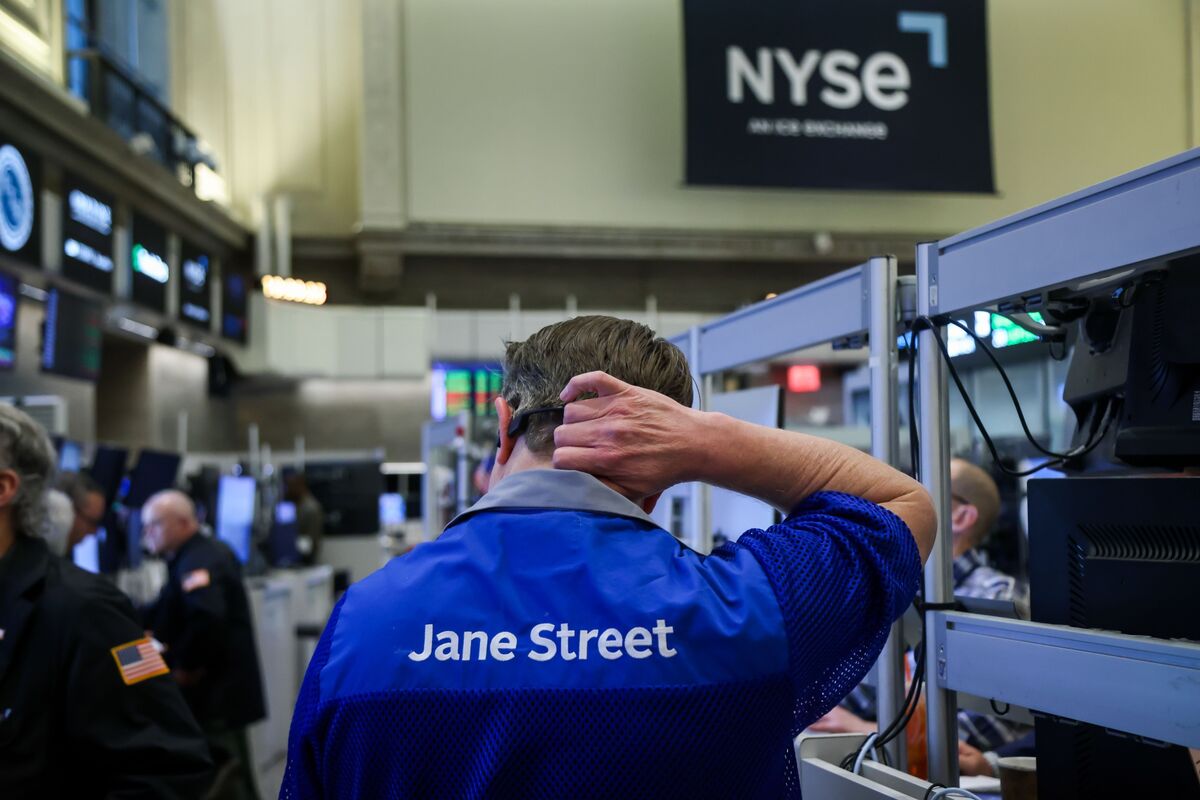
Jane Street (not a bank) reported a $15B loss in July, its first down month in a decade, driven by investments tied to Situational Awareness and some losing Asian equity positioning. Despite the drawdown, the firm is still up more than $40B in net trading revenue year-to-date—surpassing its full-year 2025 total of a record prior level—framing the move as a short-term risk signal rather than an ongoing collapse.
The important signal is not that a large private liquidity provider had a bad month; it is that the franchise could absorb a very large directional mistake without any sign of capital stress. That argues against reading this as a systemic market-structure break, so any knee-jerk move into bank-proxy de-risking is likely a short-lived reaction over days, not a months-long fundamental shift.
Second-order effects are more interesting than the headline. If a dominant market maker is pulling back in specific pockets, flow does not disappear — it migrates to exchanges, listed options, and other liquidity venues first. That is constructive for fee-based market infrastructure like CBOE/ICE/NDAQ, while being a headwind for public market makers such as VIRT if competition keeps compressing spread capture and inventory economics.
The contrarian read is that the consensus may be overreacting to one loss print and underestimating how much size and diversification matter in market making. The more relevant question is whether risk appetite was actually reduced in Asia/equities or whether this was a one-off wrong-way bet; the falsifier is any follow-on deterioration in quoted spreads, ETF/option volumes, or market-maker commentary over the next 1-3 months. If those stay healthy, the right conclusion is not fragility but brutal competition.
AI-powered research, real-time alerts, and portfolio analytics for institutional investors.
Request DemoOverall Sentiment
mildly negative
Sentiment Score
-0.35
Ticker Sentiment
