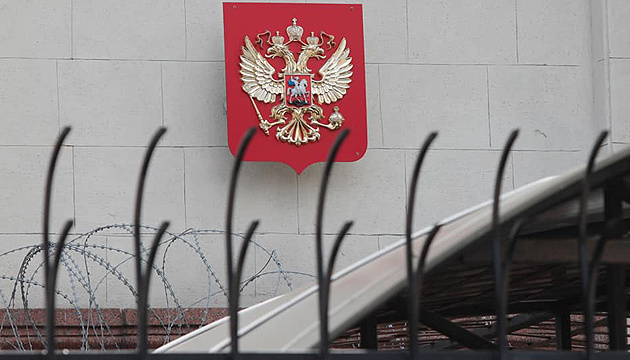
The EU said it will move forward with new sanctions targeting people involved in the deportation of Ukrainian children by Russia. Kaja Kallas also said the ceasefire sought by Putin was "cynical," while stressing that Ukraine had observed it unconditionally and Russia had repeatedly violated it. The announcement adds to geopolitical and sanctions pressure linked to the war in Ukraine.
The incremental market impact is less about the sanctioned individuals themselves and more about the policy regime shift: Brussels is signaling that humanitarian-linked abuses are now part of the sanctions toolkit, which widens the set of future targets and increases compliance burden across banks, logistics, telecom, and travel intermediaries with any Russia exposure. That matters because secondary screening tends to broaden after headline measures, raising friction costs for cross-border payment rails and counterparties that are one or two hops away from designated actors.
Second-order beneficiaries are European defense primes and missile-defense supply chains, but the timing is asymmetric: sanctions headlines tend to be supportive immediately, while any actual budget conversion from rhetoric to procurement typically takes 1-3 quarters. The more durable winner is the subset of defense names with bottlenecked capacity and long-duration backlog, because any escalation in sanctions usually coincides with higher NATO replenishment urgency and less tolerance for just-in-time inventory.
The main risk is that this becomes a noise event unless paired with enforcement or broader sectoral measures. If the next 2-4 weeks bring no follow-through on asset freezes, shipping restrictions, or bank de-risking, the market will fade the headline and refocus on ceasefire optics; conversely, a fresh escalation in attacks on civilians or evidence of expanded child-transfer networks would reprice the probability of wider EU measures. A key contrarian angle is that tighter sanctions can also harden Russia's wartime adaptation, pushing more activity into opaque intermediaries and reducing the near-term efficacy of symbolic measures while increasing long-term operational costs for European firms with Eurasia adjacency.
For portfolio positioning, the cleanest expression is to stay long high-quality European defense exposure and use any broad Europe risk-off spillover to add rather than chase; the catalyst window is 1-6 months, not days. The better hedge is to short or underweight European transport, logistics, and payment-sensitive names that face rising compliance and rerouting costs if sanctions expand beyond individuals into enabling networks.
AI-powered research, real-time alerts, and portfolio analytics for institutional investors.
Request DemoOverall Sentiment
mildly negative
Sentiment Score
-0.35
