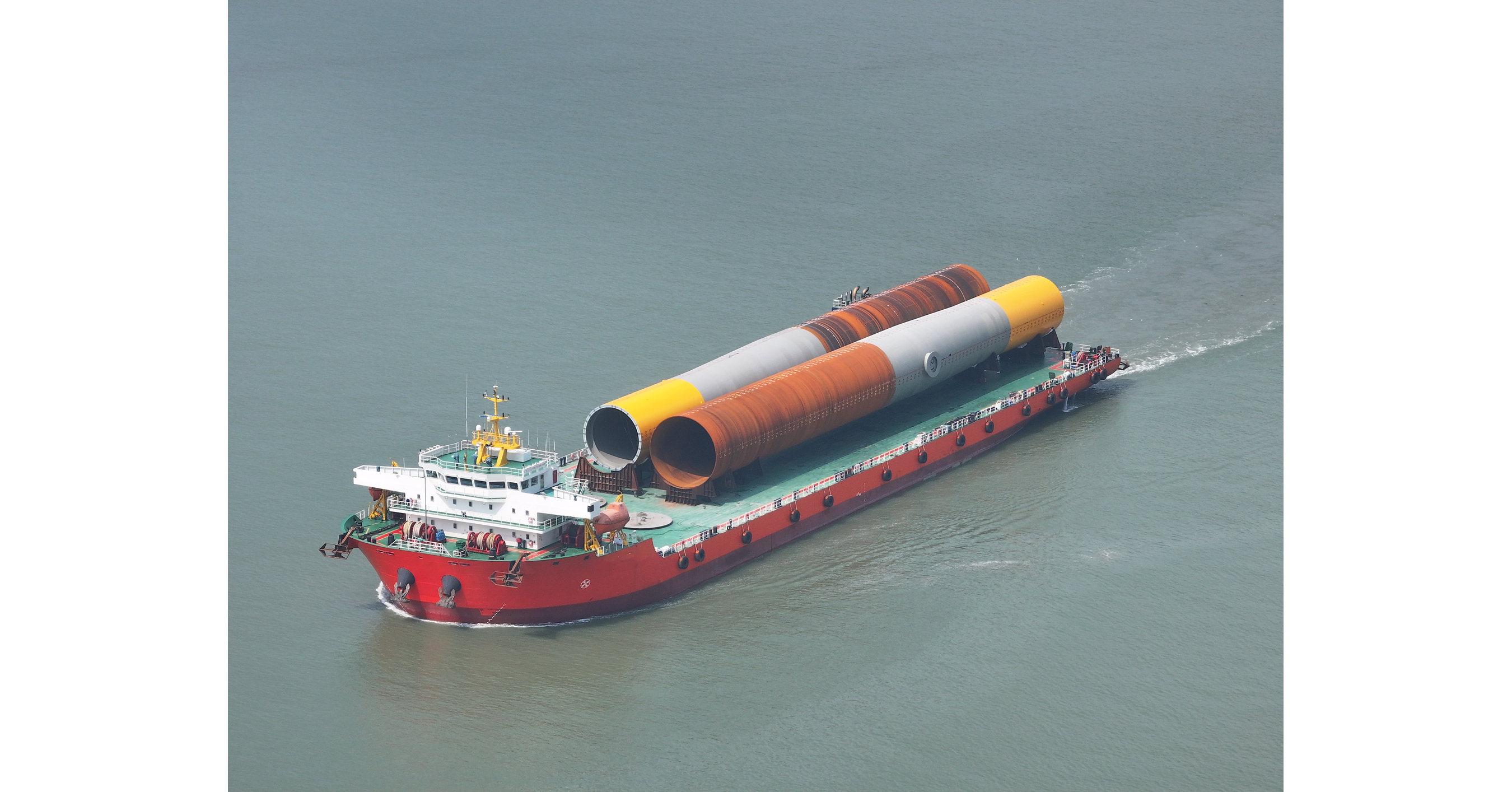
Rainbowco-Tochter ROC (Nantong Rainbow Offshore & Engineering Equipment) erweitert ihre Offshore-Wind-Fundament-Kompetenzen und Auslieferungsfähigkeiten, gestützt durch einen Produktionsstandort von ca. 500.000 m² sowie eine 800 m lange Uferlinie am Jangtse. Das Unternehmen nennt bisherige Lieferungen von knapp 800 Monopiles und baut zudem auf einem globalen Fertigungs- und Servicenetzwerk mit fünf Produktionsstandorten und ~30 lokalen Service-Standorten auf sechs Kontinenten. Insgesamt positioniert sich ROC zur Unterstützung des weiteren Wachstums im Offshore-Windsektor (ohne konkrete finanzielle Kennzahlen oder Guidance).
This reads less like a demand acceleration signal and more like a reminder that offshore wind is becoming a scale-and-logistics business. The economically important shift is that integrated Chinese fabricators with waterfront capacity can bundle engineering, assembly, coating, and shipping, which puts pressure on smaller Western monopile/jacket specialists whose advantage was once scarcity, not balance sheet strength. If export quality holds, the margin pool migrates toward integrated manufacturers and away from single-asset contractors.
The second-order loser is not just the obvious European foundation names, but any adjacent vendor that depends on project fragmentation: secondary steel, coatings, marine logistics, and installation services. That said, the sector’s real bottlenecks remain financing costs, permitting, and grid access, so added foundation capacity does not automatically convert into faster project starts or better developer IRRs. In the next 1-3 months, the key question is whether this shows up in new export contracts and utilization; over 6-18 months, it matters only if it translates into sustained margin expansion rather than promotional capacity claims.
The contrarian read is that the market may overestimate how immediately accretive this is for offshore wind developers and underappreciate the risk of policy pushback. Local-content rules, tariffs, or procurement scrutiny in Europe and the U.S. would blunt the export thesis and could even support domestic suppliers via protection. Falsifiers: no follow-on orders, flat backlog, or no gross-margin improvement despite the headline capacity narrative; if that happens, this is just industrial PR, not a durable competitive shift.
AI-powered research, real-time alerts, and portfolio analytics for institutional investors.
Request DemoOverall Sentiment
mildly positive
Sentiment Score
0.12
