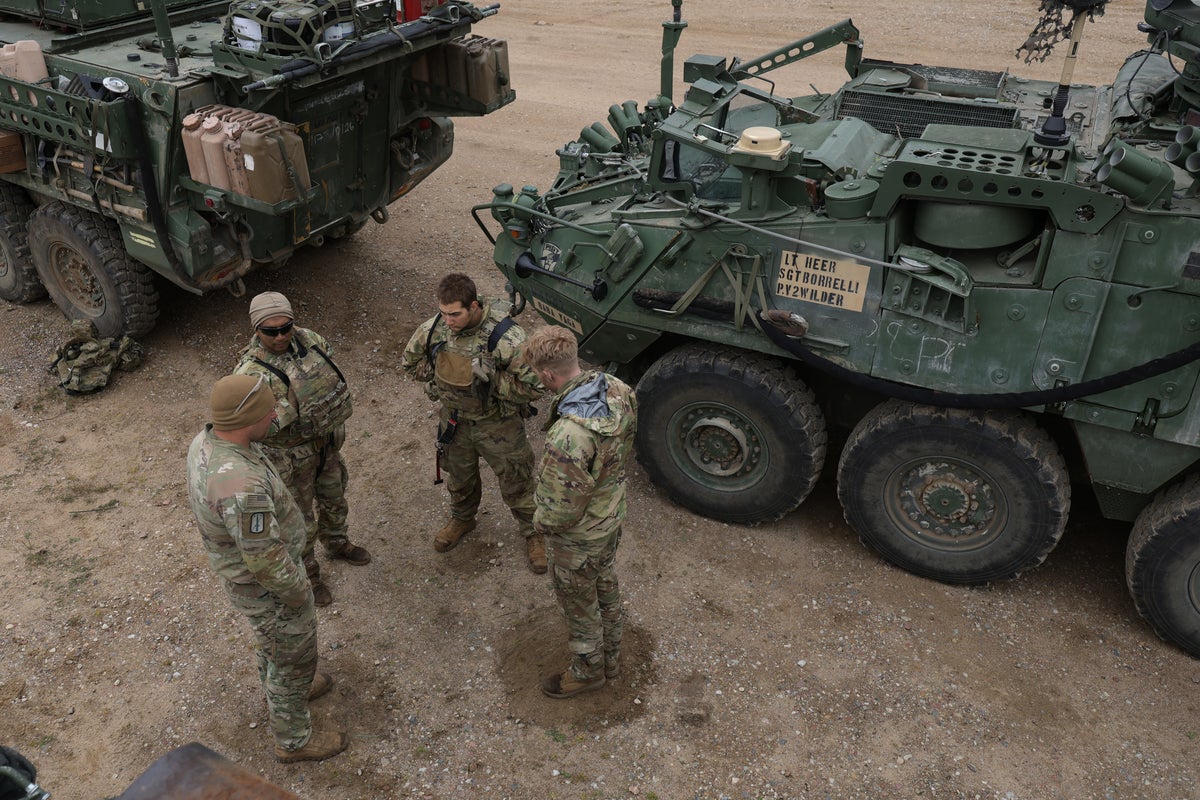
The Pentagon abruptly scrapped the planned temporary redeployment of 4,000 U.S.-based troops to Poland, deepening tensions with European allies amid the U.S.-Europe split over the Iran war. The move follows a previous decision to pull 5,000 troops from Germany and comes despite a congressional NDAA provision barring Europe troop levels from falling below 76,000. The surprise decision could affect NATO force posture and investor perceptions of transatlantic security stability.
The immediate market read is not about one troop rotation; it is about the growing gap between headline U.S. force posture and the legal/political floor imposed by Congress. That matters because European defense stocks have been priced on a multi-year ramp in rearmament, but an erratic U.S. umbrella is a faster catalyst for procurement urgency, especially in air defense, ammunition, ISR, and command-and-control. The first-order beneficiary is less “Europe defense” broadly and more the primes with local industrial footprints and backlog visibility tied to short-cycle replenishment orders.
Second-order, this increases the odds of a Europe-led procurement push that bypasses U.S. political uncertainty by shifting toward sovereign stockpiles and dual-source arrangements. That should help suppliers with European production capacity and hurt names reliant on a stable U.S. forward-deployment narrative for revenue normalization. In parallel, the uncertainty premium rises for transatlantic logistics, base-support contractors, and military transport exposure if rotational deployments become less predictable and more expensive on a unit-cost basis.
The bigger catalyst is not troop count, but precedent: if rotations can be reshuffled quickly, markets should expect more policy volatility in sanctions, basing, and alliance commitments over the next 1-3 months. That creates tail risk for NATO cohesion trades and supports a mild risk-off bid in European cyclicals if investors start to price a higher security premium and weaker growth impulse from defense friction. The contrarian angle is that Poland may actually gain, not lose, influence: the more unreliable the broader European posture looks, the more Warsaw can position itself as the indispensable eastern flank buyer, accelerating domestic defense capex and drawing U.S. industrial work.
The key thing the market may be missing is that uncertainty itself is a procurement catalyst. Even if troop levels stabilize, the signaling damage can front-load orders already budgeted for 2026-27, which is bullish for backlog-rich defense names before it shows up in revenue.
AI-powered research, real-time alerts, and portfolio analytics for institutional investors.
Request DemoOverall Sentiment
moderately negative
Sentiment Score
-0.35
