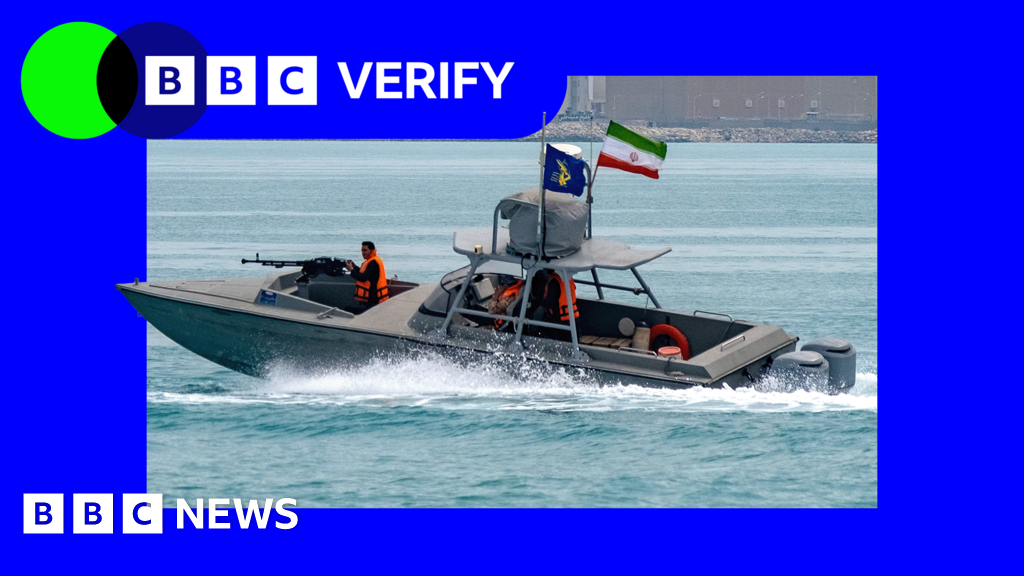
Iran says it is expanding claimed military oversight over more than 22,000 sq km around the Strait of Hormuz and says all transit requires authorization, raising fresh risks for a critical oil chokepoint. The US has redirected 94 commercial ships and disabled four vessels since its blockade of Iranian ports began on 13 April, while tensions are heightened by reports of tanker strikes and renewed US-Iran negotiations. The dispute increases the likelihood of shipping disruptions and broader energy-market volatility.
The market is underpricing how quickly a Hormuz “coordination” regime could become a de facto rolling premium on all Gulf-linked barrels, even without a clean closure. The first-order move is obvious in front-month energy, but the more durable effect is on freight, marine insurance, and inventory behavior: charterers will pull forward liftings, vessels will demand higher war-risk premiums, and refiners outside the region will bid up prompt crude to avoid headline risk. That tends to steepen the Brent curve near-term while simultaneously depressing longer-dated risk assets through higher input-cost uncertainty.
The more interesting second-order winner is not just upstream oil, but non-Gulf supply optionality. US shale, Brazilian offshore, and Canadian barrels gain relative bargaining power because customers will pay up for reliability, and any persistent disruption should widen Brent-WTI and widen differentials for Atlantic Basin grades that can substitute into Europe and Asia. Conversely, Gulf-state infrastructure, regional ports, and shipping/logistics names face a tail-risk regime where even short disruptions can freeze trade flows faster than physical damage would imply.
Catalyst timing matters: over days, the market can spike on any interdiction, drone strike, or boarding incident; over weeks, the key variable is whether Gulf states quietly de-escalate the legal-military theater or whether the US formalizes a tighter interdiction posture. The contrarian view is that Iran’s signaling may be aimed at raising negotiation leverage rather than sustained blockade capacity, so outright maximum-disruption pricing could fade if Gulf mediation produces a face-saving off-ramp. But the asymmetry remains skewed: the cost of a false negative on protection is much higher than the cost of paying a temporary risk premium.
AI-powered research, real-time alerts, and portfolio analytics for institutional investors.
Request DemoOverall Sentiment
strongly negative
Sentiment Score
-0.55
