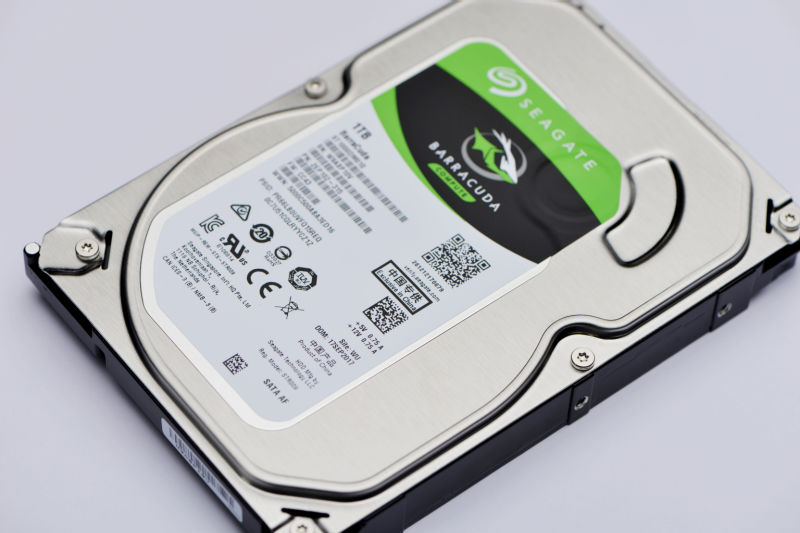
Seagate’s valuation outlook has strengthened sharply, with analyst price targets rising from $240 in October 2025 to $425 in January 2026 and $700 in April 2026, while the stock trades at $745.23 and 69.67x earnings. Analysts see EPS reaching $29 in calendar 2028 in the base case and up to $45 in a bullish case, supported by HAMR adoption, tight HDD supply, and nearline pricing gains of 8%-16% annually. The setup is constructive, but execution risk remains high given the stock’s elevated valuation and dependence on successful technology commercialization.
The market is pricing Seagate less like a cyclical hardware supplier and more like a constrained-capacity utility with a technology option embedded. The second-order effect is that tight HDD supply is not just lifting Seagate; it is forcing hyperscalers to accept longer contract tenors and higher storage ASPs, which should compress procurement flexibility across the cloud stack. That dynamic likely leaks into the ecosystem as a relative winner for firms tied to data-center expansion but a hidden tax on buyers that rely on cheap nearline storage economics.
The real catalyst is not first shipment of HAMR, but proof that qualification has crossed from engineering milestone into repeatable manufacturing yield. If yields stabilize over the next 1-2 quarters, Seagate’s margin inflection could come faster than consensus expects because every basis point of ASP retention flows through a still-fixed factory base. The risk is that the stock’s current multiple already discounts a near-perfect adoption curve; any slippage in customer migration or reliability testing could trigger a fast de-rating because the equity is now trading on 2028 outcomes, not next quarter’s prints.
Consensus seems to be underestimating how fragile the bullish case becomes if supply discipline breaks elsewhere in the industry. The strongest bear case is not HAMR failure per se, but competitors or adjacent storage technologies loosening the scarcity premium before Seagate has fully locked in volume share. That would pressure both the pricing umbrella and the narrative that the company can sustain mid-50s operating margins, leaving the stock vulnerable to a sharp multiple reset even if earnings still rise. Over a 6-12 month horizon, this is a classic “good story, expensive stock” setup with asymmetric downside if execution merely meets, rather than beats, expectations.
AI-powered research, real-time alerts, and portfolio analytics for institutional investors.
Request DemoOverall Sentiment
strongly positive
Sentiment Score
0.72
Ticker Sentiment
