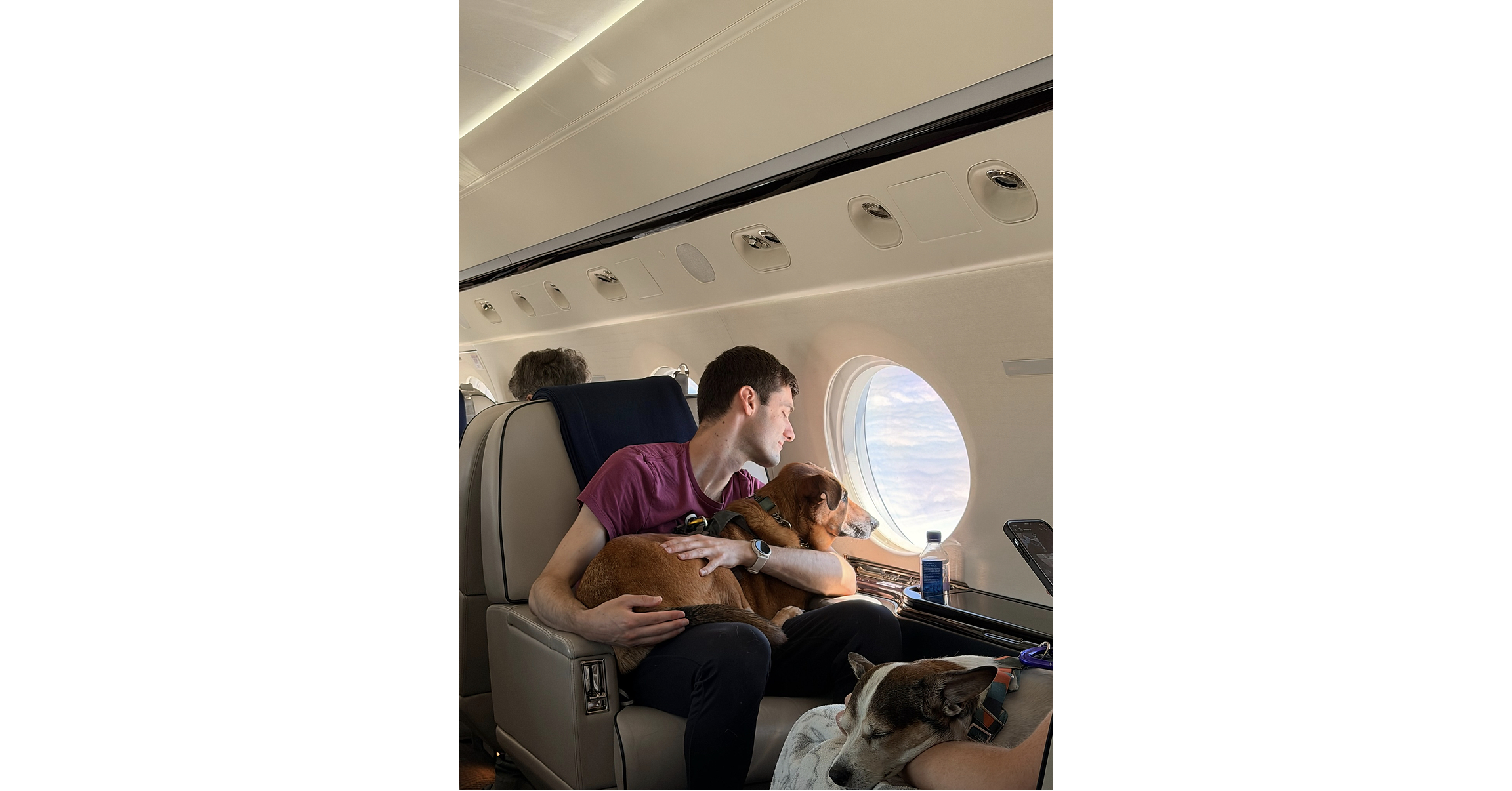
Vicuna Air launched „Vicuna Waypoints“, expanding its pet-first service beyond flights with concierge-coordinated express and scenic multi-day routes connecting European cities with transatlantic hubs (including New York–Brüssel). The offering includes tier-friendly transfers, pet-friendly stops, hotels, and coordinated connections, with initial expansion focused on Northern Europe (via Brüssel for Paris/Amsterdam/Frankfurt and stopovers for Hamburg, Kopenhagen, Stockholm and Oslo). Overall, the move is a customer-experience enhancement but is unlikely to materially move markets given it’s a service introduction without quantified financial impact.
This is less a transport story than a packaging story: the economic value sits in converting a single premium flight into a multi-leg, high-touch itinerary with a much larger wallet share. The immediate winner set is not airlines broadly, but whoever controls booking, ground handling, and lodging on the route — the incremental margin should accrue to orchestration, not seat capacity. If this model works, it is a small but real proof that niche premium travel can monetize friction reduction as an ancillary, which is a better signal for travel-platform pricing power than for airline volume.
The second-order effect is competitive: the product pressures generic OTAs and self-assembled itineraries by making convenience the differentiator, while also creating a service moat that larger carriers are structurally bad at replicating. But this is still a niche demand pool, so near-term enthusiasm can outrun actual revenue contribution; the key question is whether repeat usage and partner attach rates show up within 1-3 months, not whether the press release sounds differentiated. If adoption is weak, the story becomes CAC inflation disguised as premiumization.
Contrarianly, the market may be underestimating how much of the economics could spill to hotels and ground transport, and overestimating the air segment itself. The real falsifier is operational friction: if pet-handling complexity creates service failures, cancellations, or insurance/claims costs, the brand can be damaged quickly even while the concept looks attractive on paper. Watch for route density, booking repeat rates, and whether the scenic option actually produces higher average booking value over 6-18 months.
AI-powered research, real-time alerts, and portfolio analytics for institutional investors.
Request DemoOverall Sentiment
mildly positive
Sentiment Score
0.15
