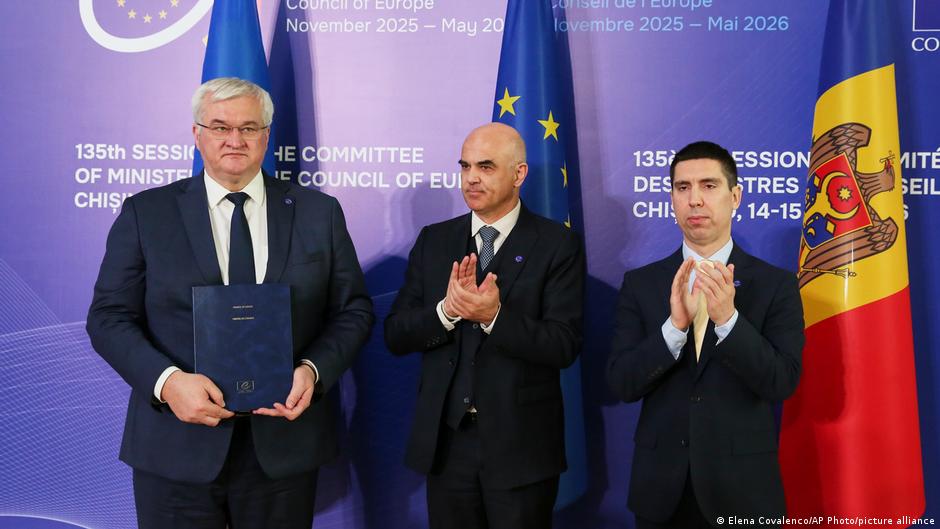
Thirty-four European countries, plus Australia, Costa Rica and the EU, signed onto a plan to create a special tribunal to prosecute Russia for crimes related to its invasion of Ukraine. The tribunal is designed to address jurisdictional gaps beyond the ICC, including the decision to launch the war and potential reparations, with The Hague set to host the initial phase. While largely symbolic at this stage, the move reinforces international legal pressure on Russia amid the ongoing war.
This is less about near-term legal enforcement and more about institutionalizing a durable capital-allocation regime against Russia: the market should think in terms of multi-year friction rather than immediate penalties. The meaningful second-order effect is on sovereign risk premia for any European asset class exposed to a prolonged sanctions architecture, because the tribunal creates another anchor point that makes eventual normalization politically harder and raises the probability of recurring secondary sanctions cycles.
The immediate winner is the Hague-based legal and compliance ecosystem: firms tied to international arbitration, sanctions screening, asset tracing, and cross-border evidence collection should see a multi-quarter revenue tailwind as governments and corporates prepare for documentation, investigations, and claims processing. The loser set is broader than Russia-linked entities; European corporates with residual Russia exposure, Turkey-adjacent logistics, and neutral-jurisdiction intermediaries face higher due-diligence costs and longer settlement/insurance cycles, even if they are not directly sanctioned.
The contrarian point is that the tribunal’s operational value may be overstated in the near term because enforcement depends on custody, cooperation, and asset access, all of which remain weak. That means the tradeable impact is likely asymmetric: sentiment can move quickly on headline escalation, but actual monetization of claims and reparations is a 12-36 month story. The more investable implication is not headline justice, but the increasing probability that frozen-asset debates and confiscation-by-stealth frameworks stay live, which keeps Russia risk embedded in European policy and defense spending assumptions.
Catalyst-wise, the key checkpoints are tribunal funding, participating-state ratification, and any move to extend the framework to asset seizure or reparations financing; those would materially increase market relevance. Conversely, a ceasefire, US diplomatic pivot, or fragmentation among EU holdouts would reduce urgency and compress the policy premium quickly, especially in sectors trading on extended conflict duration.
AI-powered research, real-time alerts, and portfolio analytics for institutional investors.
Request DemoOverall Sentiment
neutral
Sentiment Score
-0.10
