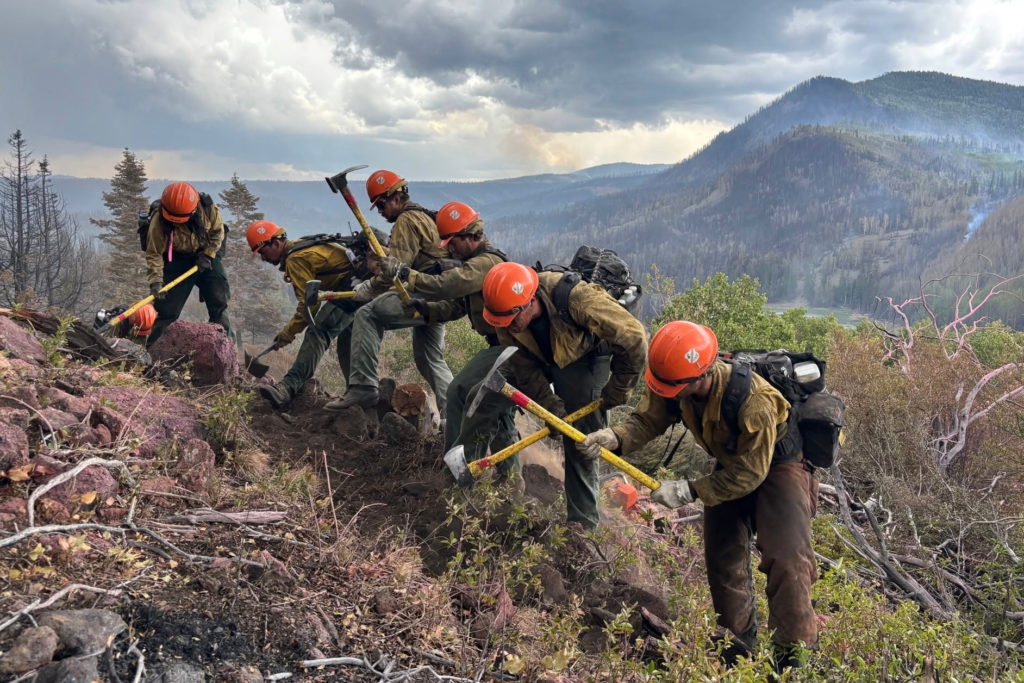
The Cottonwood Fire in southern Utah has grown to more than 144 square miles, making it the largest active wildfire in the U.S., with evacuations ordered in multiple communities and air quality worsening across the region. Wind gusts reached 45 mph and humidity fell into the single digits, grounding aircraft and forcing highway closures, while the Iron and Cherry fires near Salt Lake City are now 38% contained across about 91 square miles. The event is prompting red flag warnings, public safety power-shutoff watches, and temporary fireworks restrictions through July 5, with spillover risk for tourism and utility operations across the West.
The immediate market read-through is not the fire size itself; it is the compounding effect of wind-driven spread across an already stressed regional grid. That combination raises the probability of rolling shut-offs, delayed restoration, and precautionary de-energizations, which tends to hit the same cluster of assets in sequence: local utilities, regional tourism, and discretionary travel demand. The second-order issue is duration — if crews cannot safely attack by air during peak wind windows, containment math worsens quickly and the event stops being a one-off headline risk and becomes a multi-week operational drag.
The clearest beneficiaries are non-electrical backup and mitigation names: diesel gensets, battery storage, telecom resiliency, and water/portable shelter logistics. In the travel stack, the pain is asymmetric: park-dependent lodging, RV/camping, and drive-to leisure operators face a near-term booking stall, while larger national brands with diversified demand can absorb the shock. Defense-adjacent wildfire suppression suppliers and contractors also get a stronger bid if this season forces agencies to reallocate spend toward aircraft, retardants, and monitoring systems.
The contrarian point is that the market often overprices the first outage and underprices the second-order spend. A sustained fire season usually pulls forward capex into grid hardening, transmission reliability, fuel storage, and utility vegetation management, which can offset some of the “disaster” headline in utilities over a 6-18 month horizon. The real tail risk is not just damaged assets but a policy response that tightens restrictions and raises operating costs right into the holiday period, which would pressure regional demand more than the fire itself.
For energy markets, the fire is mildly supportive for regional power prices and diesel demand, but not a broad crude catalyst unless smoke and outages expand materially into transport corridors or refining assets. The bigger trade is volatility: short-dated event risk is high, but the macro spillover is still localized unless dryness persists into July and August, at which point the narrative can shift from a weather event to a structural utility and infrastructure earnings reset.
AI-powered research, real-time alerts, and portfolio analytics for institutional investors.
Request DemoOverall Sentiment
strongly negative
Sentiment Score
-0.62
