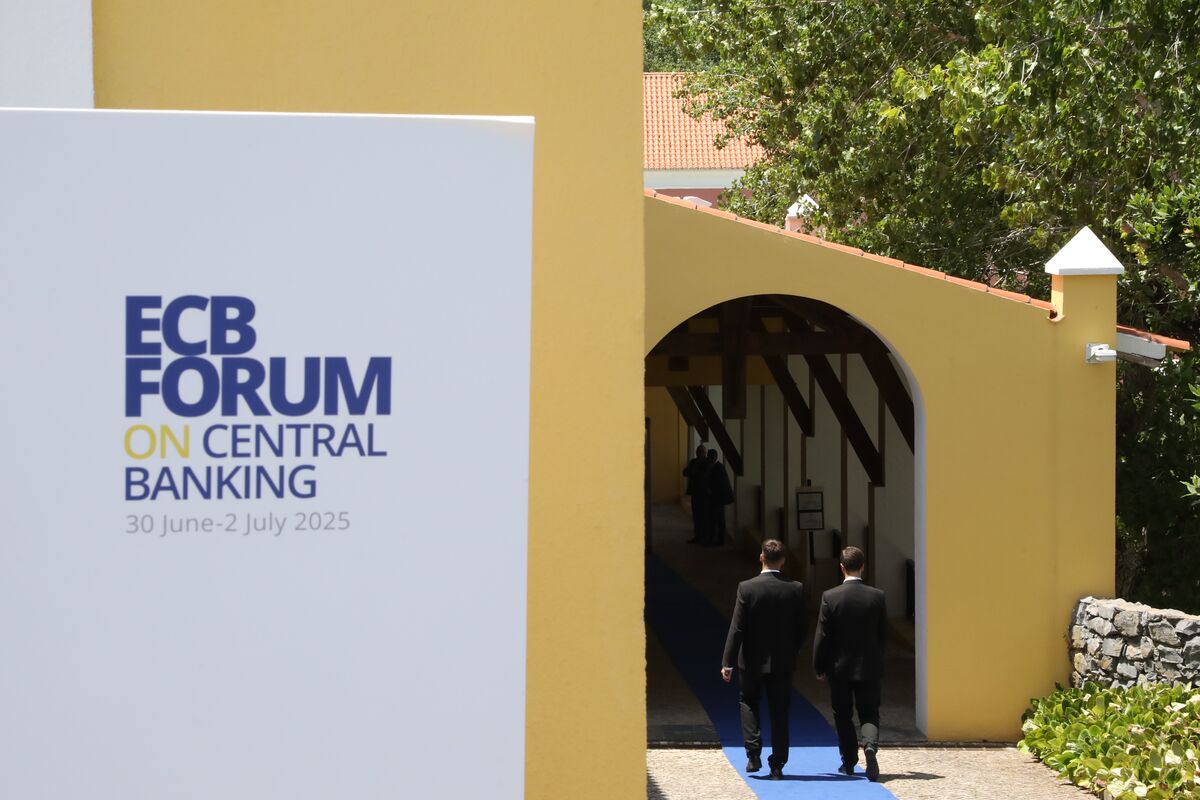
Fed Chief Kevin Warsh will make his first public appearance outside the US since taking office in May at the ECB’s annual symposium in Portugal, alongside Christine Lagarde and other 2008 crisis veterans. The article underscores lingering concerns about renewed financial turmoil, but it contains no policy decision, data release, or market-moving announcement. Overall impact is limited and mostly contextual for central-bank watchers.
This is less about the individual speaker and more about signaling. A high-profile cross-Atlantic central banking appearance by a crisis-era policymaker nudges markets toward a “higher-for-longer but coordinated” policy regime, which tends to flatten front-end volatility and compress the probability of a disorderly policy surprise over the next 1-4 weeks. That is mildly supportive for rate-sensitive assets only if investors read it as institutional continuity rather than a prelude to a policy pivot.
The second-order effect is on positioning, not fundamentals: crowded duration longs and soft-landing equity calls are most vulnerable if the symposium shifts expectations toward less easing and more tolerance for restrictive real rates. In that case, the immediate losers are long-duration growth, homebuilders, and highly levered balance-sheet names; beneficiaries are bank net interest margins and cash-rich value/defensive sectors that can absorb a steeper-for-longer path. Even absent a policy change, a surge in “crisis nostalgia” can keep term premium bid, which is bearish for multiples across the long end of equities.
The key risk window is days, not months. If the panel leans hawkish or emphasizes financial stability over growth, rates can reprice quickly via the front end first, then bleed into equities over 2-5 sessions as systematic vol-control strategies de-risk. The reversal trigger would be any explicit acknowledgement that disinflation is durable and cuts are coming sooner than expected; without that, the market likely treats the event as a reminder that central banks are still uncomfortable easing aggressively.
Contrarian angle: consensus may be underestimating how much investors want a dovish validation from elite policymakers, which makes disappointment asymmetric. A neutral-to-hawkish tone could hurt more than the absence of new information would suggest because positioning has leaned toward benign policy outcomes. That sets up a low-cost way to express a modestly defensive rates/equity view into the event.
AI-powered research, real-time alerts, and portfolio analytics for institutional investors.
Request DemoOverall Sentiment
neutral
Sentiment Score
-0.05
