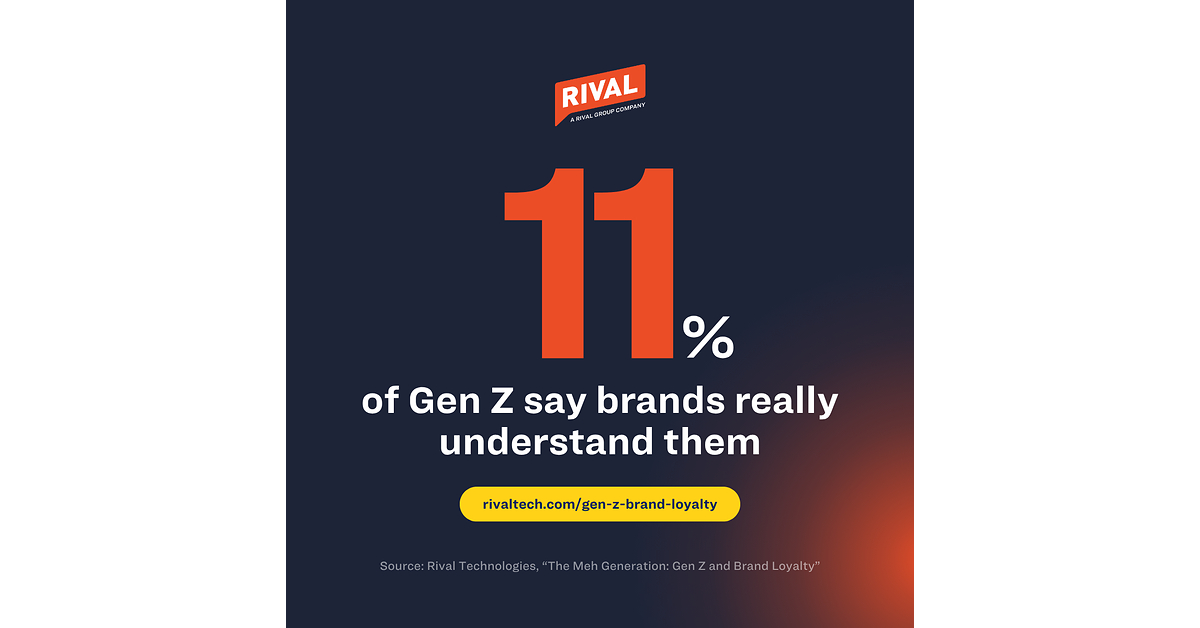
Rival Technologies’ study of 903 Gen Z consumers finds only 11% say brands understand them “really well,” and those who feel understood are 45% unconditionally loyal vs 5% for those who feel misunderstood (9x gap). Disengagement is widespread, with 64.5% responding “Meh/I don’t care” to brand messaging, while loyalty drivers skew to price/value (82%) and product quality (80%). Apple, Nike, and Costco/Kirkland lead the most-loyal brand mentions, but the findings suggest brands face a loyalty risk if they fail to meaningfully engage Gen Z.
The investable signal is less about “Gen Z likes Brand X” and more about which business models convert habitual use into retention without needing constant persuasion. That favors ecosystem and membership economics—AAPL, COST, and to a lesser extent AMZN/WMT private label—because switching costs and replenishment drive repeat revenue even when messaging is ignored. It is a quiet negative for brands that rely on creator-led awareness or “purpose” positioning to justify premium pricing; if the customer base is indifferent, those firms tend to defend share with discounting, which hits margins before top line.
The biggest near-term risk is not a sudden demand cliff but gradual CAC inflation: if marketing teams conclude influencer spend is low-ROI, budgets should rotate toward CRM, loyalty, and product innovation over the next 1-3 quarters. That is supportive for retailers and consumer platforms with first-party data, while pressuring brands that need paid media to manufacture relevance. For Starbucks and other habit-driven discretionary names, the test is whether Gen Z traffic holds up in real transaction data; if not, the survey suggests the cohort will be more price-driven than brand-forgiving.
Contrarian view: the market may overinterpret the “understood” framing. The actual decision stack is still price/value/quality first, so this is not a mandate to chase emotionally resonant marketing—it is a reminder that product economics matter more than message volume. The survey is self-reported and small, so the falsifier is simple: if upcoming earnings show stable full-price sell-through, repeat purchase, and no promo step-up, the implied loyalty problem is probably overstated. For RVTI, the study validates the category, but it is more a lead indicator for enterprise research spend than a direct equity catalyst.
AI-powered research, real-time alerts, and portfolio analytics for institutional investors.
Request DemoOverall Sentiment
neutral
Sentiment Score
0.00
Ticker Sentiment
