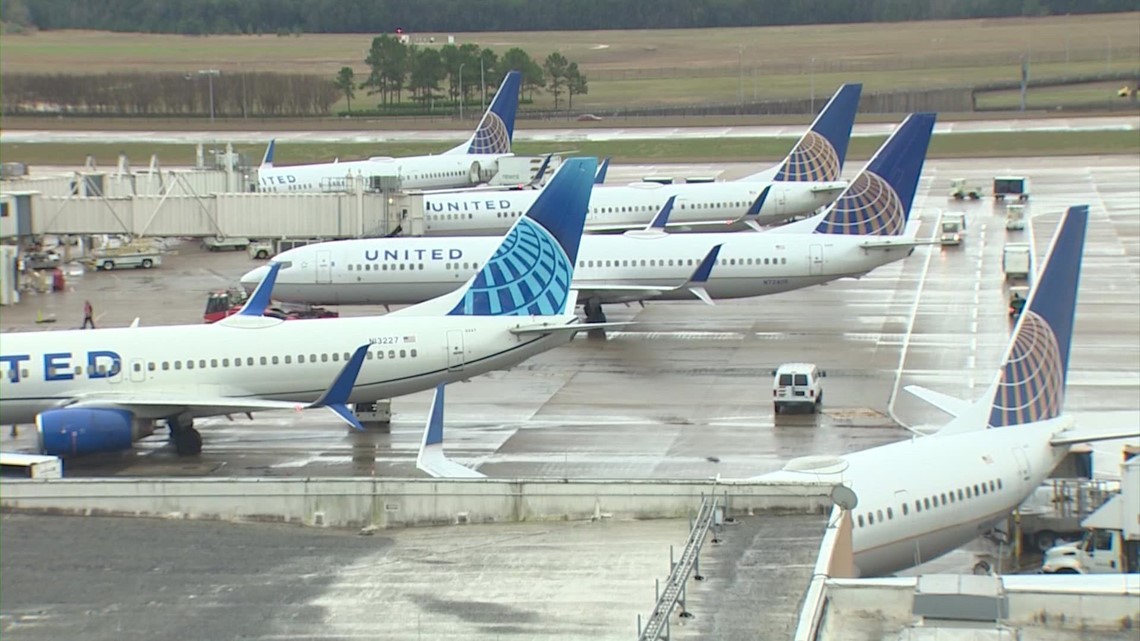
United Airlines Flight 579 from Cabo San Lucas to Houston was diverted to Monterrey, Mexico, due to a mechanical issue. The Airbus A320 had 143 passengers and five crew members on board, and everyone deplaned normally before United arranged another aircraft to continue to Houston. The incident is operationally negative but appears contained, with limited immediate market impact.
A single diversion is not a fundamental earnings event for UAL, but it does matter at the margin because airline stocks trade on operational reliability as much as unit revenue. The immediate cost is small; the bigger issue is reputational drag and the potential for a higher maintenance/inspection narrative to leak into investor perception if similar events cluster over the next few weeks. In a market already sensitive to any sign of operational slippage, even isolated incidents can widen the discount rate applied to labor- and maintenance-heavy carriers.
The second-order read is that disruptions of this type usually help network competitors only indirectly: passengers do not reroute their entire demand curve after one event, but they do become incrementally less forgiving of one-stop itineraries and schedule complexity. That can favor carriers with stronger punctuality or more resilient hubs over a multi-quarter horizon, especially in premium and business travel where reliability is monetized. The near-term beneficiary is not a direct rival from this one flight, but rather any airline with a cleaner on-time profile and fewer maintenance headlines.
The contrarian point is that this is probably being overinterpreted as a brand signal and underinterpreted as noise in a very large operation. Unless this is part of a broader maintenance trend, the stock impact should fade quickly, and any dip tied to the headline may be a better entry point than a reason to de-risk structurally. The real catalyst to watch over days to weeks is whether management commentary or FAA scrutiny turns an isolated event into a recurring operational-cost story; if not, the market should revert to pricing UAL on demand and margin trends rather than one-off disruptions.
AI-powered research, real-time alerts, and portfolio analytics for institutional investors.
Overall Sentiment
mildly negative
Sentiment Score
-0.15
Ticker Sentiment
