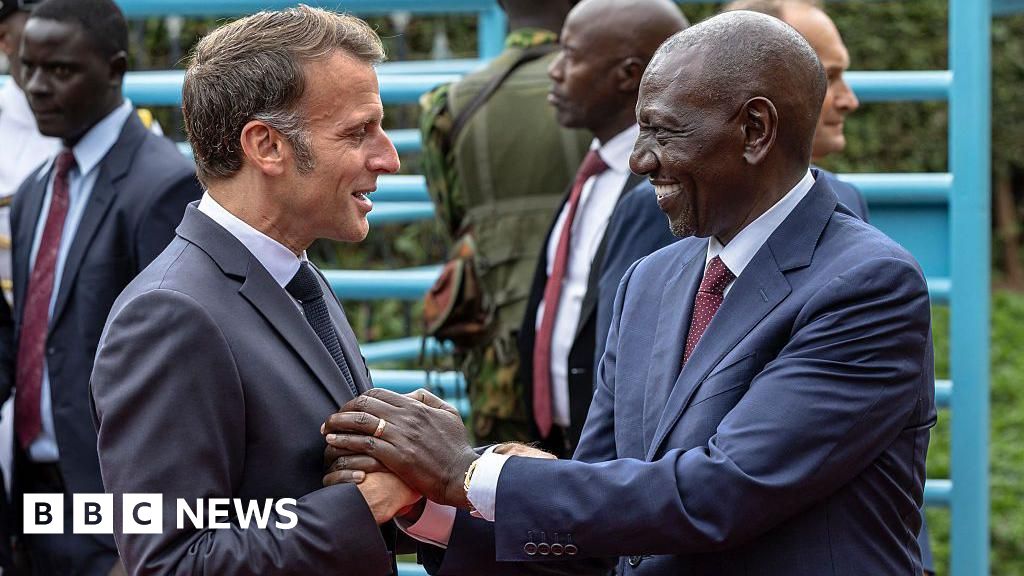
France announced $27bn of investment commitments in Africa at the Africa Forward Summit in Nairobi, spanning energy transition, digital and AI, maritime, and agriculture, with officials saying the plans could support about 250,000 jobs. The summit signals a shift away from France's traditional Francophone-only approach as it seeks broader partnerships amid rising anti-French sentiment in West Africa and growing influence from China, Russia and Turkey. Kenya is positioning itself as a bridge-builder and expects additional foreign investment in infrastructure, renewable energy, technology and even early-stage nuclear cooperation.
The investable signal here is not a single deal headline; it is France acknowledging that influence in Africa is shifting from security guarantees to capital allocation, with Kenya as a lower-friction entry point. That matters for listed beneficiaries because it likely redirects European development finance, export-credit support, and private co-investment toward infrastructure, grid, logistics, and digital rails in East Africa rather than the more politically fragile Sahel corridor. The near-term winners are firms that can monetize public-private partnerships and long-duration concession pipelines; the losers are incumbent security-adjacent contractors and legacy French exposure that depended on privileged access rather than competitive economics.
The second-order effect is that Kenya’s role as a “gateway” could compress financing costs for projects that have been stuck in the 2-4 year bankability gap. If French capital and diplomatic support help derisk deals, local utilities, renewable developers, telecom infrastructure, ports, and logistics names should see a faster conversion of MOU backlog into capex execution over the next 6-18 months. A subtler read-through is that Europe may use Africa to secure optionality in energy transition inputs and digital infrastructure, which is supportive for midstream grid equipment, transmission, and industrial automation suppliers across the EM complex.
The main risk is political theater outrunning deal execution. Africa-facing summits often generate headlines first and funded projects second; if the promised investment package is not translated into signed project finance within 2-3 quarters, the market will fade the signal quickly. Another tail risk is backlash: any perception of paternalism, especially if defense cooperation expands while economic benefits lag, could reinforce the very anti-French sentiment Paris is trying to dilute.
Contrarian view: consensus will probably underappreciate how much this is a relative-value trade versus a directional Africa macro call. The opportunity is not broad EM beta; it is selective exposure to firms with French/EU strategic backing, procurement leverage, and Africa execution capability. The setup is more durable for infrastructure and energy-transition names than for discretionary consumer plays, because governments can sponsor capex even when private demand is uneven.
AI-powered research, real-time alerts, and portfolio analytics for institutional investors.
Request DemoOverall Sentiment
mildly positive
Sentiment Score
0.18
