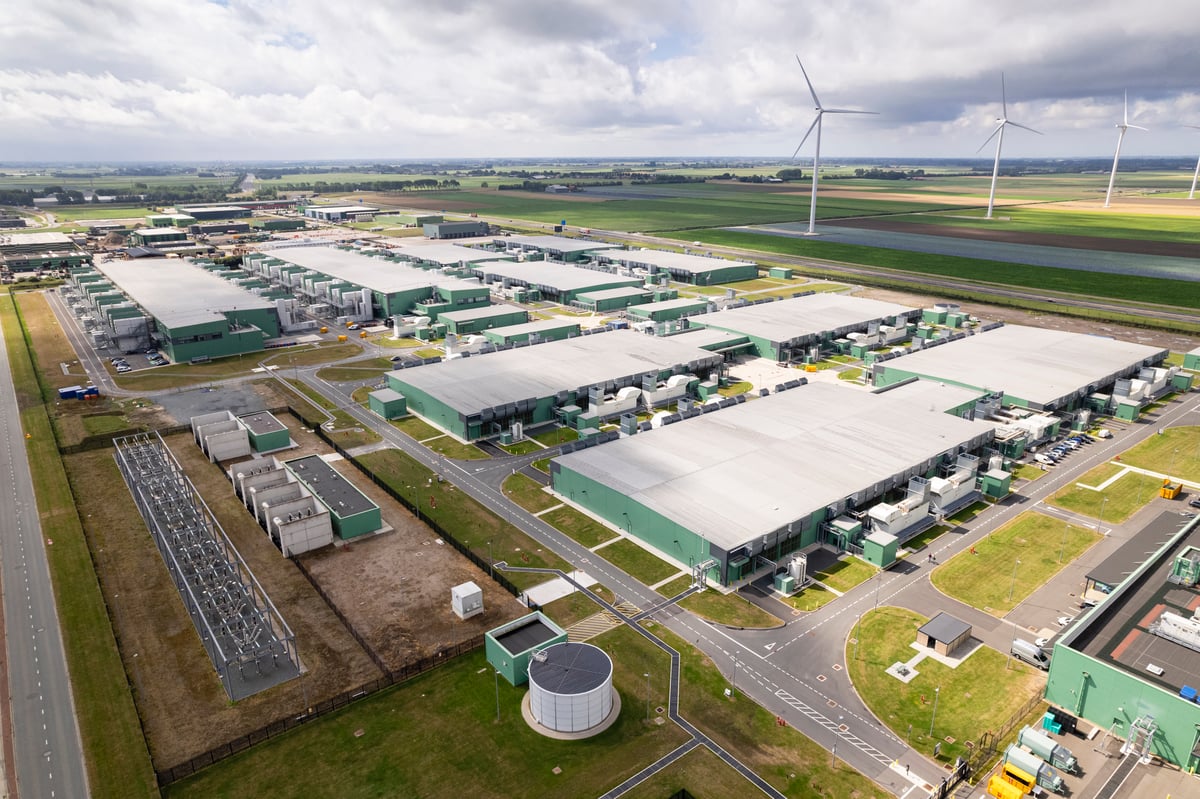
Morgan Stanley flags a potential 38 GW U.S. data-center power gap (68 GW needed for 2026–2028 vs. ~30 GW available/under construction), which would likely push developers toward faster behind-the-meter generation. GE Vernova reported a Q2 gas power backlog/slot reservations of 116 GW (vs. 100 GW prior year) and expects at least 125 GW under contract by year-end; Eaton’s Q2 data-center orders rose ~85% YoY with ~65% revenue growth, and it is expanding AI liquid-cooling exposure via its $9.5B Boyd Thermal deal expected to drive ~$1.7B in 2026 sales; Vertiv posted Q2 revenue up 24% to $3.27B, adjusted operating profit up 51%, adjusted EPS up 60% to $1.52, and adjusted FCF rising to $925M, with 2026 guidance around $14B revenue at the midpoint. Net: the thesis is structurally bullish for power-generation, grid/electrical, and cooling equipment tied to AI data-center buildouts.
The cleanest expression is not “AI beta,” but a bottleneck trade on power delivery. The market is still underappreciating how much of the next leg of AI capex migrates from semiconductors into electrical balance-of-plant, which favors ETN and VRT on a faster revenue conversion path, while GEV gets the most torque from the power-generation substitution effect. Second-order winners also include copper, specialty transformers, gas-turbine service, and EPC capacity; the losers are hyperscalers and colocation operators if they cannot secure power fast enough, because that pushes out utilization and delays monetization.
The main catalyst path is 1-3 months, not 1-3 years: order announcements, backlog conversion, and guidance raises matter more than headline construction plans. The risk is that a lot of the good news is already in the multiples, especially for ETN and VRT, so even strong fundamentals may not expand valuations if the market decides the constraint is supply-chain, not demand, and therefore only shifts revenue timing. For GEV, lead times on turbines and interconnect equipment can create a mismatch between backlog and cash conversion, so the stock is more exposed to execution slippage and working-capital drag than the narrative suggests.
Contrarian view: the consensus is probably too linear on the size of the addressable market and too optimistic about timing. A power shortage does not automatically translate into immediate earnings upside if utilities, permitting, gas infrastructure, and transformer availability remain the true bottlenecks; in that case, the winners are still real, but the path to EPS is slower and more volatile than the market implies. The thesis is falsified if hyperscaler capex growth decelerates, if order growth normalizes below high-teens/low-20s, or if supply constraints push out delivery schedules enough to cap near-term revenue recognition.
AI-powered research, real-time alerts, and portfolio analytics for institutional investors.
Request DemoOverall Sentiment
mildly positive
Sentiment Score
0.25
Ticker Sentiment
