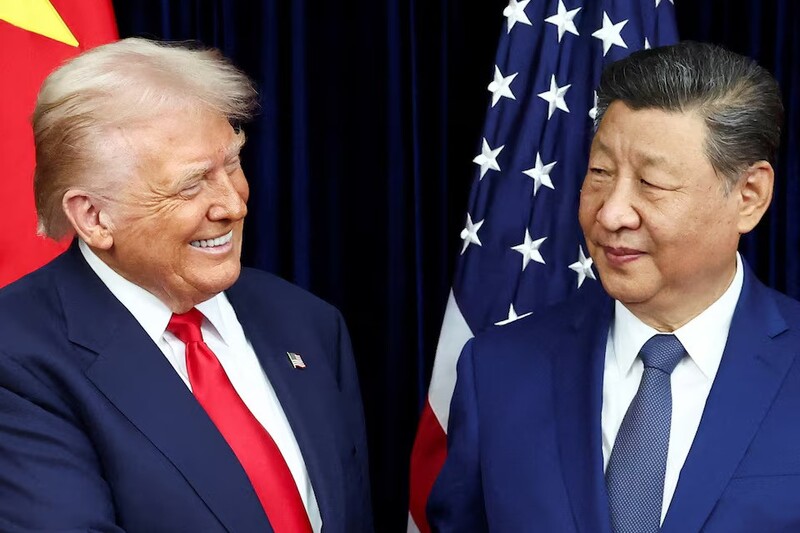
Oil jumped over 3% after the reported US-Iran peace deal fell through, signaling renewed geopolitical risk in energy markets. The article also notes Trump’s upcoming China visit from May 13 to 15, with trade tariffs, Taiwan, and Iran expected on the agenda. The combination of Middle East uncertainty and high-level U.S.-China talks raises the odds of volatility across crude and broader risk assets.
The immediate read-through is a higher geopolitical risk premium in crude, but the bigger trade is the renewed sensitivity of the oil complex to diplomatic headlines rather than fundamentals. When headline-driven risk appetite fades, energy often gives back part of the move quickly unless the event actually changes physical supply expectations; that makes this a better short-dated volatility expression than a directional macro bet. The move also reinforces a regime where rates, oil, and defense-related factor exposure can all reprice together on a single summit outcome.
The second-order beneficiaries are not just the obvious energy producers, but also names leveraged to higher inflation expectations and supply-chain friction. If tensions stay elevated, upstream service, midstream throughput, and U.S. energy infrastructure can outperform E&Ps because they are less exposed to outright commodity mean reversion. On the flip side, the trade-policy overlay raises the odds of renewed export-control noise around advanced semis and AI hardware, which matters for the two high-beta names in the data: any China-related escalation can compress multiple expansion even if fundamentals remain intact.
The market’s mistake is likely treating this as a simple oil-up / risk-off binary. In reality, the path of least resistance is a sequence of headline whipsaws: crude can stay bid for days, but the equity winners are more likely to be the implied-volatility sellers and the balance-sheet-strong energy names than the lowest-quality levered producers. If the summit produces even partial détente, the entire move can unwind fast because the premium is event-driven, not structural.
For SMCI and APP, the main risk is not direct commodity exposure but multiple compression from a more fragile U.S.-China tone; they should trade as barometers of policy uncertainty rather than pure earnings stories. That argues for using this tape to fade broad AI beta on rallies if the summit rhetoric turns hawkish, while keeping a tight stop because any constructive trade extension could trigger a short squeeze in the highest beta growth cohort.
AI-powered research, real-time alerts, and portfolio analytics for institutional investors.
Request DemoOverall Sentiment
mildly negative
Sentiment Score
-0.35
Ticker Sentiment
