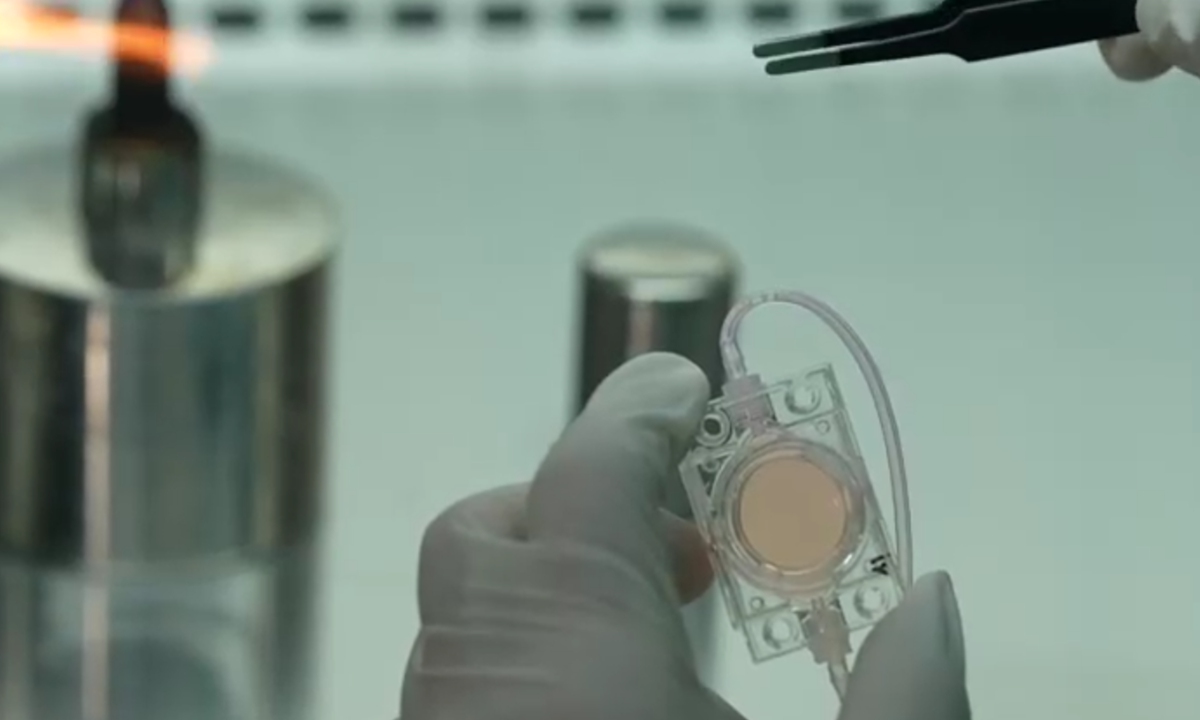
China launched Tianzhou-10 carrying 67 scientific items, including the world's first space experiment on stem-cell-derived "artificial embryos" to study early development under microgravity and cosmic radiation. The 5-day experiment could improve understanding of embryonic development and future human reproduction in space, with potential relevance for long-duration lunar or Martian habitation. The news is scientifically significant but likely limited near-term market impact.
This is less a near-term tradable catalyst than a signal that China is willing to fund frontier life-science experiments in orbit with state backing. The second-order winner is the microgravity research supply chain: sample handling, automated fluid exchange, cryogenic return logistics, and onboard bio-incubation hardware become higher-priority procurement categories for CAS-linked contractors and satellite subsystems vendors. The broader strategic read is that China is trying to compress the gap with US-led space biotech by using the space station as a reusable lab, which raises the odds of follow-on experiments and a larger budget envelope over the next 12-36 months.
For public markets, the main impact is reputational and policy, not earnings. The experiment increases optionality for Chinese space-health platforms, but monetization is still years away; any equity rerating would likely flow first to listed names exposed to space infrastructure, life science instrumentation, or radiation-hard components rather than pure research headlines. The more interesting second-order effect is on defense-adjacent and aerospace suppliers: repeated biological payload missions imply a steadier cadence of cargo and experiment flights, supporting utilization and procurement visibility in an otherwise episodic sector.
The contrarian angle is that markets may over-interpret this as immediate commercialization of space biotech. The real bottleneck is not proving that microgravity changes development, but translating that into a defensible IP estate and a repeatable therapeutic or fertility platform, which is a multi-year path with high failure risk. A bigger tail risk is regulatory and ethics backlash if the narrative shifts from basic science to reproductive experimentation, which could slow funding or limit international collaboration; that risk rises over months, not days.
AI-powered research, real-time alerts, and portfolio analytics for institutional investors.
Request DemoOverall Sentiment
mildly positive
Sentiment Score
0.18
