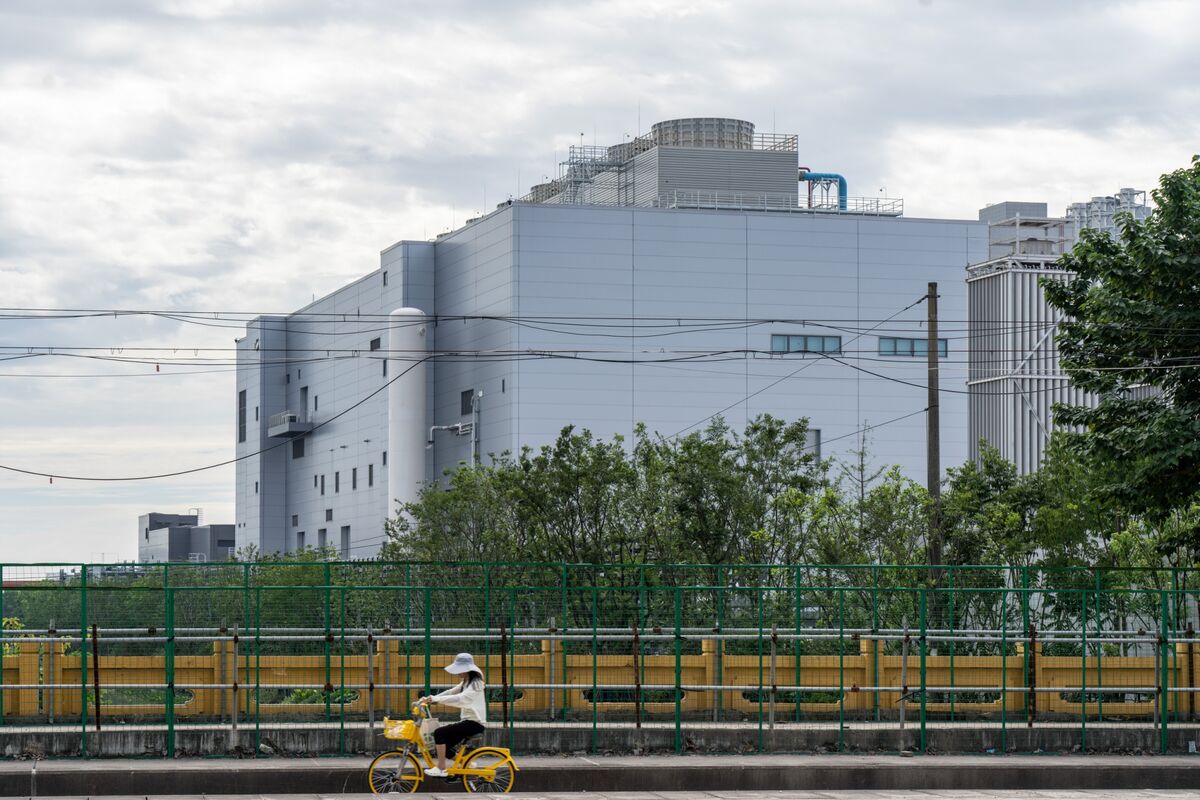
China’s AI push is backed by a reported $28T capital-markets strategy meant to reduce reliance on subsidies and state funding. CXMT Corp.’s Shanghai debut saw its memory-chip shares surge over 500% within hours, quickly topping China’s mainland leaderboard and signaling strong investor appetite for indigenous AI supply chains. The move directly targets reduced foreign dependence and competitiveness versus the US in AI.
This is less a single-stock AI story than a signal that Beijing wants markets, not only bank balance sheets, to finance strategic tech. The first-order winners are Chinese brokers, exchanges, wealth managers, and the higher-beta domestic AI/semicap complex; the second-order winner is likely turnover itself, because a sustained retail/speculative bid creates recurring fee revenue and faster capital recycling. By contrast, the big state banks are only partial beneficiaries: they gain underwriting/distribution economics, but they also risk being forced to carry more policy risk while household savings migrate into equities.
The consensus is probably overstating how quickly this closes the hardware gap versus the US. Capital can re-rate Chinese AI names in days, but advanced memory, lithography, EDA, and leading-edge packaging remain years-long bottlenecks; that limits the near-term threat to NVDA/AMD/AVGO/ASML fundamentals. The more immediate market effect is valuation dispersion: China-specific beta can outrun earnings, while US AI leaders may only see multiple pressure if investors extrapolate the policy shift into a full domestic substitution cycle.
Catalyst risk is two-sided. Over 1-3 months, watch for breadth of participation, margin financing, and IPO cadence; if the rally stays concentrated, regulators can cool it quickly and unwind the move. Over 6-18 months, the thesis only works if capital-market liberalization is allowed to persist through volatility; otherwise this becomes another policy-driven squeeze with limited structural impact. The contrarian view is that the bigger miss is not the chipmaker, but the plumbing around it: if market activity broadens, Chinese financial intermediaries could see a more durable uplift in fee income than the AI hardware names themselves.
AI-powered research, real-time alerts, and portfolio analytics for institutional investors.
Overall Sentiment
mildly positive
Sentiment Score
0.25
Ticker Sentiment
