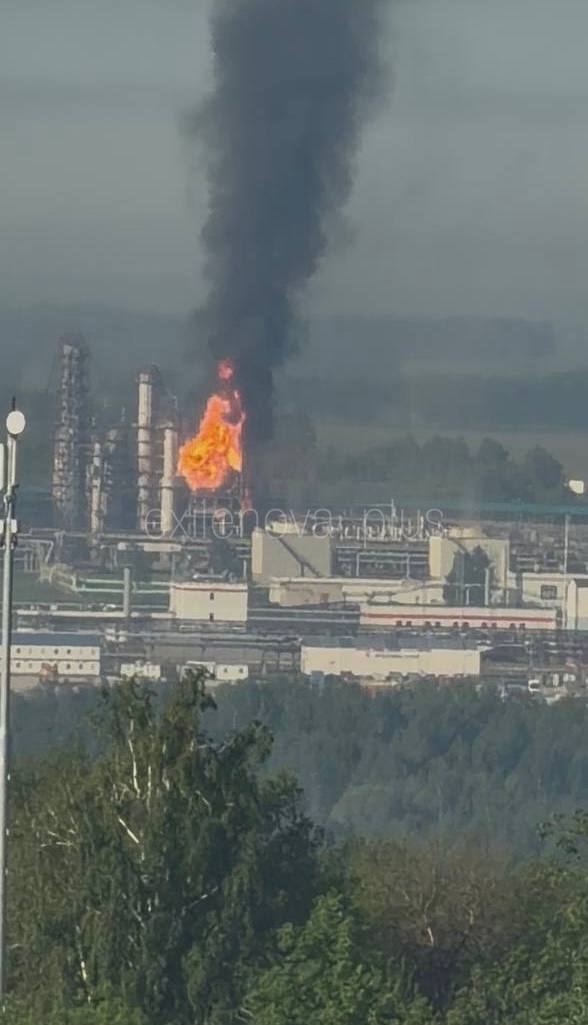
Ukraine said it struck one of Russia's largest oil refineries in Nizhny Novgorod for the second time in a week, hitting an AVT-6 refining unit and sparking a fire at the Lukoil-Nizhegorodorgsintez site near Kstovo. The article also reports additional drone strikes on Russian command posts, ammunition depots, and the Nevinnomyssk Azot fertilizer plant, a key producer of ammonia and ammonium nitrate used in explosives. The attacks underscore escalating pressure on Russian energy and industrial infrastructure, with potential implications for fuel supply and defense production.
This is less about a single refinery outage and more about a regime shift in Russian downstream risk premia. Repeated hits on the same high-complexity asset suggest Ukraine has moved from symbolic disruption to a campaign that raises the probability of unplanned downtime, maintenance deferrals, and precautionary throughput reductions across the broader Russian refining network. The market should focus on the second-order effect: even if physical damage is contained, insurance, logistics, and operational continuity costs rise non-linearly when key conversion units become recurring targets.
The near-term winner is not just global crude, but refined-product differentials. Any sustained impairment to Russian gasoline, diesel, or aviation fuel output tightens the Atlantic Basin middle-distillate balance faster than it tightens headline Brent, because product exports are less fungible than crude and the system has less spare conversion capacity than spare extraction capacity. That creates upside for refiners with access to advantaged feedstock and stable domestic logistics, while pressuring transport-heavy end users that are already margin-sensitive to diesel.
The larger tail risk is escalation into broader infrastructure targeting: once drones demonstrate repeatability against petrochemical and fertilizer assets, the market should price in intermittent supply shocks to diesel, naphtha, ammonia, and explosives precursors over a 1-3 month horizon. The contrarian point is that the immediate price response may overstate durable supply loss if Russia reroutes crude away from damaged units or temporarily exports more unrefined barrels; in that case the bigger move will be in crack spreads and freight rather than Brent itself. If attacks continue weekly, however, the probability of a sustained Russian product export disruption rises materially, and that is where the convexity sits.
AI-powered research, real-time alerts, and portfolio analytics for institutional investors.
Request DemoOverall Sentiment
strongly negative
Sentiment Score
-0.55
