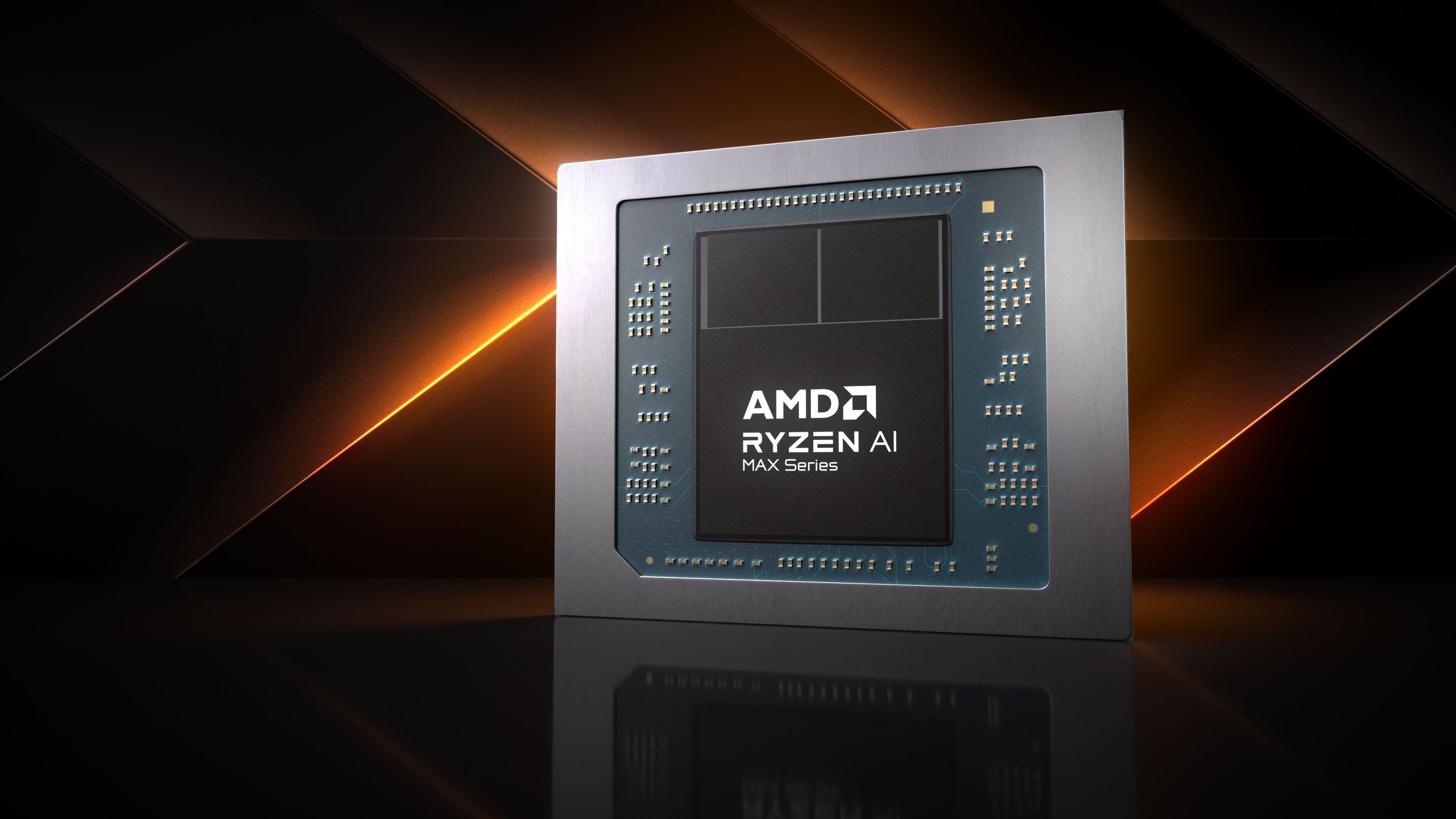
AMD is refreshing its Ryzen AI Max lineup with Gorgon Halo chips that support up to 192GB of unified memory, up from 128GB on Strix Halo, and the flagship Max+ Pro 495 boosts to 5.2 GHz. The company also confirmed Ryzen AI Max Pro 400 systems from OEM partners are expected to be announced starting in Q3 2026, while Ryzen AI Halo pre-orders open in June at a $3,999 starting price. The update is supportive for AMD’s AI PC and edge-AI positioning, but it is a minor refresh rather than a major new product cycle.
AMD’s real signal is not the incremental CPU/GPU refresh; it is the push to normalize workstation-class local inference as a premium endpoint category. The 192GB unified-memory ceiling, even if supply-constrained, moves AMD into a narrow but important lane where the bottleneck shifts from raw FLOPS to memory residency for larger models and agent workflows. That gives AMD a differentiation wedge versus Intel in x86 and forces NVIDIA to defend a more expensive, more power-hungry stack for on-device AI development.
The near-term commercial impact is likely limited by two frictions: component availability and channel economics. If DRAM remains tight, the highest-memory configurations may become allocation-limited halo products, which supports ASPs but caps unit volume and creates launch slippage risk. That matters because these systems are being sold on payback math; any rise in memory cost or elongation of lead times pushes the breakeven window out and makes procurement teams more skeptical.
For Apple, this is a small but real reminder that unified-memory messaging is now a competitive battleground beyond the Mac. However, ARM remains the more credible native platform for ultra-large local workloads, so the AMD move is more of a pricing and availability threat than a platform threat. NVIDIA is the cleaner short-term loser in this specific form factor: if AMD can make x86 Linux boxes acceptable for agent developers at materially lower total cost, some budget that would have gone to DGX Spark-style systems can migrate down-market.
The contrarian view is that the market may be overestimating the TAM. These are still niche systems for developers and labs, not mass enterprise endpoints, and the first-order effect may simply be margin expansion on a few hundred high-ASP boxes rather than a meaningful share shift. The better setup is to treat this as a sentiment-positive AMD catalyst with low earnings beta, while watching for evidence that OEM partners actually ship in Q3 and that memory costs do not erase the product’s value proposition.
AI-powered research, real-time alerts, and portfolio analytics for institutional investors.
Request DemoOverall Sentiment
mildly positive
Sentiment Score
0.20
Ticker Sentiment
