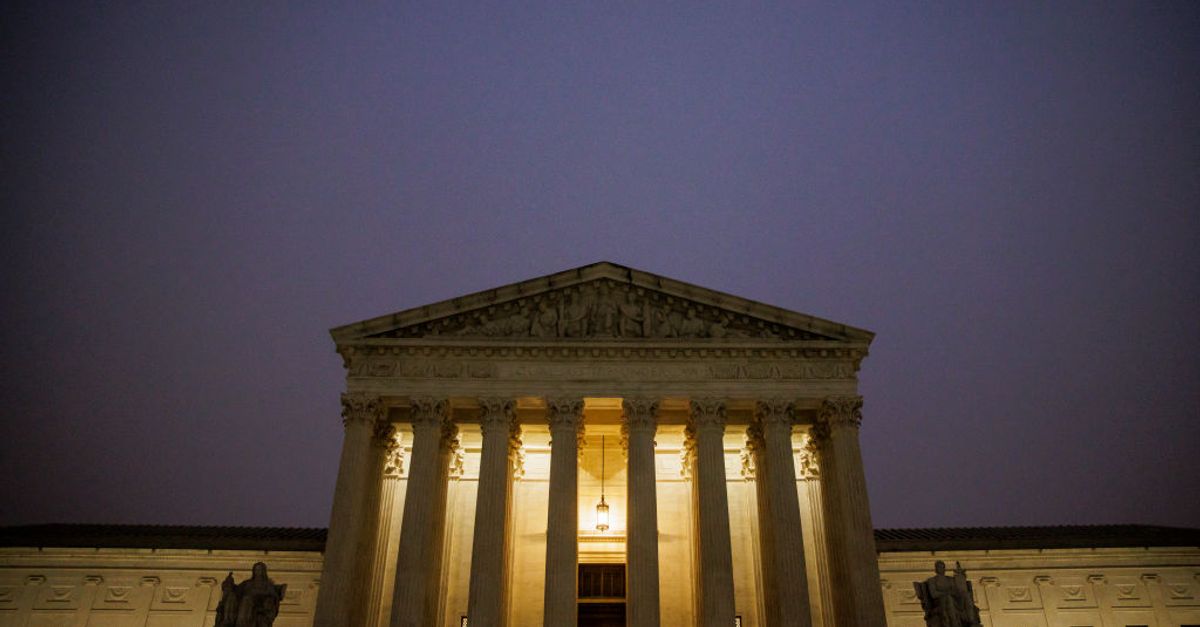
The Virginia redistricting dispute remains before the U.S. Supreme Court, with Republican legislators asking justices to leave in place a Virginia Supreme Court ruling that invalidated a constitutional amendment enabling a new congressional map. The overturned amendment had passed voters by roughly 3 percentage points, and the state court said the legislature used improper procedures because its first approval came after ballots were already being cast in the 2025 general election. Virginia officials now say the 2026 map will not be used, reducing immediate election-admin risk but leaving the legal fight unresolved.
The immediate market read is not about Virginia politics; it is about whether courts or deadlines set the effective strike price on state-level redistricting optionality. If the Supreme Court declines to intervene, the 2026 map shifts from a live asset to a stranded political derivative, reducing the probability of a near-term Democratic seat pickup and forcing both parties to reprice House control odds for the midterm. That matters because House majority pricing is highly sensitive to just a handful of districts; even a small procedural reversal can move national fundraising, candidate recruitment, and paid media allocation over the next 6-12 months.
The second-order effect is on the broader redistricting arms race. A clean win for state procedural opponents would encourage litigation in other states where map changes depend on voter approval or compressed legislative timing, raising the cost of late-cycle gerrymanders and making courts a more important bottleneck than ballot initiative success. That would likely favor incumbency and volatility in names exposed to election-administration intensity, while reducing the market’s willingness to price aggressive 2026 structural shifts until courts clear them.
The key tail risk is timing: if the Court grants emergency relief, the move could re-open a path to a map change with only months of runway, creating a fast reversal in district expectations and a short-lived spike in political ad demand in the targeted seats. But the base case is that procedural objections and administrative deadlines dominate, which means the biggest beneficiaries are not the map-drawing side but the status quo coalition and any businesses that dislike headline-driven campaign volatility. The contrarian takeaway is that this is less about Virginia and more about a legal precedent that could slow the national redistricting trade by 1-2 cycles, trimming the odds of a broad “wave” narrative in 2026.
AI-powered research, real-time alerts, and portfolio analytics for institutional investors.
Request DemoOverall Sentiment
neutral
Sentiment Score
0.00
