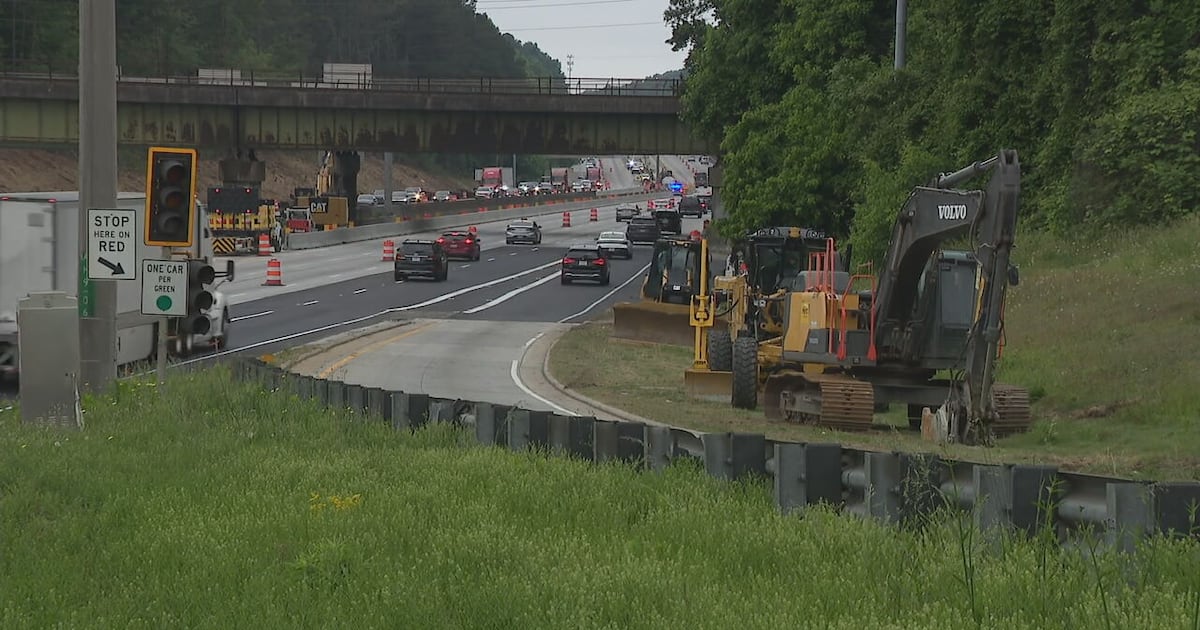
A full closure of I-285 between MLK Jr. Drive and Cascade Road begins Friday at 7 p.m. and ends Monday at 5 a.m., with GDOT warning of "significant, region-wide delays." The shutdown is part of a $370 million westside rebuild to replace crumbling pavement and improve safety and ride conditions. Drivers are being directed to alternate routes via I-85, I-75, and Camp Creek Pkwy/Thornton Road.
A full-weekend hard closure on a key Atlanta beltway segment is less about a single congestion event and more about a temporary rewiring of regional freight and commuter flows. The first-order trade is obvious—local mobility stress—but the second-order effect is that even short duration highway outages can create inventory timing noise for retailers, parcel carriers, food distributors, and port/airport drayage operators that rely on just-in-time metro transit. The biggest incremental winners are firms with dispatch flexibility, dense alternative route networks, or modal optionality; the biggest losers are small regional carriers and last-mile operators that lack spare capacity.
The important nuance is duration: a 48-hour closure can still force pre-positioning costs starting Friday afternoon and lingering disruption into Monday morning, so the economic hit is concentrated but not trivial. Historically, these events compress demand into adjacent windows rather than destroy it, which means the real P&L impact often shows up as overtime wages, missed delivery SLAs, and higher fuel burn rather than permanent volume loss. That argues for near-term pressure on transportation efficiency metrics and potentially modest upside for congestion-tolerant beneficiaries like rail intermodal or third-party logistics firms with urban re-routing capabilities.
Consensus may be underestimating the signaling value of repeated infrastructure closures: if the rebuild is large enough to keep recurring, local shippers may start budgeting for chronic route fragility, which supports a longer-duration thesis on logistics resiliency spend. The contrarian angle is that a disruptive weekend can actually pull forward decisions on warehouse redundancy, route-optimization software, and fleet telematics. In other words, the macro economic impact is small, but the micro capex and software demand impulse could be outsized over the next 6-18 months.
AI-powered research, real-time alerts, and portfolio analytics for institutional investors.
Request DemoOverall Sentiment
neutral
Sentiment Score
-0.05
