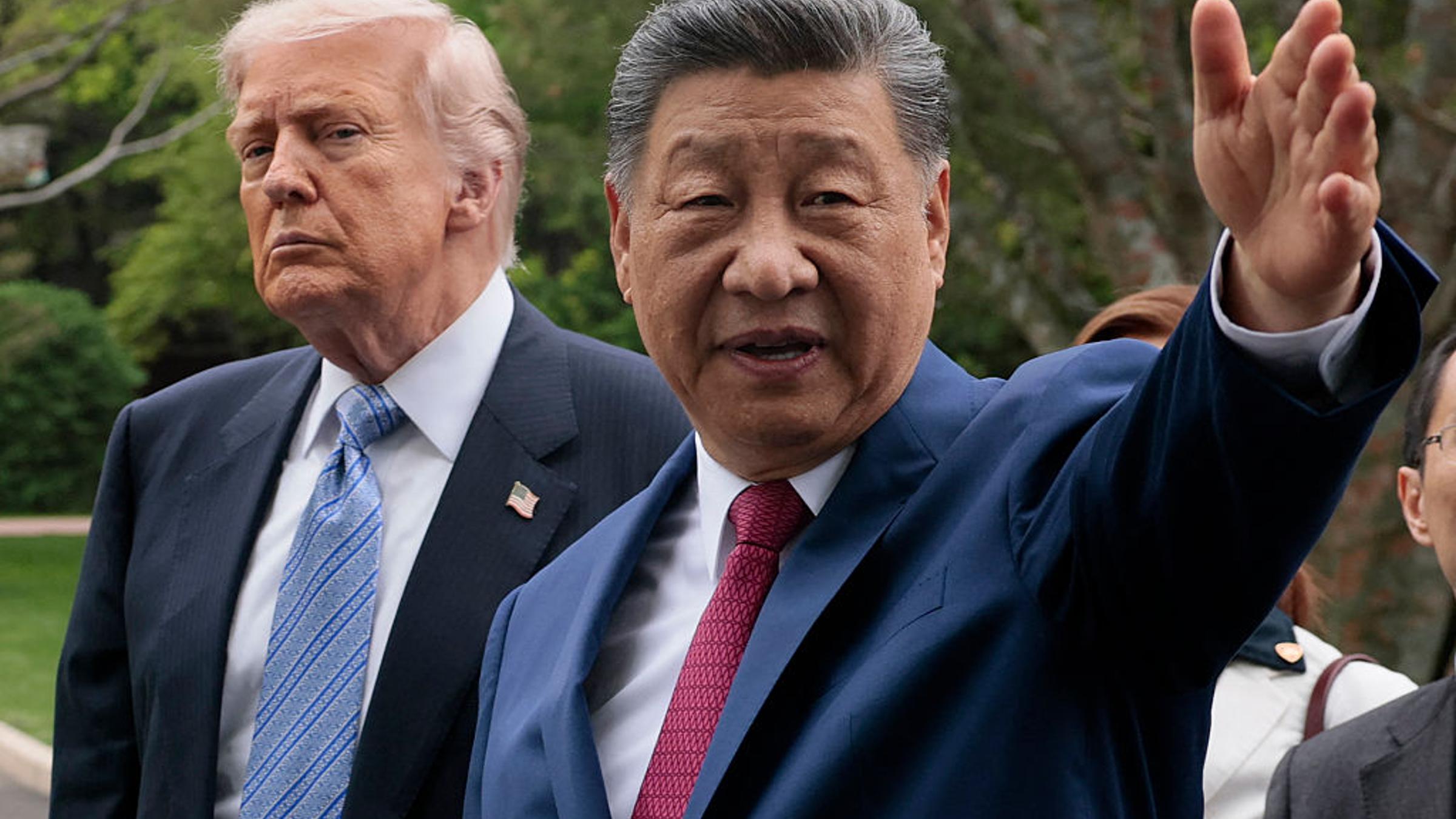
Xi Jinping invoked the 'Thucydides Trap' as U.S.-China tensions remain elevated across trade, AI, and Taiwan, signaling continued geopolitical risk rather than a policy breakthrough. The article emphasizes repeated warnings from both sides that conflict is not inevitable but remains possible if strategic miscalculation deepens. Market impact is modest but relevant for sectors exposed to China-U.S. friction, especially technology and defense.
The useful signal is not the rhetoric itself but the policy compression it implies: when both sides publicly frame the relationship as a managed strategic rivalry, the market should assign a higher baseline probability to episodic, state-directed disruption rather than linear escalation. That favors defense, cyber, and resilience capex over broad trade-exposed cyclicals. The second-order effect is that supply chains become less about lowest cost and more about redundancy, which incrementally benefits domestic manufacturing, logistics automation, and firms that can certify non-China sourcing faster than peers.
AI is the most asymmetric flashpoint because it sits at the intersection of export controls, compute concentration, and military dual-use. Even absent a headline event, the probability distribution shifts toward tighter semiconductor, cloud, and advanced packaging restrictions over the next 6-18 months, which is negative for China-linked hardware demand and positive for U.S. defense-tech and select infrastructure names that support data-center buildout and grid reliability. The losers are the firms with highest China revenue exposure and the weakest ability to re-route production or revenue to India, Mexico, or onshore capacity.
The contrarian read is that markets may be overpricing immediate kinetic risk and underpricing bureaucratic, slower-burn fragmentation. That means the best expression is not a crash hedge but a relative-value basket that benefits from policy friction without requiring war. If tensions cool tactically, these trades should still work because the underlying trend is de-risking and supply-chain bifurcation, not a one-off headline cycle.
Catalyst timing matters: days to weeks for tariff/export-control headlines, months for procurement and capex revisions, years for manufacturing relocation. Tail risk is a sanctions or Taiwan-related event that forces abrupt semiconductor and shipping repricing. The reversal case is a credible bilateral stabilization framework, but absent that, every summit likely just resets volatility lower for a few weeks before the next policy shock.
AI-powered research, real-time alerts, and portfolio analytics for institutional investors.
Request DemoOverall Sentiment
mildly negative
Sentiment Score
-0.15
Ticker Sentiment
