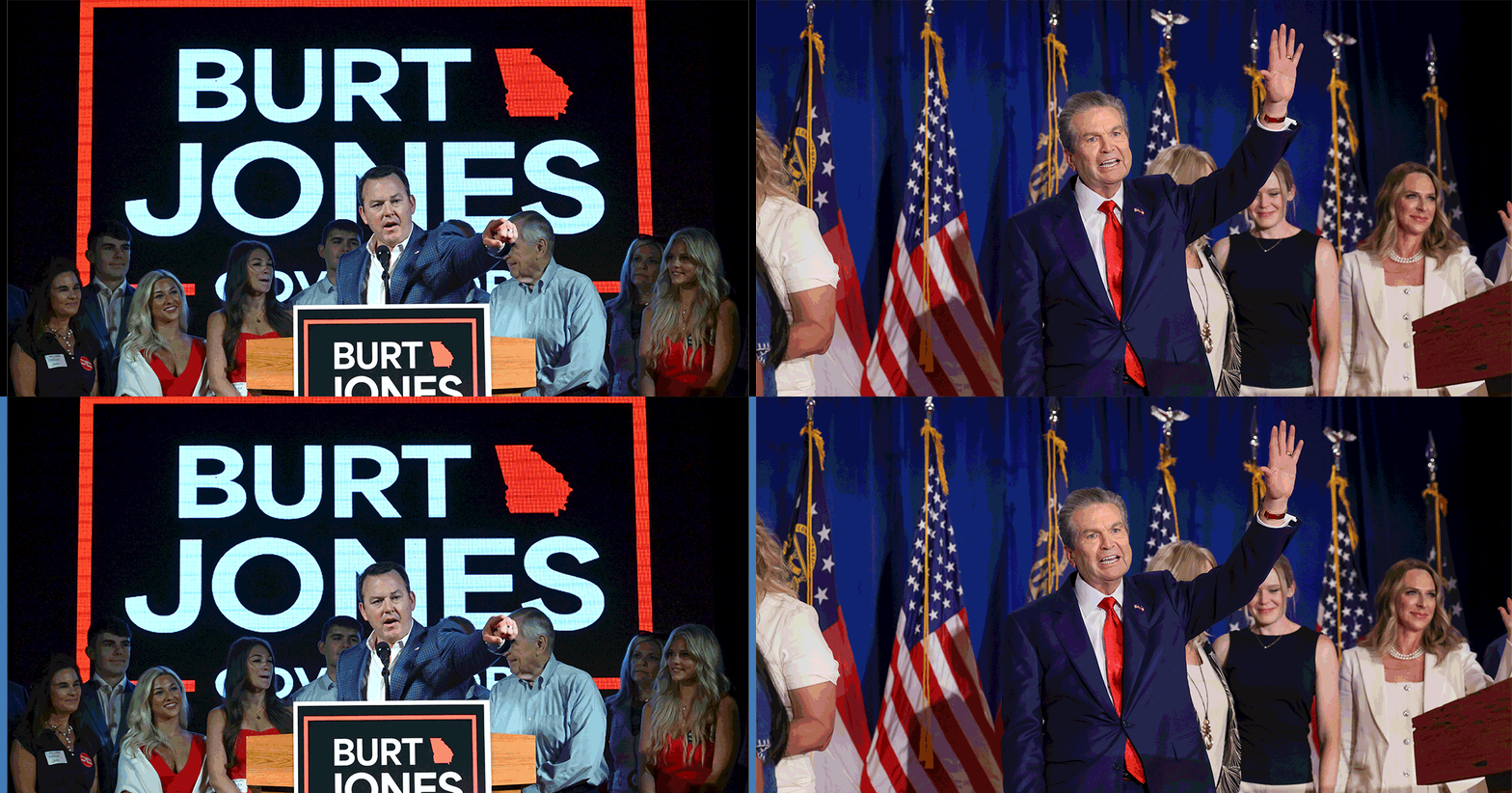
Billionaire Rick Jackson and Lt. Gov. Burt Jones advanced to a June runoff for the Republican nomination for Georgia governor after neither secured enough support in Tuesday’s primary. The field also included Attorney General Chris Carr and Secretary of State Brad Raffensperger, but the race was dominated by a nine-figure spending spree and attack ads, making the result a political rather than market-moving event.
The key market signal is not who advanced, but how expensive it has become to force a nomination in a fragmented primary. That usually benefits the eventual winner by hardening name recognition and donor loyalty, but it also leaves the victor more dependent on a narrow, highly activated base, which tends to pull general-election positioning toward the extremes and raises the odds of governance volatility once in office. In practical terms, the runoff extends uncertainty for another 4-6 weeks, but the real overhang is the post-runoff stitching together of rival donor networks and activist factions.
The second-order effect is that the spending intensity itself can become a liability: when a campaign is financed by a handful of ultra-wealthy backers, the winner inherits a perception problem that can suppress crossover support and complicate legislative coalition-building. That matters more in state-level politics than investors often assume, because it can shift appointment quality, procurement preferences, tax-policy rhetoric, and regulatory posture for months after the election. The market should also expect any runoff participant to spend the interim doubling down on identity-based messaging, which increases the probability of an error-driven headline that can move sentiment abruptly.
Contrarian view: the dominant read is that this is just another noisy red-state primary, but the more important point is that the runoff narrows the path to a cleaner, pro-business consensus candidate. If the eventual nominee is forced to appease the most polarizing faction, the odds rise of policy instability rather than outright policy change, which is usually worse for capital allocation. The risk is front-loaded into the runoff period; if fundraising and endorsement consolidation happen quickly after the vote, much of the headline risk decays faster than consensus expects.
AI-powered research, real-time alerts, and portfolio analytics for institutional investors.
Request DemoOverall Sentiment
neutral
Sentiment Score
0.00
