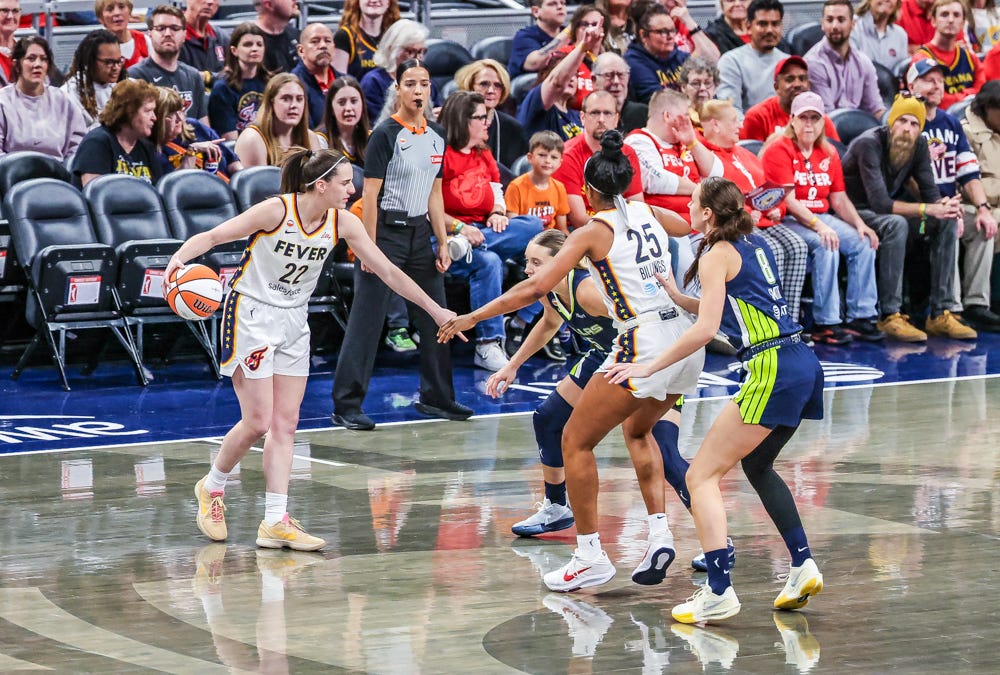
Caitlin Clark will miss Wednesday’s game against Portland due to a back issue, marking her first absence of the season. Indiana says the decision is precautionary, with head coach Stephanie White emphasizing that Clark is healthy and not dealing with a new injury. The Fever will use Ty Harris at point guard, and Clark is averaging 24.3 points, 5.0 rebounds, and 9.0 assists per game.
The immediate loser is not just Indiana’s win probability; it’s the integrity of the Fever’s on-court product, which has been carrying a premium audience and sponsorship halo tied to star availability. A one-game absence is usually noise, but in a stretched schedule it can alter usage, pace, and turnover profile enough to affect margin markets and live betting more than the outright result. The bigger second-order effect is reputational: management is signaling that preserving the player-traveling-ticket-equity tradeoff matters more than squeezing one extra regular-season game, which should reduce downside from a true overuse injury but raises short-term volatility in all Clark-linked derivatives.
The main catalyst window is the next 72 hours, not weeks. If she returns Friday, this reads as a one-game precaution and the market should mean-revert quickly; if she misses multiple games, the narrative shifts from maintenance to structural workload risk, which would pressure attendance, national viewership, and Fever-related team props. That distinction matters because the current pricing likely embeds a high probability of full participation after a hot stretch, so the first absence can create an overreaction in both fan sentiment and betting markets.
The contrarian view is that the absence may actually be constructive for medium-term equity in the team asset. A controlled reset now lowers the odds of a longer shutdown later, and the replacement profile is more stable than market participants assume because the offense can simplify into lower-variance possessions against a pressing opponent. If the next game is a normal minutes ramp, the selloff in Clark-exposure should be faded rather than chased; if the issue lingers, the real losers become broadcasters, ticketing, and any partner assets priced off her full-season attendance curve.
AI-powered research, real-time alerts, and portfolio analytics for institutional investors.
Request DemoOverall Sentiment
mildly negative
Sentiment Score
-0.12
