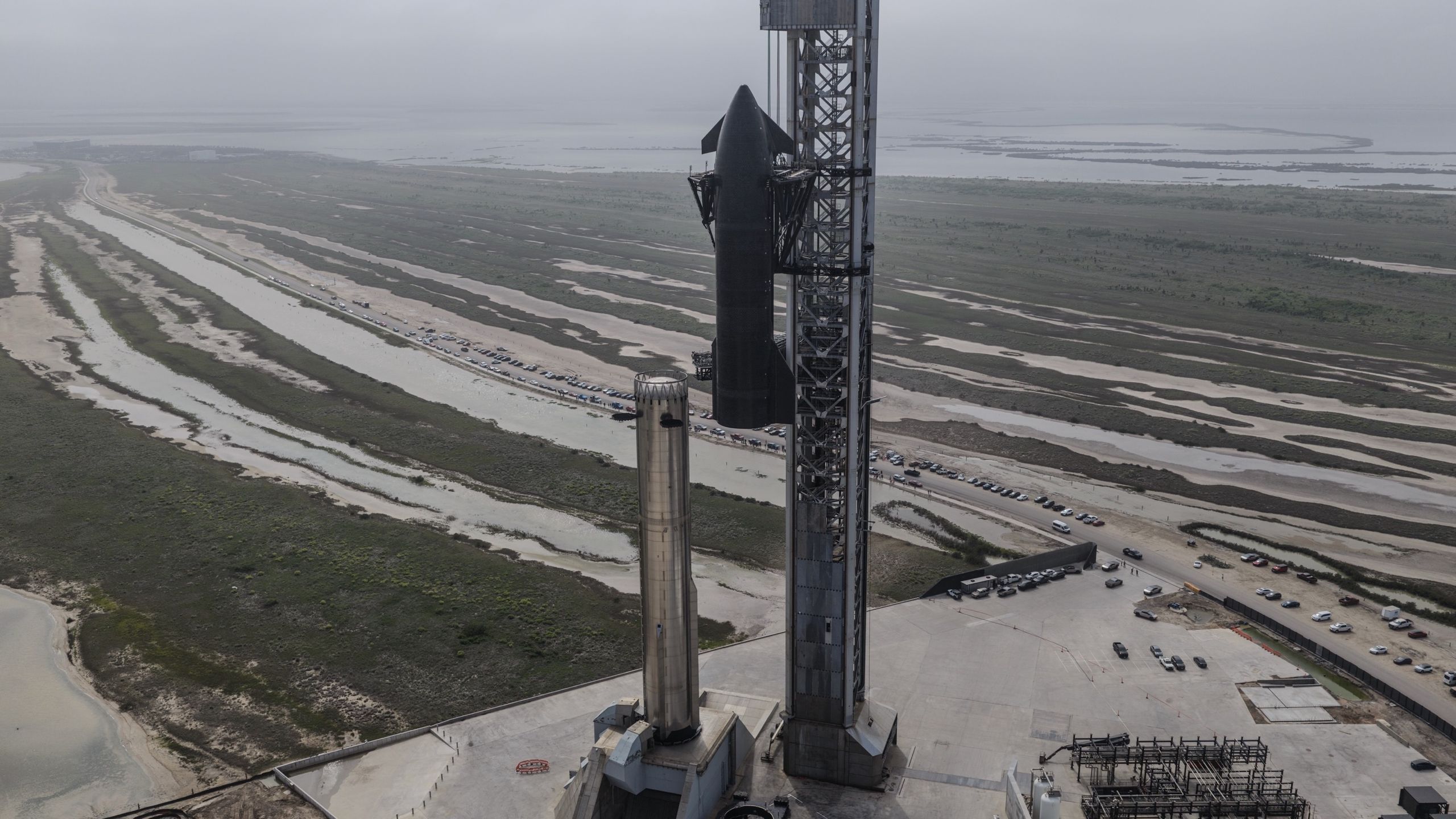
SpaceX has stacked its first Starship V3 vehicle and completed a final wet dress rehearsal ahead of Flight 12, which is scheduled for no earlier than 6:30 p.m. EDT on May 21. The upgraded rocket includes docking ports for in-space refueling, a key capability for future Artemis lunar missions, with Artemis 3 targeted for late 2027 and Artemis 4 for 2028. The update is constructive for SpaceX's Starship development timeline but is unlikely to move markets broadly.
This is less a one-off launch headline than a signal that SpaceX is moving from “test article” to “systems validation” on the path to operational cadence. The important second-order effect is that the nearer Starship gets to reliable turnaround, the more valuable its internal launch capacity becomes relative to legacy launch providers: a functioning Starship implies lower marginal cost, larger payload classes, and a faster iteration loop that can compress development cycles across the entire commercial launch stack.
The near-term market implication is not revenue tomorrow, but a widening probability gap. If the next few flights show materially improved staging, fueling, and recovery logic, the market will begin to price a steeper decline in the addressable market for expendable heavy-lift and partially reusable medium-lift systems over a 12-24 month horizon. That matters most for suppliers and competitors tied to “launch as a scarce resource” economics, where Starship’s learning curve could pressure pricing faster than headline launch counts suggest.
The bigger catalyst is not the debut flight itself but the sequence after it: any demonstration of upper-stage recoverability or credible in-space refueling progress would shift Starship from moonshot narrative to program execution. That is the key gating item for lunar lander confidence, and it also raises the odds of spillover demand for cryogenic handling, avionics, composite structures, and launch infrastructure tooling. Conversely, a failure that looks like a structural design issue would likely reset timelines by quarters, not weeks, because the program is now entering the phase where each anomaly compounds certification friction.
Consensus is likely underestimating how much this de-risks SpaceX’s internal roadmap versus how little it changes public financials immediately. The real trade is not “buy space” broadly; it is positioning around which public names are exposed to launch-price deflation and which benefit from an ecosystem that needs more ground systems, testing hardware, and defense-adjacent resiliency spending if Starship execution accelerates.
AI-powered research, real-time alerts, and portfolio analytics for institutional investors.
Request DemoOverall Sentiment
mildly positive
Sentiment Score
0.35
