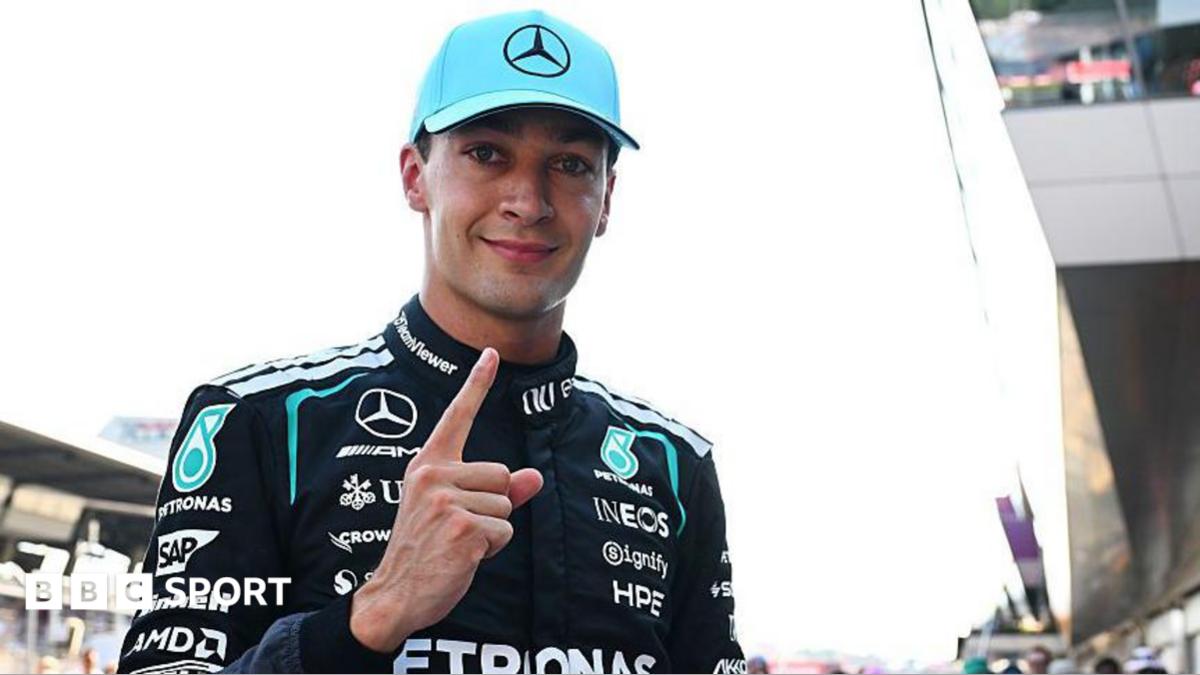
George Russell took pole position for the Austrian Grand Prix, edging Charles Leclerc and Lewis Hamilton on the final lap amid a disputed yellow-flag situation after Max Verstappen crashed. Mercedes' Kimi Antonelli would have likely joined Russell on the front row but backed off under caution, while Verstappen kept fifth and the McLaren pair finished sixth and seventh. The article is primarily a motorsport qualifying report with limited broader market relevance.
This is more a governance/operational signal for Mercedes and the FIA than a clean sporting edge. When a result hinges on flag interpretation, the marketable takeaway is that Mercedes has both pace and enough proximity to capitalize on procedural chaos, but the bigger second-order effect is elevated regulatory scrutiny around stewarding consistency, which can compress the “luck premium” embedded in weekend-to-weekend outcomes. For a public equity lens, this is marginally supportive for RACE’s narrative because Ferrari had genuine front-row pace without a clean execution edge, but it also reinforces that small process gaps still matter at the sharp end.
The main tradable implication is on expectation management for Mercedes-linked sentiment: if this pole converts into a win or podium, short-term narrative momentum improves, but it is unlikely to alter the broader competitive hierarchy unless it repeats across several weekends. The more important catalyst is whether officials formalize flag procedures after this weekend; any post-race clarification or penalty would be a headline risk for Mercedes and a volatility event for motorsport-linked sponsorship optics, but probably only for days, not months.
Contrarian view: the market may overvalue pole positions as proof of a durable performance turn. In F1, qualifying variance and traffic/incident dependence are high; the better signal is race pace plus tire degradation over a full stint, which this article does not resolve. That means any enthusiasm should be tactical rather than structural, with the asymmetry favoring fading a single-weekend narrative if Mercedes cannot convert from the front row and Ferrari/McLaren show stronger race execution.
AI-powered research, real-time alerts, and portfolio analytics for institutional investors.
Overall Sentiment
neutral
Sentiment Score
0.05
Ticker Sentiment
