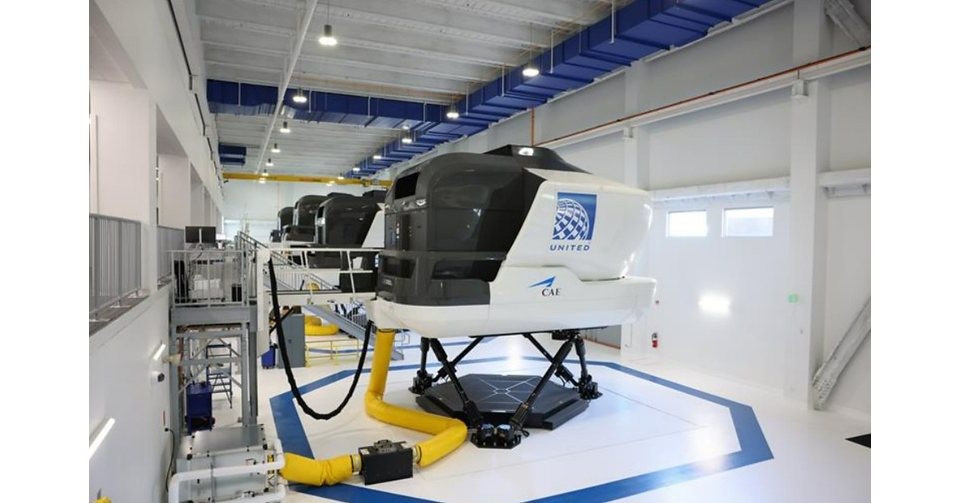
United and CAE marked phase one of expansion at United’s Denver Flight Training Center, adding 40 CAE training devices since 2022 and lifting capacity to up to 860 pilots per day (86 total CAE devices: 52 full-motion simulators, 34 fixed devices). Phase two is slated to break ground in 2027 and be operational before 2030, following a $145M investment in a new 2024 building and ongoing $370M total investment since 2016. The buildout supports Denver’s fastest-growing hub amid hiring plans of 1,400+ employees last year and 1,300+ in 2026, but the news is primarily operational and unlikely to move airline stocks materially in the near term.
This is less about one airline’s expansion and more about who controls the bottleneck in crew availability. CAE’s value is not the incremental hardware sale; it is the recurring, high-switching-cost training ecosystem that gets embedded when a major carrier standardizes around a facility. For UAL, the strategic upside is operational optionality: if pilot supply remains tight, a bigger internal training pipeline can support growth and reduce reliance on third-party capacity, which matters more than the near-term optics of another capital project.
Second-order, this is mildly bearish for weaker network and regional operators that still depend on outsourced training and less efficient recruiting funnels. If UAL can train and onboard at scale, it raises the bar for competitors on retention and wage offers, potentially pressuring margins at DAL/AAL/ALK and especially regionals that are already fragile on labor economics. The flip side is that this can also become a self-inflicted cost escalator for UAL if demand softens before the new capacity is fully absorbed; trained pilots are a fixed-cost commitment, not a free option.
The market reaction should be modest in the next few days because the economic benefit is mostly 12-36 months out, while the big 6-18 month variable is whether UAL can keep unit revenue and load factors ahead of rising labor and capex intensity. The key falsifier is a deterioration in UAL’s CASM ex-fuel or a slowdown in hiring/training cadence; if that shows up, the expansion reads as overbuild rather than moat-building. For CAE, the thesis weakens if simulator utilization and services backlog do not convert into higher-margin recurring revenue rather than one-off equipment deliveries.
AI-powered research, real-time alerts, and portfolio analytics for institutional investors.
Request DemoOverall Sentiment
mildly positive
Sentiment Score
0.25
Ticker Sentiment
