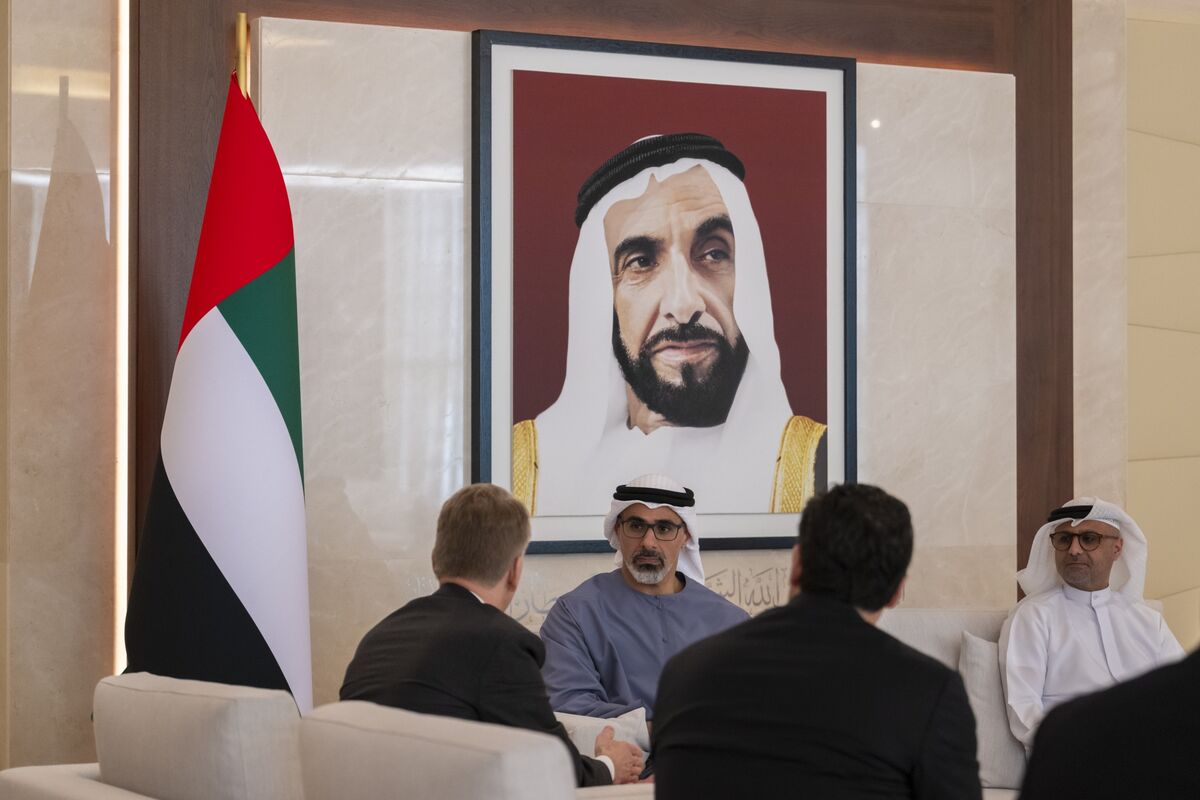
Abu Dhabi has appointed Jassem Bu Ataba Al Zaabi as CEO of L’imad, a new sovereign investing platform estimated to manage about $300 billion. The article highlights his mandate to execute Crown Prince Sheikh Khaled bin Mohammed’s global dealmaking ambitions amid rising geopolitical risk. The piece is primarily about leadership and capital allocation strategy rather than a specific transaction or financial performance update.
This is less about one executive and more about the institutionalization of Abu Dhabi as a quasi-global allocator with tighter political control. The second-order effect is that capital will likely be deployed with a higher geopolitical premium: more co-investments with strategic value, fewer passive mega-fund checks, and a stronger bias toward assets that can survive sanctions, supply shocks, and regional stress. That should be supportive for defense-adjacent, energy-transition, and infrastructure names that offer policy optionality rather than pure financial return.
The competitive implication is that Gulf sovereign capital becomes a more formidable competitor to Western sponsors in mid-market M&A and private assets, especially where speed and certainty matter. Expect richer pricing for trophy assets in Europe and Asia as state-backed buyers compress the spread between strategic and financial bids; the flip side is lower returns on late-cycle deals and a higher probability of governance overhang once political objectives trump IRR discipline.
The market should not overreact in days, but over months the catalyst is a visible rise in cross-border deal flow from Abu Dhabi into hard assets, logistics, and select tech. The main risk is that an escalation in regional conflict or a policy reversal inside the emirate turns this into capital preservation mode, which would slow deployment and tighten the whole GCC risk appetite. In that scenario, the first-order losers are high-beta EM and private-market proxies that have been trading on the assumption of abundant sovereign liquidity.
Consensus is likely underestimating the signaling value: when a sovereign fund is staffed and positioned to execute the ruler’s agenda, capital becomes more coordinated and less economically neutral. That means the real edge is not in predicting one deal, but in front-running the sectors and geographies that get persistent strategic bid support, especially where public markets still price them as cyclical. The move is underdone in portfolios that still treat Gulf capital as a generic EM flow rather than a targeted geopolitical instrument.
AI-powered research, real-time alerts, and portfolio analytics for institutional investors.
Request DemoOverall Sentiment
neutral
Sentiment Score
0.15
