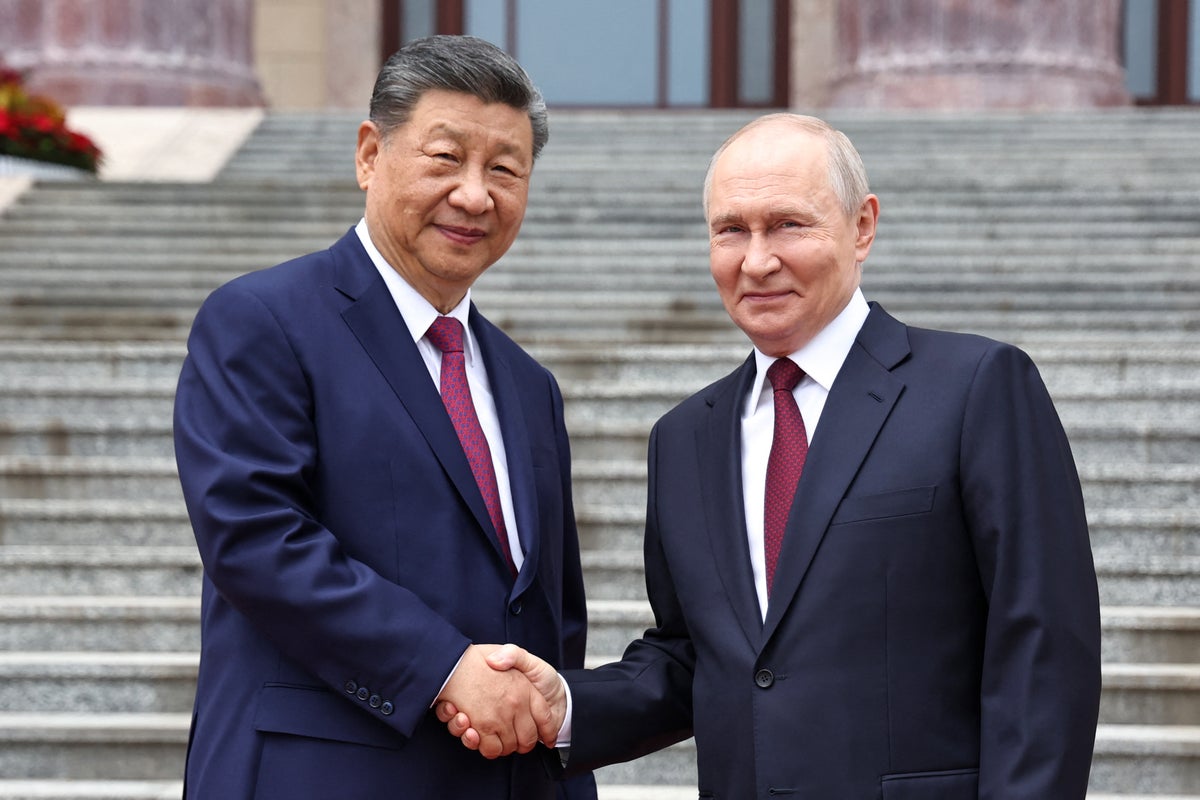
Xi warned Putin that the world risks reverting to the "law of the jungle" as China and Russia moved to extend their bilateral cooperation treaty and discuss deeper energy and technology ties, including the Power of Siberia 2 pipeline. The summit underscored continued strategic alignment between Beijing and Moscow, while Russia also reported overnight attacks in Ukraine and drone strikes on industrial sites inside Russia. The article is geopolitically significant and may affect energy and defense sentiment, but it contains no direct market-moving policy decision.
The market takeaway is not the symbolism of the Xi-Putin optics; it is the incremental tightening of an alternative industrial and financial bloc that reduces Western leverage over energy, commodities, and technology standards. A durable China-Russia framework makes sanctions less binding at the margin, but the bigger second-order effect is on capital allocation: Chinese buyers can demand steeper discounts on Russian molecules, while Moscow becomes more dependent on infrastructure commitments that lock in lower-margin, long-duration volumes rather than spot upside. That is mildly negative for global gas pricing at the margin, but more important for the equity dispersion between exporters with sanction-proof infrastructure and everyone else.
Power of Siberia 2 remains the key optionality item. Even without a firm timetable, the market should treat “general understanding” as a signal that the project is politically alive, which matters because any credible path to incremental Russian gas into China caps medium-term Asian LNG upside and weakens the scarcity premium embedded in LNG names. The catch is execution risk: financing, routing, pricing, and Chinese bargaining power could drag this for years, so the near-term tradable impact is more on sentiment than physical volumes. In other words, the headline is bearish for LNG beta now, but not a clean thesis for immediate fundamental downgrade unless contracts actually move.
The escalating drone war and Russia’s internal vulnerability create a different trade: supply disruption risk is rising, but so is the probability of retaliatory escalation that keeps energy and defense bids intact. This is constructive for defense primes and select counter-drone/electronic warfare suppliers, while oil markets may see temporary spikes rather than a sustained bull trend unless infrastructure damage hits export corridors or refining capacity. The contrarian point is that markets may be underpricing how much domestic pressure on Russia shortens the political runway for any negotiated settlement, which keeps a risk premium in European security assets and in any commodity with Russian shadow supply exposure.
AI-powered research, real-time alerts, and portfolio analytics for institutional investors.
Request DemoOverall Sentiment
mildly negative
Sentiment Score
-0.15
