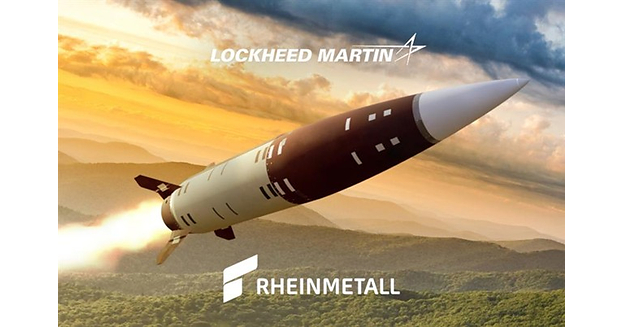
Lockheed Martin (LMT) and Rheinmetall signed an MoU at the NATO Summit aiming to co-produce ATACMS in Europe, supported by the U.S. and German governments. The plan is to move toward a joint venture/“centre of excellence” manufacturing, integration and distribution hub for ATACMS across NATO allies, with Rheinmetall’s Unterluess site targeted for guided-missile production (components/rocket motors scheduled to begin as early as 2027). Lockheed will continue its existing Camden, Arkansas line until the European transition is complete—signaling stronger localized supply and longer-term defense capacity for allies.
This is more important as a procurement-channel shift than as a near-term earnings event. LMT gains a politically durable route into European demand without needing to fully localize its own balance sheet, while RNMBY likely captures the higher-value domestic content, which can support a richer multiple than pure volume growth alone. The second-order winner is the German industrial base: once missile assembly and integration sit onshore, follow-on ammunition, motors, test, and maintenance work tends to cluster around the same site, creating a broader ecosystem effect than the headline program suggests.
The near-term risk is that markets overestimate how quickly an MOU turns into funded production. For the next 1-3 months, the key catalyst is whether this becomes a binding JV with capex, export-control, and order-book language; otherwise the move is mostly sentiment. Over 6-18 months, the real upside comes from NATO inventory replenishment and local-content mandates, but the flip side is margin dilution from tech transfer and European assembly, which could cap LMT’s incremental profit per unit.
The contrarian view is that capacity additions in a shortage usually improve delivery, not pricing power. If investors extrapolate this into a straight-line margin expansion story, that is probably too aggressive for LMT; the cleaner expression is RNMBY, where industrial policy and domestic sovereignty should support relative performance. Falsifiers are simple: no definitive JV by the next two reporting cycles, no German funding attached, or a visible pivot in European procurement toward indigenous missile alternatives that reduces ATACMS share.
AI-powered research, real-time alerts, and portfolio analytics for institutional investors.
Request DemoOverall Sentiment
moderately positive
Sentiment Score
0.35
Ticker Sentiment
