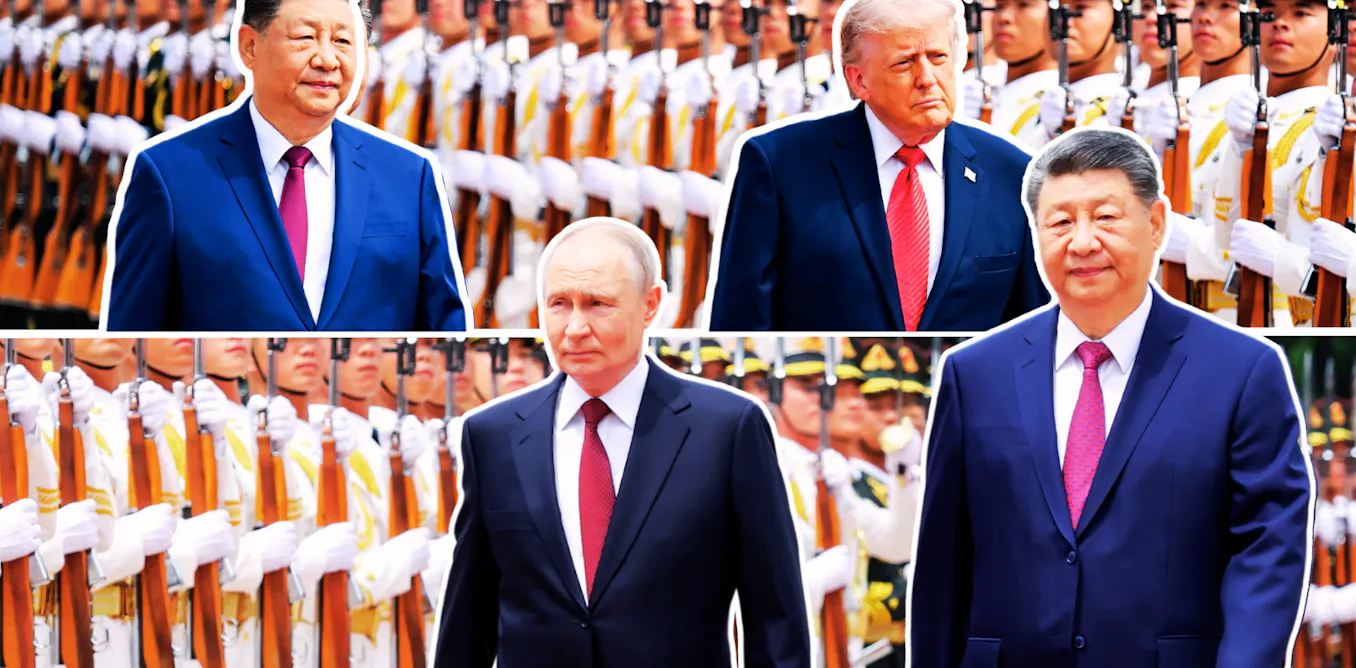
China used back-to-back visits from Donald Trump and Vladimir Putin to signal greater strategic confidence and position itself as the central node in great-power diplomacy. The article highlights a stronger China-Russia alignment, continued potential support for Russia via economic and technological cooperation, and only a general understanding—not a final deal—on the Power of Siberia-2 gas pipeline. While the piece is geopolitical rather than market-specific, it has meaningful implications for energy flows, Europe exposure, and broader US-China-Russia risk dynamics.
The market implication is not a simple “China stronger” headline; it is a repricing of bargaining power across several asset classes. Beijing is signaling that it can absorb higher geopolitical friction while still keeping trade, technology, and energy flows intact, which weakens the US ability to force fast concessions via tariffs or containment. That matters most for cyclicals with China exposure, where the risk premium should migrate from growth sensitivity to policy-fragmentation sensitivity over the next 3-12 months.
The less obvious winner is Russia’s relevance as a marginal supplier and strategic spoiler, not as a stand-alone economy. Even without a formal pipeline breakthrough, the market should assign a higher probability to incremental Chinese support for Russian energy exports, ship-to-ship logistics, financing, and sanctioned-tech substitution. That extends the “shadow supply” discount over European gas, refined products, and certain industrial inputs, while also keeping a ceiling on how quickly Western sanctions can tighten commodity balances.
The biggest second-order risk is a deeper bifurcation of supply chains in semis, industrial automation, defense electronics, and energy infrastructure. If Beijing believes Washington’s leverage is fading, it can tolerate slower but more durable decoupling, which is bearish for US multinationals that rely on China both as demand and manufacturing node. Over a 6-24 month horizon, the more important catalyst is not an immediate deal failure but repeated diplomatic theater with no operational follow-through, which will push boards to reallocate capex toward redundancy, localization, and inventory buffers.
Contrarian takeaway: this is not necessarily bullish for China broad beta in the near term. Greater strategic confidence can coexist with slower reform, more sanctions risk, and continued capital-market discounting. The best expression is likely relative-value: long firms that monetize fragmentation and supply-chain reengineering, short names whose margins depend on a stable US-China operating environment.
AI-powered research, real-time alerts, and portfolio analytics for institutional investors.
Request DemoOverall Sentiment
neutral
Sentiment Score
-0.05
