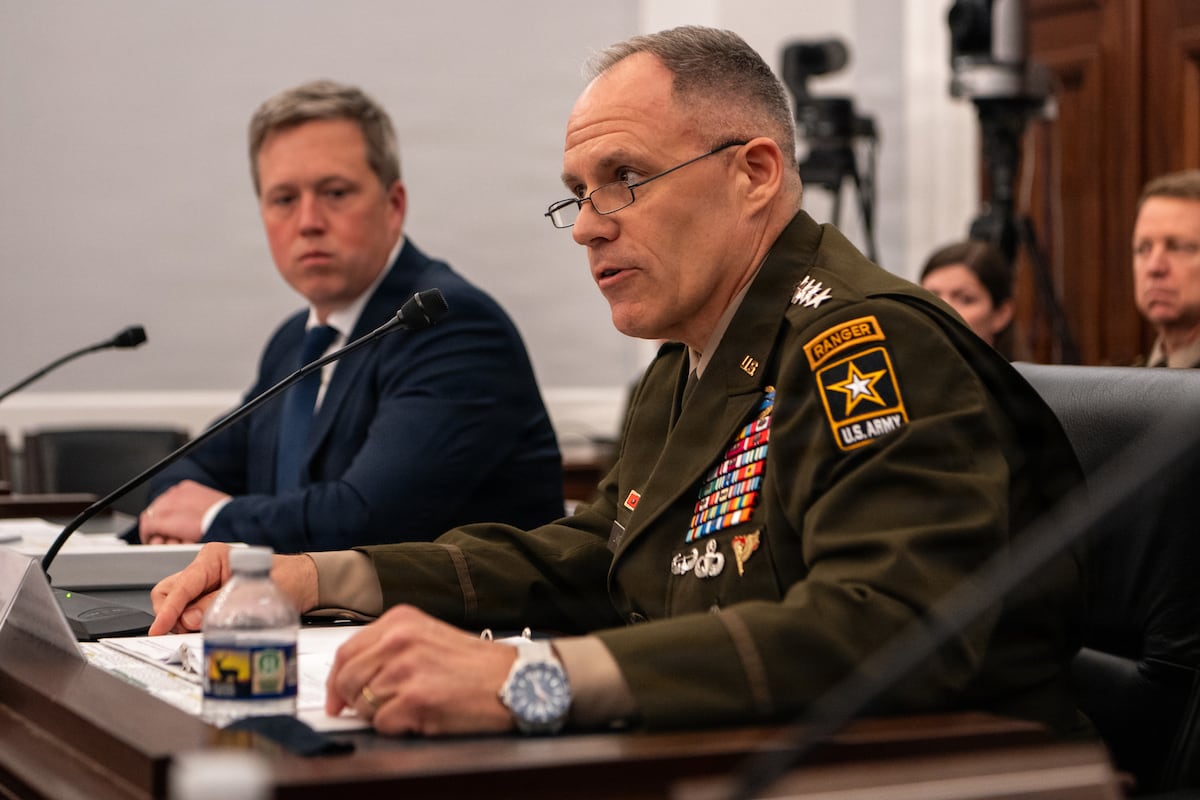
The Pentagon abruptly canceled a planned 9-month deployment of more than 4,000 soldiers from the 2nd Armored Brigade Combat Team, 1st Cavalry Division to Poland, after the unit had already begun moving equipment and an advance team overseas. Lawmakers said the decision sent a bad signal to Poland, the Baltics, and Russia, while Army leaders described it as part of routine manning reviews and did not provide timing or full operational details. The move also affects broader U.S. force posture in Europe, where the U.S. maintains roughly 80,000 service members, and comes amid reported additional cancellations involving Germany and European missile units.
This is less a troop-adjustment headline than a signal that Europe posture is becoming a negotiation lever in U.S. burden-sharing diplomacy. The market-relevant issue is not the absolute headcount; it is the implied willingness to treat forward presence as conditional, which raises the probability of further “surprise” force-posture changes across NATO over the next 1-3 quarters. That creates a modest but real premium on European defense autonomy, especially platforms tied to air defense, munitions, EW, and command-and-control rather than heavy armor.
Second-order effects should show up in procurement timing before they show up in top-line budgets. If allies read this as reduced U.S. reliability, you should expect faster ordering cycles for European primes and U.S. primes with local industrial footprints, plus incremental demand for transport/logistics, base infrastructure, and stockpile replacement. The underappreciated loser is any contractor exposed to U.S. Europe theater modernization or rotational support, because even if budgets are preserved, program cadence becomes less predictable and that typically compresses multiples.
The contrarian view is that the immediate equity reaction may overstate the strategic change. A single canceled rotation does not equal a durable force drawdown unless followed by a budget and basing reset, and the Pentagon has an incentive to preserve optionality while extracting concessions from allies. That means the best near-term setup is not a broad Europe-defense basket, but a hedged expression: own the beneficiaries of accelerated allied self-help while shorting the most Europe-dependent U.S. defense revenue streams. Time horizon is weeks to months, with the main catalyst being any follow-on announcement on Germany/Europe rotations or allied capex commitments.
AI-powered research, real-time alerts, and portfolio analytics for institutional investors.
Request DemoOverall Sentiment
mildly negative
Sentiment Score
-0.25
