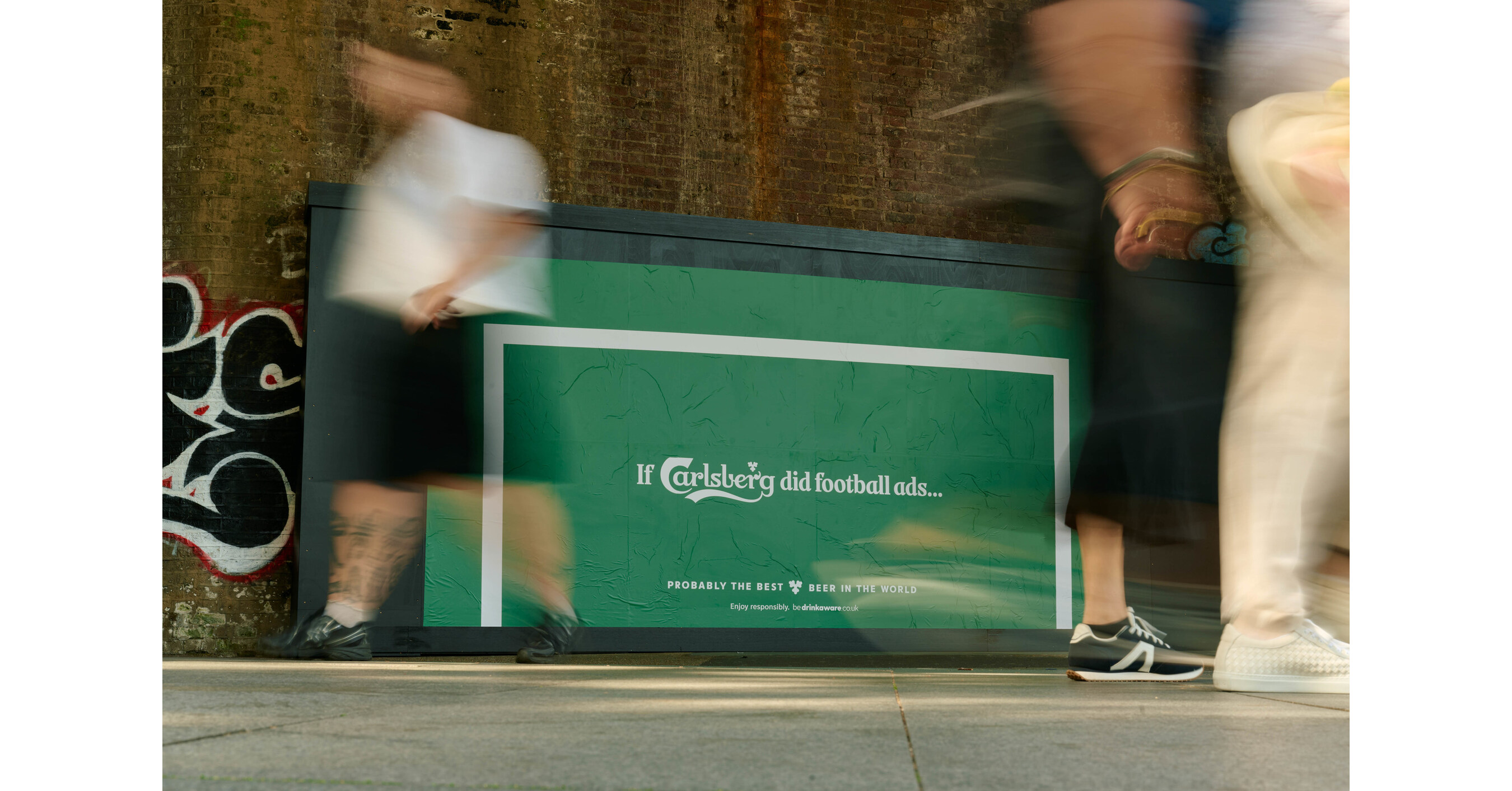
Carlsberg says 73% of adults plan to watch football this summer, but 31% report they have not played for six months or longer. To address participation barriers (cited as lack of time 44%, no playmates 39%, and not enough space 16%), the company is rolling out “Goal-Poster” installations in select cities (London, Manchester) to make pickup games easier. The article is largely promotional with no direct financial or earnings implications.
This is mainly brand spend, not a fundamental inflection. In beer, sponsorships can preserve pricing power and on-trade share, but the revenue translation is usually delayed and tiny relative to group sales unless there is measurable lift in volume or mix. The immediate market impact should be negligible; any bid in CABGY would more likely be sentiment-driven than tied to a revised earnings path.
The second-order read is competitive: UEFA adjacency matters most for large-scale, occasion-driven consumption, where Heineken and AB InBev compete hardest for visibility in Europe. If the activation improves top-of-mind recall, the payoff would show up first in UK/Nordics on-trade channels and only later in scanner data; that is a months-long story, not a days-long catalyst. The risk is that this is a cost without conversion, which would show up as SG&A creep rather than incremental margin.
Contrarian view: the market may overrate "sports marketing" as a demand driver when the real issue in beer is affordability, premiumization, and channel mix. Unless management can show share gains in the next print or stronger sponsorship ROI in Europe, this should be treated as a low-signal PR release. Falsifiers would be weaker Q3 Europe volumes, no improvement in premium mix, or rising promo intensity from peers that offsets any brand lift.
AI-powered research, real-time alerts, and portfolio analytics for institutional investors.
Overall Sentiment
neutral
Sentiment Score
0.08
Ticker Sentiment
