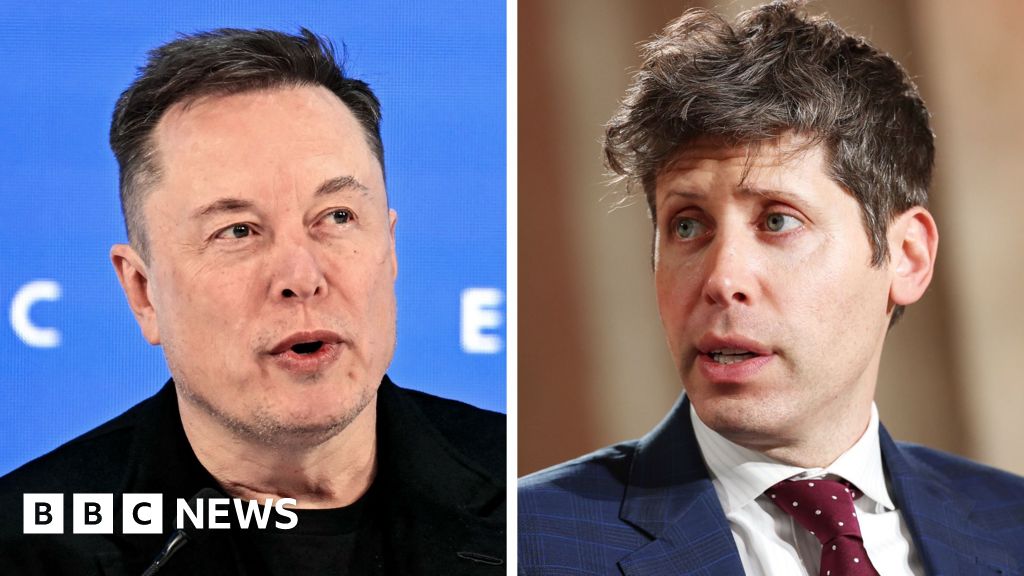
The Musk-Altman OpenAI trial centers on allegations that Sam Altman misled Elon Musk about OpenAI's nonprofit commitments, with testimony from high-profile witnesses like Satya Nadella and Ilya Sutskever contradicting Musk's claims. The court also highlighted governance and character issues, including scrutiny of Altman's disclosures, Musk's relationship with Shivon Zilis, and broader power struggles tied to OpenAI, xAI, and Microsoft. The case is largely a legal and reputational event for OpenAI and associated tech executives, with limited immediate market impact unless the verdict affects control or strategic partnerships.
The market implication is not the courtroom drama itself, but the probability distribution around Microsoft’s AI optionality. If the testimony undermines the existence of a binding non-profit commitment, MSFT’s embedded economic claim on OpenAI becomes more defensible over a multi-quarter horizon, which supports multiple expansion in the AI-infrastructure complex. The bigger second-order effect is that governance risk at frontier AI labs is now being repriced as a financing issue: more legal scrutiny means slower capital formation, more bespoke structures, and a higher cost of capital for private AI peers.
The near-term risk is binary and headline-driven, but the more durable catalyst is structural. A pro-Microsoft outcome would likely reduce overhang on its AI spend narrative, while an adverse or mixed outcome could force more conservative disclosures around AI revenue recognition, partnership terms, and control risk. Either way, the trial highlights that “strategic” AI investments are not just about models; they are about control of distribution, compute, and IP, which favors incumbents with balance-sheet capacity and legal teams, not pure-play startups.
The contrarian view is that the market may be overestimating the direct financial impact on MSFT and underestimating the reputational damage to the OpenAI ecosystem. If investors conclude the OpenAI cap table is politically fragile, the beneficiaries are alternative model providers and infrastructure names that monetize picks-and-shovels demand without boardroom entanglement. That makes this less a verdict trade than a dispersion trade across AI beneficiaries, with the clearest upside in companies whose AI exposure is contractually simple and balance-sheet light.
AI-powered research, real-time alerts, and portfolio analytics for institutional investors.
Request DemoOverall Sentiment
neutral
Sentiment Score
-0.05
Ticker Sentiment
