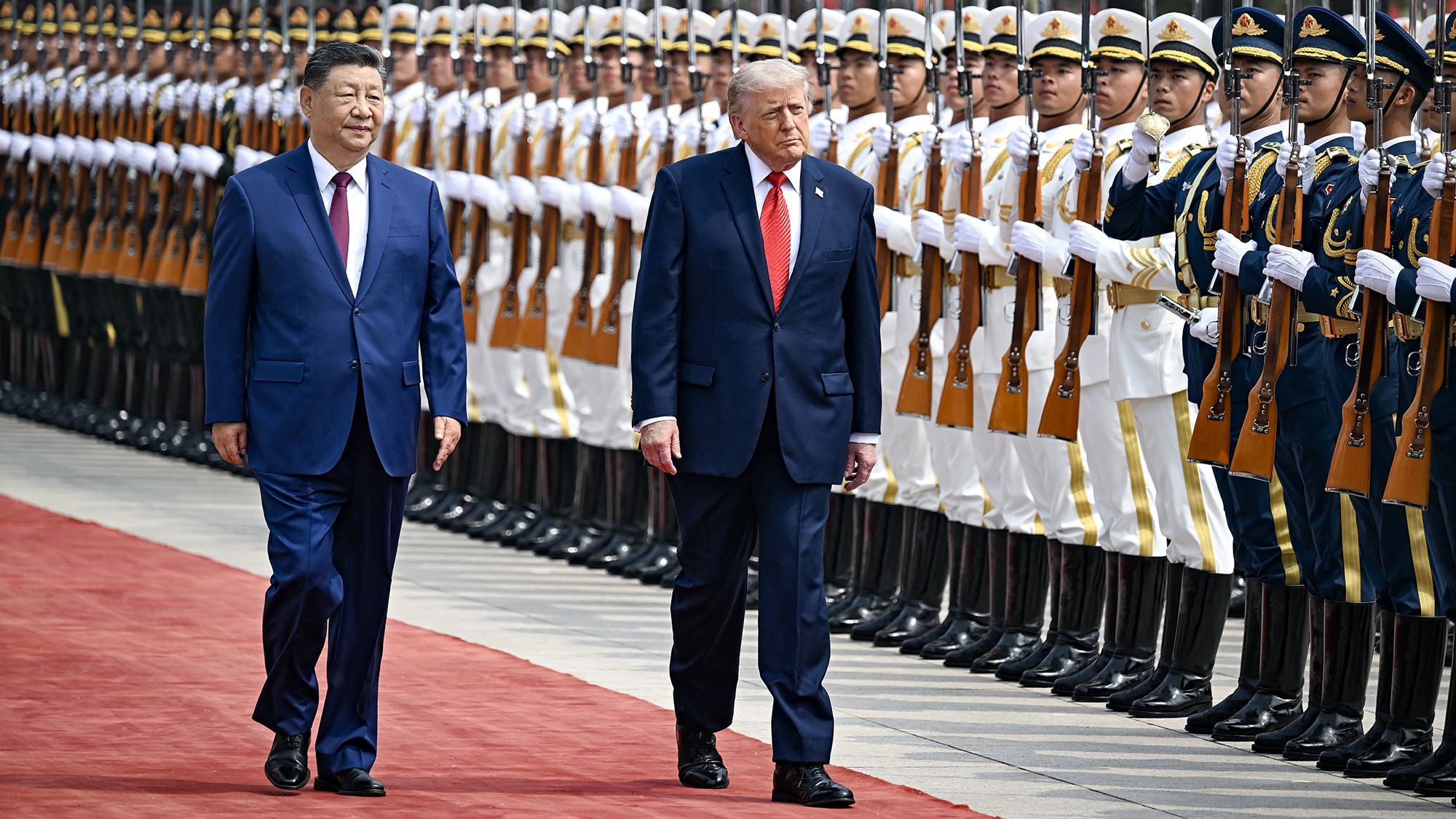
Xi warned Trump not to mishandle Taiwan, saying poor U.S. handling of tensions could push the China-U.S. relationship into an extremely dangerous place. The summit was otherwise described as friendly, with Trump saying the leaders made "some fantastic trade deals" and U.S. officials expecting China to announce double-digit billion purchases of American agricultural goods. The geopolitical warning keeps Taiwan risk elevated, even as trade détente offers a near-term offset.
The market takeaway is not the ceremonial tone; it is that both sides are signaling a preference for managed friction rather than escalation. That lowers the probability of an immediate shock, which should cap near-term volatility in semis, industrials, and shippers with China exposure, but it does not remove the structural risk premium embedded in Taiwan-linked supply chains. The first-order bid is for anything tied to de-escalation headlines; the second-order effect is that every public warning like this hardens board-level “China plus one” capex planning, which is a slow-burn positive for India, Mexico, and Southeast Asia manufacturing beneficiaries.
The more actionable read is on agriculture and politically sensitive imports. If Beijing follows through on large U.S. farm purchases, that is not a broad trade thaw; it is a targeted pressure-release valve designed to buy time and optics. That helps a narrow basket of U.S. ag exporters and rail/logistics names in the next 1-2 quarters, but it also risks pulling demand forward rather than creating durable incremental volume, so the setup is better for event-driven longs than for strategic positioning.
The contrarian point is that the biggest market mistake would be assuming “friendly summit” means tail risk has fallen. Taiwan remains a binary geopolitical strike price, and the more trade wins are announced, the easier it is for both governments to claim success while the underlying strategic rivalry stays intact. That means realized volatility may stay subdued for days, but policy gap risk over the next 6-12 months remains elevated, especially into election-cycle rhetoric and any military or export-control incident.
AI-powered research, real-time alerts, and portfolio analytics for institutional investors.
Request DemoOverall Sentiment
mildly negative
Sentiment Score
-0.15
