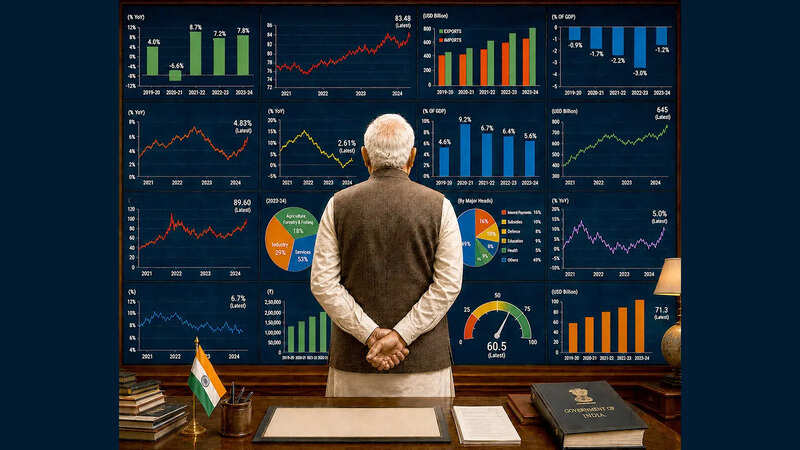
PM Modi signaled tougher economic conditions ahead, urging households and businesses to cut discretionary spending and conserve energy amid high imported energy costs linked to the Iran-US-Israel conflict. He called for more public transport and car-pooling, greater EV adoption, fewer foreign vacations, lower gold purchases, reduced chemical fertilizer use, and more work-from-home arrangements. The message is broadly defensive and points to softer consumer demand rather than an immediate policy shock.
The signal here is not a demand shock so much as an official attempt to pre-clear a slower-growth, higher-input-cost regime. When leadership starts nudging households toward substitution and firms toward behavior change, the market should think about second-order compression in discretionary spend, not a simple one-off sentiment dip. That argues for a broader “domestic beta” de-rating over the next 1-3 quarters, especially in categories where consumption is financed by weak real wage growth and aspirational spend.
The most immediate transmission is through transport, travel, and imported consumables. Even if crude and freight costs only stay elevated for a few months, the behavioral message can extend the pain: fewer overseas trips, weaker premium tourism demand, and softer gold and jewelry demand if households reallocate away from status purchases. On the corporate side, firms facing softer consumption may try to offset with remote work and efficiency measures, which is mildly negative for office demand, urban mobility, and capex-linked service chains.
The more interesting second-order effect is policy signaling into ESG-adjacent sectors. Encouraging lower chemical fertilizer use and EV adoption can be read as a partial push toward input substitution and electrification, but in the near term it is more likely to raise uncertainty for agri-input volumes and legacy auto demand than to create an immediate EV step-function. The market may overprice the EV upside while underpricing the near-term hit to two-wheelers, ICE passenger vehicles, and mall-driven retail traffic.
Catalyst-wise, this is a weeks-to-months story unless energy prices re-normalize quickly. If the external shock fades, the rhetoric becomes noise; if it persists, expect follow-through in budget guidance, subsidy tweaks, and tighter household behavior by the festive season. The contrarian point is that exhortation alone does not create actual substitution at scale, so any selloff in consumption proxies may be better traded than held outright.
AI-powered research, real-time alerts, and portfolio analytics for institutional investors.
Request DemoOverall Sentiment
mildly negative
Sentiment Score
-0.25
