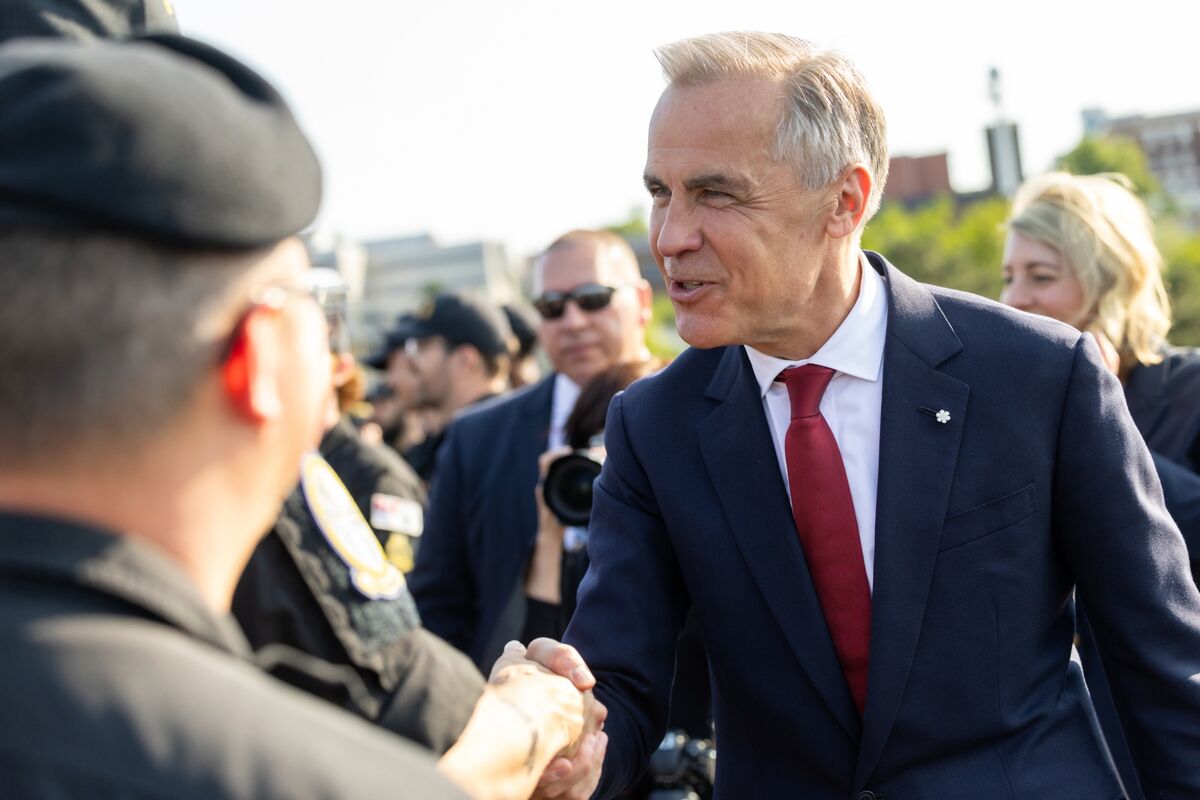
Prime Minister Mark Carney said Canada secured support from eight additional countries for the proposed Defence, Security and Resilience Bank (DSRB), which would be hosted by Canada and invest in the defense industry. The initial backers include Albania, Belgium, Greece, Latvia, Luxembourg, Romania, Turkey, and Ukraine. While not a direct market trigger, the expanded coalition improves the bank’s prospects and could be a modest positive for defense-finance exposure.
The market should treat this as a financing mechanism, not an earnings event. The first-order winner is the defense ecosystem with the most balance-sheet friction in the supply chain: munitions, air-defense, comms, and systems integrators that can convert committed sovereign demand into funded backlog faster. The more important second-order effect is for smaller subcontractors and European industrial suppliers that have been constrained by working capital and bank covenants; a quasi-public lending/guarantee channel can lower their cost of capital and accelerate output without waiting for full fiscal appropriation cycles.
The contrarian risk is that the headline overstates the economic size. If the institution is thinly capitalized, politically fragmented, or limited to advisory/guarantee functions, the P&L impact on listed primes will be modest and delayed. In that case, the trade is mostly multiple support for defense names rather than a step-change in revenue. Near term, the catalyst path is governance and funding details over the next 1-3 months; structurally, if this becomes a repeatable procurement-finance tool, it can extend the European rearmament cycle for 6-18 months and favor air-defense/missile suppliers over platform-heavy names.
AI-powered research, real-time alerts, and portfolio analytics for institutional investors.
Request DemoOverall Sentiment
mildly positive
Sentiment Score
0.15
