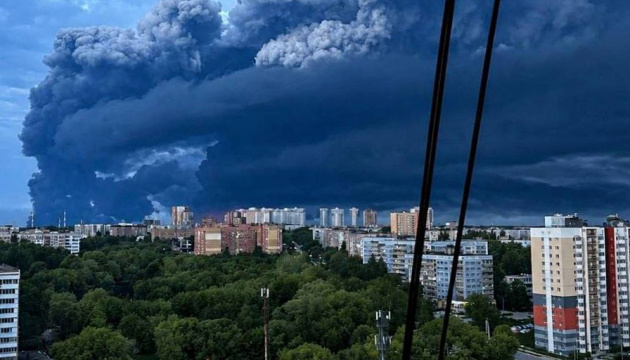
Drones reportedly struck the Ryazan Oil Refinery again, one of Russia's largest refining facilities with capacity of about 17 million tonnes per year. The attack highlights ongoing wartime risks to Russian energy infrastructure and could add to supply disruption concerns, especially given prior repeated targeting. Local authorities also reported 3 killed and 12 injured in the city.
The key market issue is not the headline blast count; it is the cumulative degradation of Russia’s ability to keep domestic fuel markets balanced without either curbing exports or leaning harder on emergency logistics. Repeated hits on large, integrated refining assets matter because they remove not just primary throughput but also high-value middle distillate and gasoline optionality, which is harder to replace than crude barrels. Over days, the first-order effect is a localized tightening in Russian product availability; over weeks to months, the second-order effect is a wider distortion in Black Sea product flows and a higher probability of ad hoc export restrictions.
For global markets, the more relevant transmission is refined-product pricing rather than Brent itself. Gasoline and diesel cracks can spike even if crude remains range-bound, especially if outages cluster across a few large plants and Russia is forced to redirect crude into storage or exports at discounted prices. That creates a relative winner set in non-Russian refining assets with clean balance sheets and coastal access, while integrated E&Ps with heavy Russian exposure or product-sensitive downstream units face margin volatility.
The contrarian point is that the market may overestimate the immediate oil-price bullishness and underestimate the speed of substitution. Russia can sometimes compensate with inventory draws, temporary throughput optimization, and by rerouting exports, which caps the crude reaction unless there is a sustained campaign against multiple nodes. The bigger risk is a policy response: if outages persist into a broader fuel shortage, Moscow may prioritize domestic supply over export revenue, which would pressure seaborne crude and products differently than a simple supply shock narrative implies.
From a timing perspective, the tradeable window is more likely in the next 2-8 weeks via product crack spreads and refiners than in a generic long-crude expression. If the attacks continue, the next catalyst is evidence of sustained downtime or export curbs; if they stop, the market should mean-revert quickly because traders will fade one-off disruption headlines. The main tail risk is escalation into infrastructure deeper than one refinery, which would shift this from a product-market story to a broader geopolitical risk premium across energy and shipping.
AI-powered research, real-time alerts, and portfolio analytics for institutional investors.
Request DemoOverall Sentiment
strongly negative
Sentiment Score
-0.55
