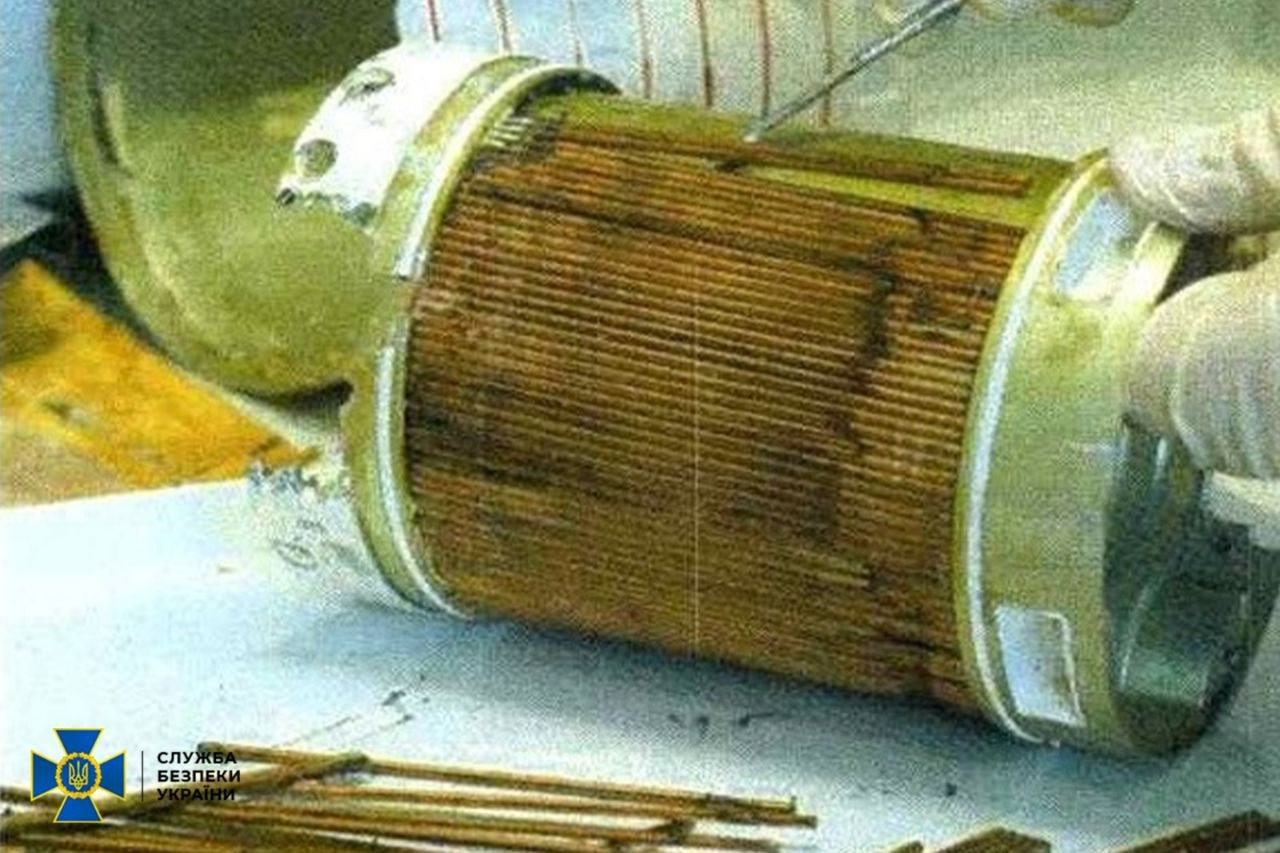
Ukraine’s SBU said it found depleted uranium in fragments of an R-60 missile mounted on a modified Russian Geran-2 drone near Kamka in Chernihiv region, with radiation measured at 12 microsieverts per hour. The agency warned civilians to avoid the wreckage due to potential exposure to radioactive dust and toxic material, and said it opened a war crimes investigation under Article 438. The report is primarily a battlefield and safety development rather than a direct market driver.
The market implication is less about the radiological headline and more about escalation optionality: once drones are being adapted into hybrid delivery platforms, the marginal cost of adding non-conventional payloads falls sharply, and that raises the perceived tail risk around border regions, logistics nodes, and fixed infrastructure. That supports a higher risk premium for assets exposed to Eastern Europe reconstruction, cross-border rail/energy assets, and any insurer/reinsurer underwriting war-adjacent exposure. The immediate economic damage is probably limited, but the signaling effect is durable because it suggests a willingness to optimize for battlefield asymmetry rather than conventional force structure.
Second-order, this broadens the envelope for counter-drone defense spend. Systems that can discriminate, intercept, and safely dispose of unusual payloads become more valuable than simple kinetic interceptors, which favors integrated air defense, sensor fusion, and C2 software over commodity hardware. The procurement cycle could accelerate over the next 6-18 months as ministries of defense translate one-off incidents into budget line items, especially for NATO border states and critical infrastructure operators.
The legal angle matters because war-crime framing can be used to extend sanctions, tighten export controls, and justify additional secondary enforcement on dual-use supply chains. Over the next few weeks, the bigger catalyst is not physical fallout but policy response: if the episode becomes a talking point in Western capitals, it can reinforce support for ammunition replenishment, counter-UAS spending, and Ukrainian air-defense aid. Conversely, if forensics later downgrade the radiological severity, the headline fades quickly and the trade becomes about defense order flow rather than event risk.
Contrarian view: the market may overestimate the near-term operational advantage of exotic payloads. These modifications can also create reliability, weight, and guidance penalties, meaning the tactical gain may be offset by lower drone survivability and easier signature detection. That argues for buying the budget beneficiaries on dips rather than chasing event-driven spikes, because the lasting value accrues to the defense procurement stack, not to the one-off incident itself.
AI-powered research, real-time alerts, and portfolio analytics for institutional investors.
Request DemoOverall Sentiment
mildly negative
Sentiment Score
-0.20
