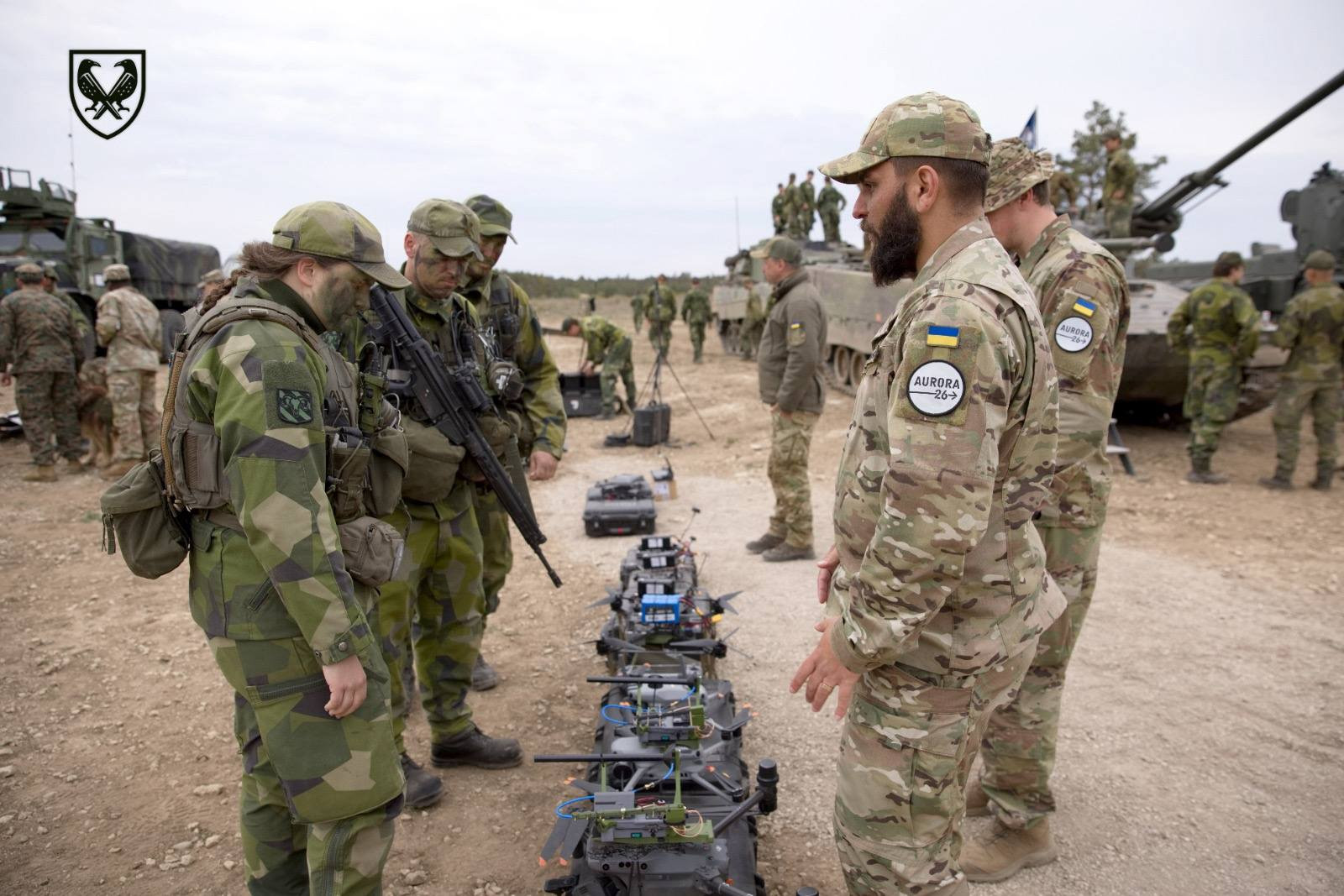
A small Ukrainian drone team reportedly disrupted Sweden’s Aurora 2026 NATO exercise, forcing organizers to repeatedly halt scenarios after simulated drone strikes destroyed or disabled large numbers of troops and vehicles. In one mechanized assault, 28 of roughly 32 major equipment pieces were “wiped out,” and another airfield defense was defeated in under 20 minutes with no Ukrainian drones lost. The article underscores NATO’s drone-warfare gap and the growing tactical importance of low-cost FPV systems, but it is primarily a military and geopolitical update rather than a direct market event.
This is a clean signal that the most underpriced part of modern land warfare is not platform quality but kill-chain speed: cheap sensors, software, and attritable drones can now overwhelm expensive force concentrations in training conditions, which tends to force doctrine changes faster than procurement cycles can absorb. The immediate winners are not the drone makers themselves so much as the firms that enable decentralized battlefield networking, EW resilience, secure comms, edge compute, and rapid software refreshes; the losers are legacy force-design assumptions built around massing vehicles and infantry without persistent top-cover from unmanned systems.
Second-order, this raises the probability of budget reallocation away from traditional armor-only modernization toward layered counter-UAS, passive defense, decoys, and dispersed logistics. That is bullish for European defense primes with exposure to sensors, air defense, command-and-control, and electronic warfare, while being mildly negative for platforms whose value proposition depends on concentrated maneuver. Over the next 6-18 months, the market may still underweight this because training anecdotes are easy to dismiss; the real catalyst will be procurement language in Sweden, the Baltics, and Germany shifting from "drone integration" to mandatory counter-drone survivability standards.
The contrarian view is that this is less about Ukraine outperforming NATO than about force-on-force exercises being structurally vulnerable to low-cost red-team drones when blue forces are optimized for conventional tempo. That means the correct response is not panic, but redesign: disperse, harden, jam, and accept higher friction. If that redesign happens quickly, the near-term read-through is not a wholesale re-rating of defense, but a relative-value trade in favor of the enablers of asymmetric defense.
For markets, the most actionable implication is a rotation inside defense: names tied to air defense, EW, secure networks, and battlefield software should see better order visibility than heavy ground-platform pure plays. The next leg higher likely comes when a major NATO procurement program explicitly budgets for counter-UAS at brigade level, turning a tactical embarrassment into a multi-year capex cycle.
AI-powered research, real-time alerts, and portfolio analytics for institutional investors.
Request DemoOverall Sentiment
neutral
Sentiment Score
0.05
