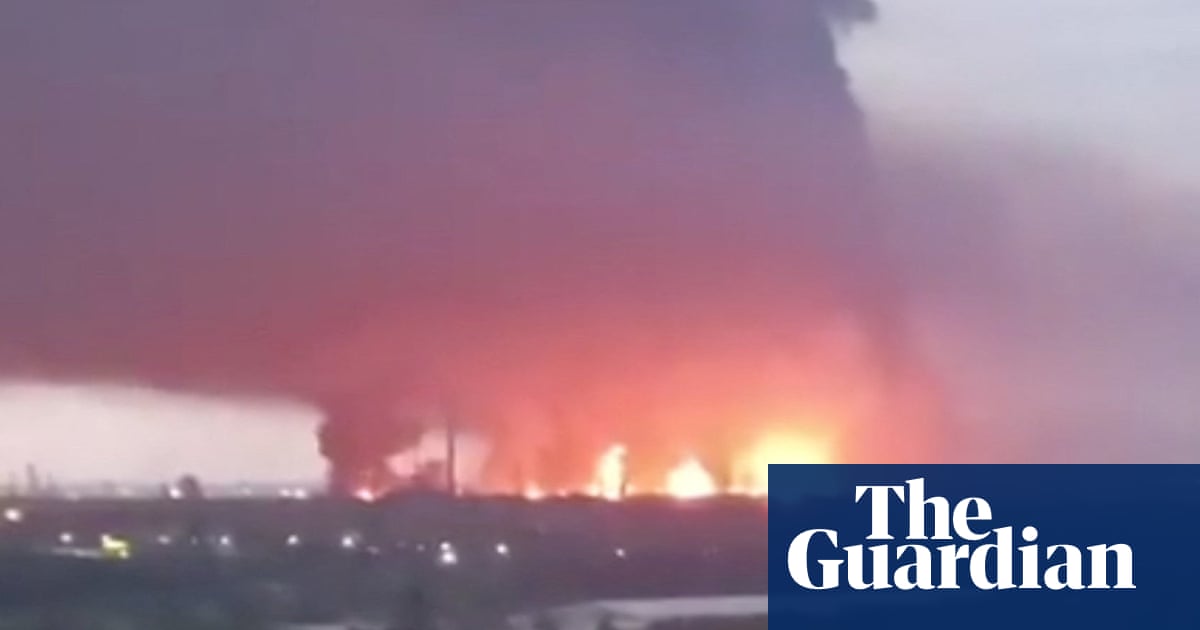
Ukraine launched a large-scale long-range drone attack on multiple Russian regions, including the Ryazan oil refinery, as Russia’s three-day barrage on Ukraine left 24 dead in Kyiv, including three children. Kyiv said the apartment-block strike was part of Russia’s biggest attack since the February 2022 invasion, with 1,500+ drones and dozens of missiles fired this week. The Council of Europe is also moving toward a war-crimes tribunal for Russia’s leadership, underscoring escalating geopolitical and legal risk.
The market should treat this as an escalation in the war’s industrial phase, not just another headline risk. Strikes on refining and power-adjacent infrastructure create asymmetric pressure because they hit systems with long repair cycles and limited spare redundancy, which can translate into temporary product dislocations even if crude exports are not immediately impaired. The bigger second-order effect is on European risk premia: every expansion in the war’s geographic reach raises the probability of sharper sanctions enforcement, tighter tanker/insurance scrutiny, and more persistent diesel crack support.
The legal-track development matters less for near-term battlefield outcomes than for medium-term capital allocation. A tribunal process, even if slow, keeps the conflict anchored in a multi-year liability regime, which raises the expected cost of normalization for Russian sovereign-linked assets and for any western counterparties still exposed to Russia-adjacent flows. That tends to benefit defense, air-defense, counter-drone, and hardened infrastructure suppliers more than broad “war trade” baskets, because procurement priorities shift toward point-defense and resilience rather than offensive platforms alone.
The consensus may be overcalling immediate crude beta. Unless the attack reliably constrains Russian export capacity, the cleaner trade is in refined products and security premiums, not outright long Brent; refinery outages in a sanctioned, export-constrained system can actually widen regional product spreads while leaving global crude less affected than headlines suggest. The real tail risk is that sustained mutual escalation accelerates strikes on energy/logistics nodes over the next 2-6 weeks, which would lift implied volatility across European energy and transport equities more than the underlying commodity tape.
From a contrarian lens, the reflexive move into generic defense may be crowded, while the more attractive upside sits in air-defense, drone interception, and power-grid hardening beneficiaries that can re-rate on order visibility rather than on one-off conflict headlines. If the next phase of attacks continues to target energy and civilian infrastructure, insurers and European industrials with exposed logistics chains could see underappreciated earnings risk, especially into the next reporting cycle.
AI-powered research, real-time alerts, and portfolio analytics for institutional investors.
Request DemoOverall Sentiment
strongly negative
Sentiment Score
-0.82
