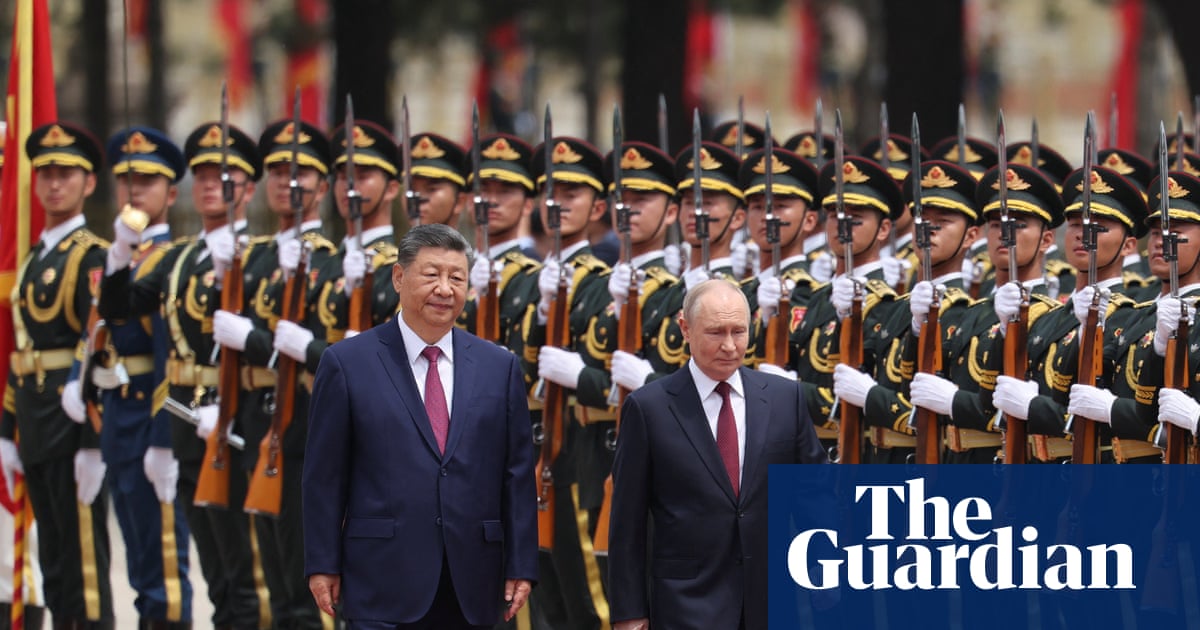
Xi Jinping hosted Vladimir Putin in Beijing for formal talks focused on bilateral ties, reciprocal trade and investment, and cooperation amid the Middle East crisis and Russia’s war in Ukraine. Putin described the relationship as unprecedented and said Moscow remains a reliable energy supplier, while inviting Xi to visit Russia next year. The article is primarily geopolitical and signals continued China-Russia alignment, but it contains no immediate policy action or market-moving economic data.
The signaling value here is less about headline diplomacy and more about the sequencing: Beijing is using ceremonial parity to show it can manage both sides of the U.S.-China confrontation while keeping Moscow economically dependent. That matters because Russia’s bargaining power is now increasingly financial, not military; any incremental Chinese support in energy settlement, trade finance, or dual-use procurement extends Russia’s runway and reduces the probability that sanctions alone force a rapid policy shift. The second-order effect is a deeper normalization of non-dollar trade rails, which is incrementally negative for Western leverage but only becomes market-relevant if it translates into broader commodity settlement or financing channels.
For energy, the immediate implication is not a demand shock but a resilience shock: Russia has a stronger incentive to keep barrels moving to Asia at concessional prices, which caps upside in Asian spot differentials while preserving headline supply. That tends to benefit Chinese refiners and integrated energy consumers more than upstream producers, especially if discounted Russian crude keeps flowing through shadow logistics. The risk is a lagged tightening of enforcement: if the U.S. or EU starts targeting intermediaries, insurers, or shipping counterparties more aggressively over the next 1-3 months, trade friction could temporarily raise freight and insurance costs and widen spreads in seaborne crude and refined products.
The contrarian view is that markets may be overestimating the immediate macro impact of the optics and underestimating the medium-term bargaining leverage Beijing gains by hosting both Washington and Moscow on the same stage. The real trade is not “China backs Russia” but “China becomes the indispensable clearinghouse,” which increases optionality for Chinese corporates and pressure on suppliers that rely on Western compliance channels. That is mildly positive for China-exposed exporters with pricing power, but negative for businesses whose margins depend on frictionless global settlement and stable cross-border logistics.
AI-powered research, real-time alerts, and portfolio analytics for institutional investors.
Request DemoOverall Sentiment
neutral
Sentiment Score
0.05
