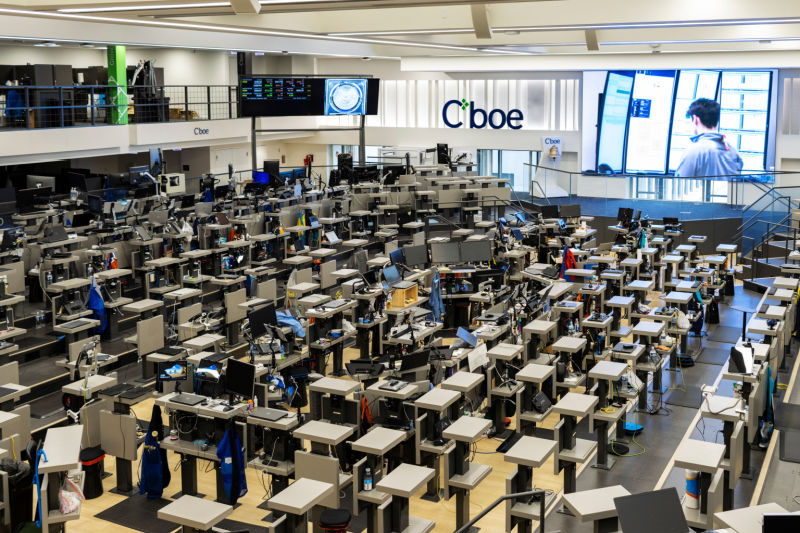
Cboe director Janet P. Froetscher sold 1,223 shares at $358.09 each for $437,944 under a Rule 10b5-1 plan, leaving her with 13,807 shares. The article also notes Cboe’s $0.72 quarterly dividend, the launch of daily expiring Dow Jones Industrial Average options, and recent bullish analyst attention. Overall, the piece is mostly factual with modestly positive company updates and limited likely price impact.
The cross-signal here is that the most important incremental read is not the insider sale itself, but the mix of actions around it: Cboe is simultaneously monetizing retail-flow growth through new product surfaces while returning cash aggressively, which usually supports a premium multiple until volumes normalize. That makes the stock more sensitive to two things the market tends to underweight: whether the new contract launches actually add net open interest rather than cannibalize existing listings, and whether higher retail engagement translates into durable fee-bearing activity or just episodic event-driven volume.
Second-order, the product expansion is strategically defensive as much as offensive. Daily-expiry index options deepen customer stickiness and improve switching costs for market makers and broker-dealers, which can modestly widen the moat versus smaller venues and alternative listing products; the risk is that incumbents imitate quickly, compressing the first-mover benefit into a short window measured in quarters, not years. For banks and broker platforms, higher retail options participation is a mixed bag: it boosts order flow but can increase hedging costs and short-term revenue volatility if volumes become concentrated around macro/event catalysts.
The insider sale is best viewed as a low-conviction signal because it was pre-planned, but it does matter at the margin when the stock is near highs and the cash-return story is already well owned. The contrarian angle is that consensus may be extrapolating the latest growth narrative into a structurally higher multiple, when the real driver is likely a cyclical uplift in derivatives activity that could fade if realized volatility compresses. That creates a path where the equity keeps working in the next 1-2 quarters if volumes stay hot, but the setup becomes fragile over 6-12 months if retail engagement cools or rate-cut optimism reduces trading intensity.
AI-powered research, real-time alerts, and portfolio analytics for institutional investors.
Request DemoOverall Sentiment
mildly positive
Sentiment Score
0.15
Ticker Sentiment
