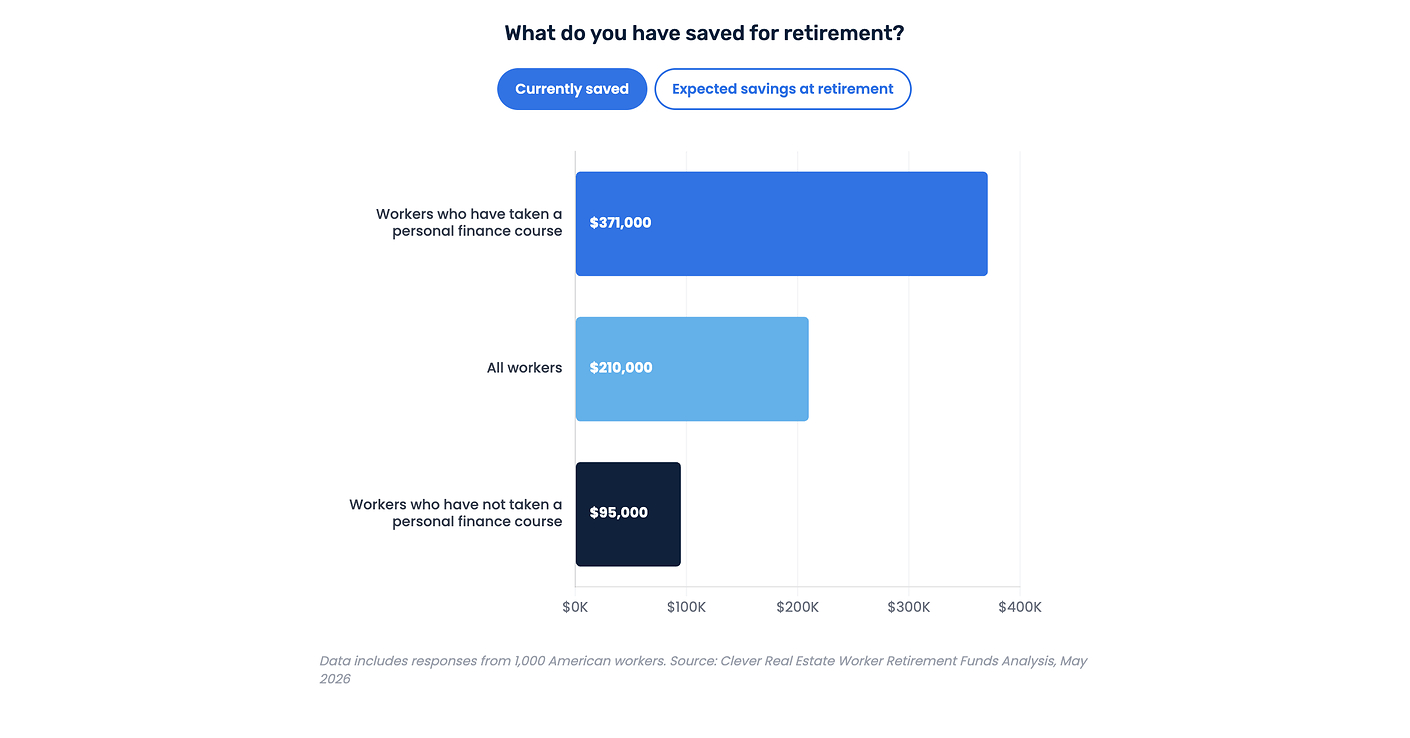
Clever Real Estate’s report finds median earners ($64,220) expect to retire with about $515,000—just half the ~$1.03 million experts say is needed for a 20-year retirement. Current savings average ~$210,000 and 65% of workers say they’re already behind; 38% cut contributions over the past 12 months, driven by high living costs. Housing gaps are large (homeowners $285,000 saved vs non-homeowners $45,000; homeowners retire target $600,000 vs $170,000), with housing costs (property taxes 49%, insurance 43%) cited as a key drag on saving.
The market implication is less about a one-day sentiment hit and more about a slow drift in household behavior: if workers believe retirement is unattainable, they tend to stay in the labor force longer and keep precautionary savings elevated when they can, both of which are mildly disinflationary for wage pressure in service-heavy sectors over 6-18 months. That makes this more relevant to labor-sensitive retailers, leisure, and local services than to headline consumer spending today.
The more investable second-order effect is in retirement infrastructure. Recordkeepers, target-date fund sponsors, managed account platforms, and annuity sellers can benefit if the pain point translates into higher demand for advice and guaranteed income products, while the flip side is contribution leakage from younger cohorts could slow net new inflows. Home equity remains the key funding valve: sustained housing wealth supports reverse mortgages and HELOC usage, but rising taxes and insurance quietly weaken that backstop and could pressure the home-as-retirement thesis.
Contrarian take: this is a familiar problem, not new information, so the consensus reaction should be restrained. The report does not justify an immediate short in consumer discretionary because respondents are explicitly not changing current spending in a meaningful way; the real risk is a future retirement-spending air pocket, not a near-term consumption collapse. The thesis would be falsified if 401(k) contribution rates reaccelerate, 55+ labor participation falls, or housing wealth deteriorates enough to force broad spending cuts earlier than expected.
AI-powered research, real-time alerts, and portfolio analytics for institutional investors.
Overall Sentiment
mildly negative
Sentiment Score
-0.25
Ticker Sentiment
