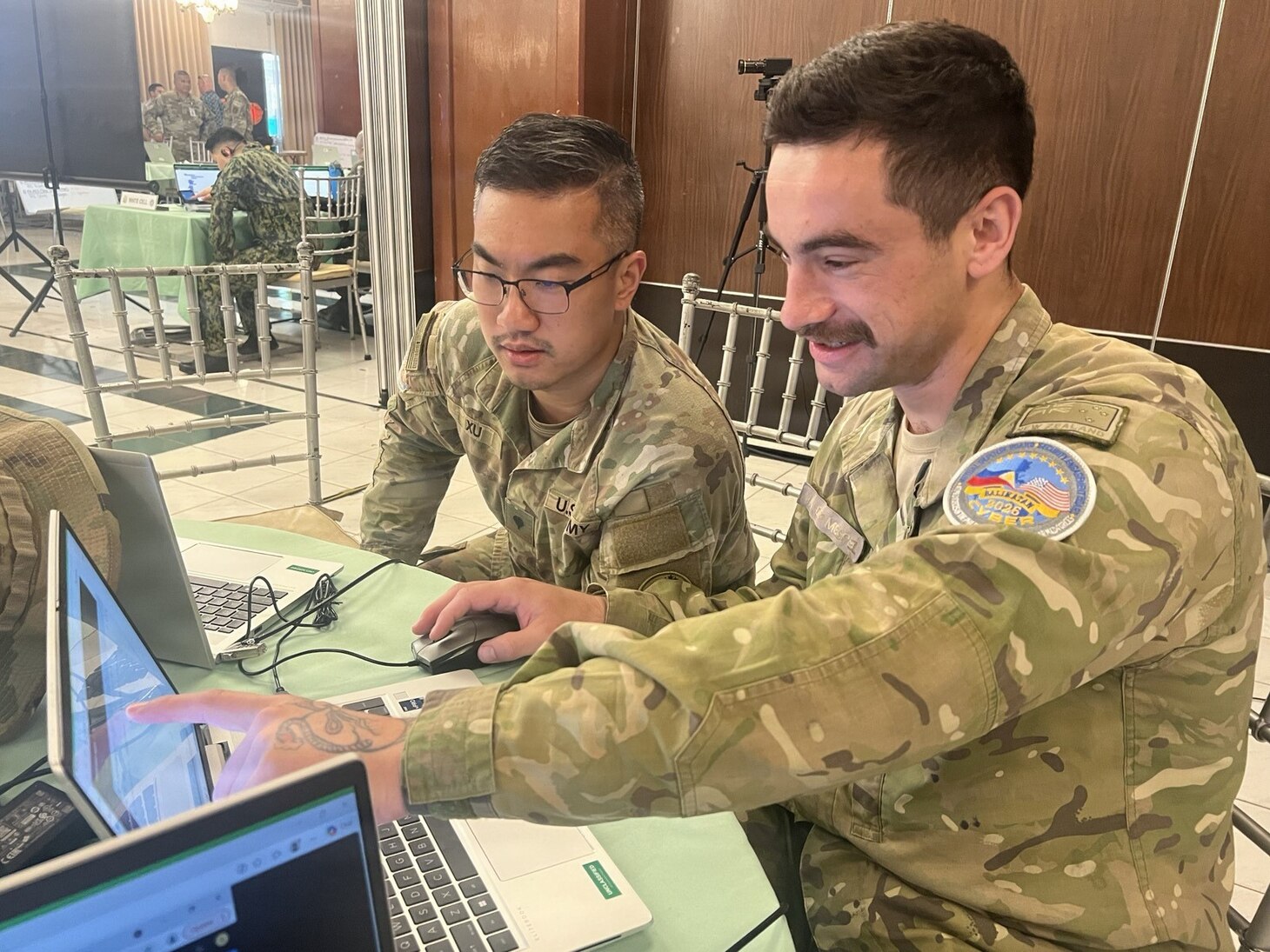
The article highlights PMTEC’s Deployable Cyber Range enabling Balikatan 26 CYDEX, where cyber defenders from seven nations trained against simulated attacks including ransomware and reconnaissance. It emphasizes expanded multinational integration, realistic training scale, and strengthened coalition readiness across critical infrastructure and military networks. The piece is strategically positive for U.S.-led Indo-Pacific defense cooperation but has limited direct market-moving implications.
The market takeaway is not “more defense spending” so much as a shift in spending quality: from hardware-heavy procurement toward software-defined readiness, cyber range tooling, secure networking, and managed training services. That favors vendors with recurring revenue, deployable simulation, identity/access, network monitoring, and threat emulation capabilities more than prime contractors tied to slow budget cycles. The second-order effect is that coalition interoperability becomes a procurement requirement, which should widen the addressable market for products that can be stood up quickly across allied networks without long integration tails.
The more important signal is budget durability. Exercises like this create operational dependencies, and once partner nations start training against the same framework and tooling, it becomes expensive—politically and technically—to unwind. That raises the probability of multi-year follow-on contracts in cyber range infrastructure, cloud hosting, zero-trust architecture, and managed security services, while also creating a small but real halo for vendors embedded in public-sector cyber modernization pipelines.
Contrarian risk: the spend may be more symbolic than additive if it remains exercise-only and doesn’t translate into larger force structure or permanent procurement. In that case, near-term beneficiaries can be bid up faster than actual order flow improves, especially in cybersecurity names already trading on defense/AI narrative premiums. The most likely reversal catalyst is a budget reallocation toward kinetic platforms or a slowdown in allied participation if procurement vetting, sovereignty concerns, or classification constraints reduce the “instant access” advantage.
The underappreciated medium-term implication is labor scarcity: the more realistic the training environment, the more it exposes a shortage of cleared cyber operators and range engineers. That increases demand for outsourced managed services, training-as-a-service, and simulation platforms that reduce the need for scarce in-house talent. In other words, the strategic winner may be the picks-and-shovels layer, not the headline prime contractors.
AI-powered research, real-time alerts, and portfolio analytics for institutional investors.
Request DemoOverall Sentiment
mildly positive
Sentiment Score
0.20
